
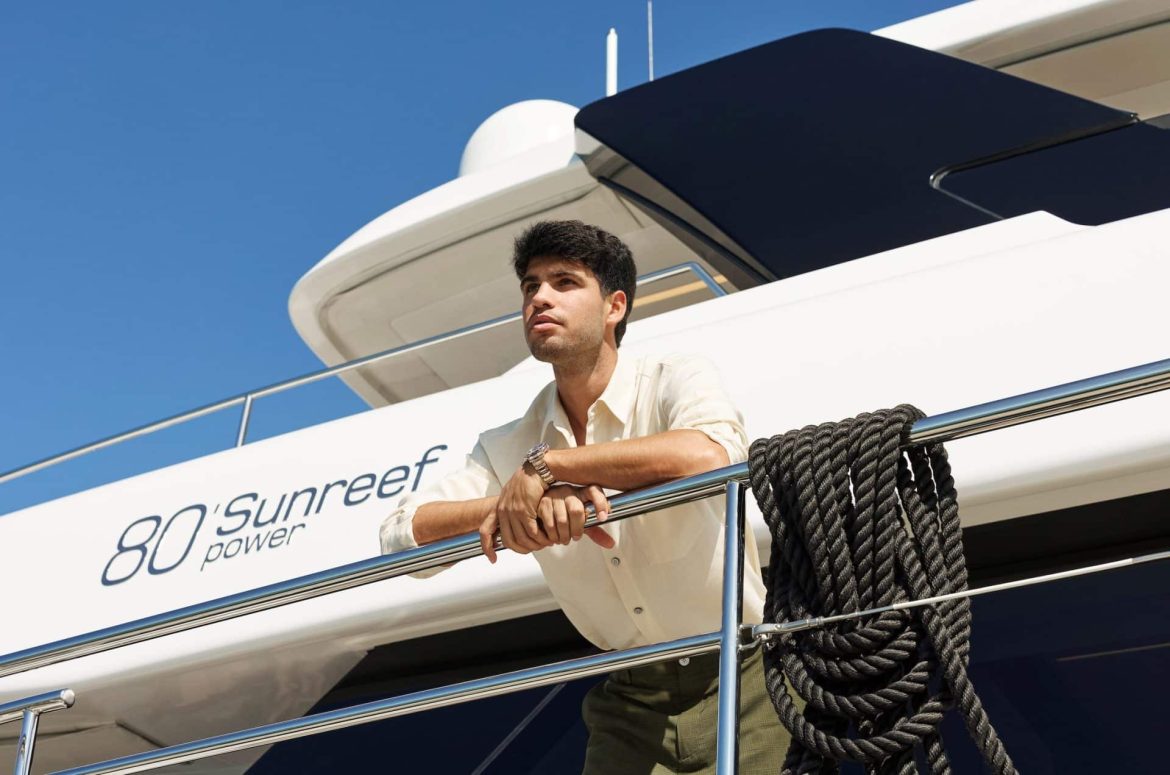
On the northern edge of the UAE, inside Ras Al Khaimah’s rapidly expanding maritime cluster, teams of engineers, designers and craftsmen are building some of the world’s most advanced luxury catamarans.
The vessels taking shape inside Sunreef Yachts’ purpose-built facility are destined for marinas across the Mediterranean, the Caribbean and increasingly, the Gulf itself.
For the Polish yachtmaker, the UAE is no longer simply a sales market. It has become a strategic manufacturing base central to the company’s long-term growth ambitions and a reflection of the country’s wider push into advanced industrial production.
Founded in 2002 in the Polish port city of Gdańsk by entrepreneur Francis Lapp, Sunreef Yachts built its reputation by challenging conventional yacht design. While much of the global industry remained focused on traditional monohull vessels, the company specialised in multihulls – catamarans offering larger living spaces, greater stability and a more residential onboard experience.
That early bet has paid off. Today, Sunreef operates at the top end of the luxury yacht market, producing around 40 fully customised yachts annually. The vessels range from 55-foot catamarans to superyachts exceeding 140 feet, with prices typically starting at around €10 million ($11.3 million) before customisation costs.
Each yacht is effectively a floating private residence, tailored to the owner’s lifestyle. Some are built for long-distance cruising, others for entertainment and leisure, while many combine both functions.

The company’s most significant strategic shift, however, has been geographic.
When Sunreef established its UAE presence in 2022, it moved beyond the traditional regional office model adopted by many European luxury brands. Instead, the company invested in a full-scale production facility in Ras Al Khaimah spanning 65,000 square metres and employing more than 1,500 workers from over 20 nationalities.
A second base on Dubai’s Palm Jumeirah supports the company’s regional commercial operations.
The move aligns closely with the UAE’s industrial strategy, which aims to position the country as a global hub for high-value manufacturing and advanced production.
Inside the Ras Al Khaimah facility, composite hulls are formed using specialised materials and precision engineering techniques, while interiors are assembled in dedicated workshops resembling high-end residential fit-out studios more than traditional shipyards.
Despite the complexity involved, the process operates with near-industrial choreography.
Every yacht remains a one-off commission, but the production system underpinning it has become increasingly refined.

The timing also reflects changing global demand dynamics in the luxury sector. While Europe remains an important market, the Middle East has emerged as one of the fastest-growing regions for yacht ownership, fuelled by rising private wealth and increasing interest in experiential luxury assets.
At the same time, the profile of yacht buyers is evolving. Younger clients are entering the market with a stronger focus on performance, design and sustainability rather than purely status-driven purchases.
Sunreef’s response has been to push innovation across both design and propulsion technologies.
Its ULTIMA range represents one of the clearest examples of this strategy. Combining the sleek styling and speed typically associated with monohulls alongside the volume and stability of catamarans, the range targets buyers seeking more versatile and dynamic vessels.
The ULTIMA 88, for example, can reach speeds of up to 26 knots while maintaining expansive indoor-outdoor living spaces. One of the early buyers of the model is tennis star Carlos Alcaraz, whose purchase reflects the growing appeal of modern yacht concepts among younger ultra-high-net-worth buyers.

Sustainability is becoming another defining theme.
Luxury yachting has historically been associated with excess consumption, but buyers are increasingly scrutinising environmental performance alongside aesthetics and comfort.
Sunreef’s Eco range addresses that shift through electric propulsion systems, advanced battery management and integrated solar technologies embedded directly into the yacht structure rather than added as external components.
Clients are also demanding increasingly complex customisation. In one recent project, a client requested a sailing superyacht capable of passing beneath a specific bridge.
The solution involved engineering a bespoke folding carbon mast capable of bending at a 90-degree angle.
For Sunreef, such requests are becoming part of the brand’s identity.
With dual production hubs now operating in both Poland and the UAE, the company has created a manufacturing ecosystem designed to serve a growing global clientele while reducing reliance on a single geographic base.
In many ways, Sunreef’s UAE expansion reflects a broader shift underway in luxury manufacturing itself. Traditional European centres still matter, but new hubs are emerging where capital, infrastructure and global ambition increasingly converge.
