
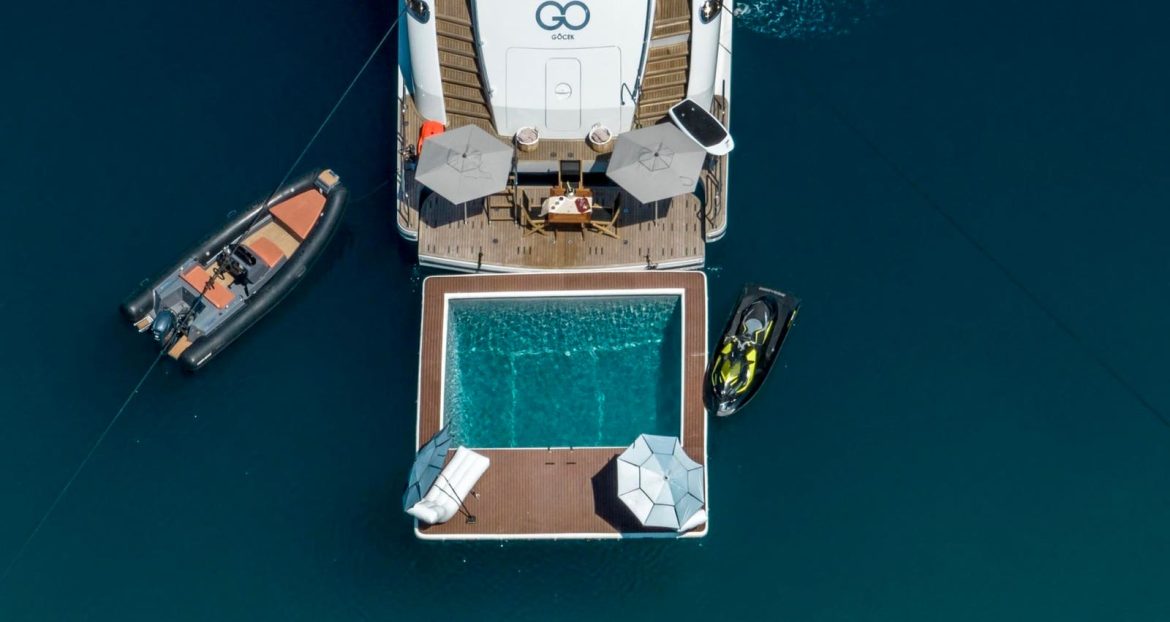

AI doesn’t help to create itineraries, because most of the coast is still too unexplored.
Contact Yachts
For years, yacht charter clients seeking the charms of the Mediterranean tended to split into two camps. There were those drawn to the polished glamour of the French Riviera and Italy’s Amalfi Coast, and those who preferred the island-hopping appeal of Greece and Croatia.
Increasingly, however, another Mediterranean destination is attracting serious attention: Turkey (Türkiye, as it’s now increasingly known).
Large superyachts often make a beeline for the region. (Photo by Ali Rza Akkir/Anadolu Agency/Getty Images)
Getty Images
While devloped for yachting, there are still plenty of secret spots. Photo by Ali Balli/Anadolu Agency via Getty Images)
Anadolu Agency via Getty Images
Once regarded primarily as the home of the traditional gulet, Turkey’s charter market has matured into one of the Mediterranean’s most diverse. Modern motor yachts, sailing yachts and catamarans now share the coastline with the country’s traditional wooden vessels, while a combination of ancient history, dramatic landscapes and a long, sun-soaked summer season is drawing a growing international audience.
The question is no longer whether Turkey is an alternative to Greece or the Western Mediterranean, but whether it may offer a more compelling charter experience altogether.
Why Charter a Yacht in Turkey?
This brand new Sanlorenzo named Danlou is one of the newest yachts in the region.
Boatsters Black (Rocky Reborn)
The Turkish Riviera stretches for hundreds of miles along the country’s southwestern coast, encompassing destinations such as Bodrum, Göcek, Marmaris and Fethiye. Unlike many Mediterranean hotspots where yachts congregate around a handful of islands or harbours, Turkey offers a coastline defined by variety.
That sense of choice remains one of its strongest assets. Guests can spend days cruising between pine-covered bays, hidden coves and quiet anchorages without encountering significant crowds. Ancient Lycian ruins often appear directly above the waterline, while small fishing villages remain largely unchanged by mass tourism.
Alongside the culture, Turkish cuisine is another significant draw, offering a rich and varied culinary experience.
De Agostini via Getty Images
“The Turkish coastline is like an open-air museum,” says Serhan Cengiz, president of the Turkish Yacht Brokers Association (TYBA). The TYBA Charter Show, an event dedicated to showcasing the local fleet of yachts in the region, recently wrapped up after another successful edition in Marmaris. Cengiz says that archaeological sites, Ottoman heritage and natural landmarks are woven throughout the cruising grounds, allowing guests to combine a beach holiday with cultural exploration.
For Kateryna Kyslyak of Contact Yachts, the destination’s appeal lies in its diversity. “It’s a kaleidoscope of emotions,” she says. “If you’re familiar with the yachting destinations of other Mediterranean countries and want something truly unique, yet still not complicated, then Turkey is an excellent choice.”
What’s more, says Kyslyak, weeks on the water can easily be paired with several days in the melting pot of Istanbul or the Instagram-favourite Cappadocia, creating a broader travel experience that extends beyond the yacht itself.
How Does Turkey Compare to Greece?
Göcek is a prominent spot for yacht charters. (Photo by Vehbi Bas/ dia images via Getty Images)
dia images via Getty Images
Turkey is often mentioned in the same breath as Greece, but charter professionals argue that the experience is fundamentally different. Danielle McNeill, central agent at Boatsters Black, believes that Turkey’s appeal lies in the balance it strikes between luxury and genuine off-the-beaten-track travel experiences.
“Turkey offers the glamour and service standards expected of the Mediterranean, but with a more relaxed, discreet and deeply atmospheric feel,” she says.
Marmaris, located at the intersection of the Aegean Sea and the Mediterranean Sea.
Kateryna Kyslyak
Compared with neighbouring Greece, she describes the cruising grounds as “greener, less crowded and more expansive”, with long stretches of undeveloped coastline and anchorages that still feel untouched.
The contrast is a big draw for charter guests, says McNeill. A morning might be spent swimming beneath ancient ruins, while the evening unfolds at a sophisticated waterfront restaurant or beach club in Bodrum.
Is Yacht Chartering in Turkey Cheaper Than Other Mediterranean Spots?
Danlou charters from €99,000 per week in low season.
Boatsters Black (Rocky Reborn)
The perception that Turkey is the Mediterranean’s budget charter destination is increasingly outdated, says Kyslyak. Today, rising demand, inflation and growing international interest have narrowed the gap considerably.
“Inflation and the overall rise in popularity of Turkey as a luxury destination have pushed prices much higher,” says Kyslyak.
A view of Bodrum Castle after its restoration work. (Photo by Ali Balli/Anadolu Agency via Getty Images)
Anadolu Agency via Getty Images
McNeill agrees, saying that the region is no longer the “budget alternative” it was once marketed as, but adds that “many charterers still find the overall experience offers strong value compared to parts of both the East and West Mediterranean, especially when considering marina fees [and] dining ashore.”
What Is a Gulet and Should You Charter One?
Wooden sailing gulets are typically cheaper, more stable, and accommodate larger passenger numbers.
Kateryna Kyslyak
For many yacht charterers, Türkiye or Turkey still conjures up images of traditional gulets (pronounced goo-lets).
Originally built as wooden trading vessels, gulets have evolved into spacious, family-friendly rental options. Wide beams, generous deck space and multiple guest cabins make them particularly attractive for families and larger groups. Some people consider them entry-level charter yachts or mini cruise ships.
Kyslyak remains one of their biggest advocates. “I absolutely love gulets,” she says. “Families with children, couples on a romantic getaway, groups of friends and large families. I recommend them to everyone.”
Boats sail between the islands of the Gokova Gulf. Photo by Yoray Liberman/Getty Images)
Getty Images
Unlike many motor yachts at similar price points, crewed luxury gulets often provide significantly more living space. Some also include fuel within the charter rate, reducing operating costs.
“If you’re looking for a 10-person motor yacht with a budget of €40,000, you simply won’t find one like that in the charter fleet of Turkey,” says Kyslyak. “Charter a gulet instead. It’s stable on the water, has five cabins, and the quality is excellent, with plenty of space for everyone and high, comfortable ceilings. ”
She adds: “It’s almost impossible to find a motor yacht with a stabiliser in Turkey, under 100k per week. Gulets with their hulls for that money will give you much more, believe me. “
Where Should You Go?
İçmeler, looking out over the bay of Marmaris.
Kateryna Kyslyak
Among Türkiye’s charter hotspots, two destinations dominate. Bodrum and Göcek have emerged as the country’s answer to the Mediterranean’s luxury capitals, complete with chic beach clubs, designer outposts, sophisticated marinas and an increasingly ambitious restaurant scene. Marmaris, home of the TYBA show, is another hub which Cengiz says has a unique appeal in its proximity to the neighbouring Greek islands, giving guests “two countries within a single charter itinerary”.
For something more under-the-radar, though, two destinations consistently stand out.
The first is Kekova, home to the famous sunken city where charter guests can swim and cruise above the submerged remains of an ancient settlement.
The second lies around Bozburun, one of Türkiye’s historic boatbuilding centres. “The bays for swimming near Bozburun village are incredible,” says Kyslyak, recommending a stop at Manzara Söğüt for dinner after a day on the water.
When Is the Best Time to Charter in Turkey?
Kekova’s sunken town. (Photo by Raimund Franken/ullstein bild via Getty Images)
ullstein bild via Getty Images
One of Türkiye’s lesser-known advantages is the length of its season.
According to Cengiz, charter conditions typically run from April through to early November, making it one of the Mediterranean’s longest yachting seasons. Warm sea temperatures often extend well into autumn and “even in April and May, sea temperatures range from around 18°C to 21°C (64 – 70 °F) making for very enjoyable conditions”.
The “sense of space” is unmatched, says McNeill.
Boatsters Black (Rocky Reborn)
For experienced charterers, September and October are increasingly viewed as the sweet spot. The summer crowds begin to disperse, water temperatures remain high and charter rates often become more attractive.
Kyslyak is particularly enthusiastic about the shoulder season. “It’s heavenly weather, warm sea, beauty and tranquillity, and rental prices are lower in the low season.”
The Biggest Misconception About Chartering in Turkey
This yacht, refit in 2021, is available from €65,000 per week with Contact Yachts.
Contact Yachts
The most persistent misconception is that Turkey offers a less sophisticated version of the Mediterranean yacht charter experience.
According to McNeill, the reality is quite different.“The standard of cuisine, service and scenery is exceptional, often exceeding expectations for first-time visitors,” she says.
While hospitality standards may have increased, McNeill says the destination still retains a sense of authenticity that many established charter hubs have struggled to preserve.
Guests still encounter traditional fishing villages, family-run waterfront restaurants and anchorages where development remains minimal. For those in the market for a yacht charter in 2026 and beyond, it appears that Türkiye still strikes the balance between untouched charm and luxury hotspots that its neighbours haven’t quite managed to keep hold of.
