

Every $1.13 spent generates $2.72 in wider value
Getty Images
The global superyacht industry has grown into a €54 billion economic ecosystem (approximately $61.4 billion as of June 24) that extends well beyond yacht ownership and luxury travel, according to a new study published by Deloitte and Vrije Universiteit Amsterdam.
Commissioned by The Superyacht Life Foundation and the Superyacht Builders Association, or SYBAss, the report purports to be the first comprehensive attempt to quantify the industry’s total economic contribution. The findings suggest that superyachts have become a driver of manufacturing activity, skilled employment, tourism spending and maritime infrastructure investment across multiple regions (but with a focus on Europe, where the majority of construction and high-end charter activity takes place).
The fleet of yachts above 98 feet has surpassed 6,000
In Pictures via Getty Images
The Economic Impact Of Superyachts
The study focuses exclusively on vessels measuring more than 30 meters (98 feet) and analyzes activity across construction, refit and maintenance, brokerage, charter operations and fleet management. Researchers found that the sector generated €22 billion (about $24.9 billion) in direct economic activity during the benchmark year of 2022 and an additional €32 billion ($36.2 billion) in indirect impact through supply chains, professional services and tourism-related spending.
According to the report, every €1 spent within the industry generates approximately €2.40 in broader economic value. As a rough conversion, that equates to every $1.13 spent generating $2.72 in wider value.
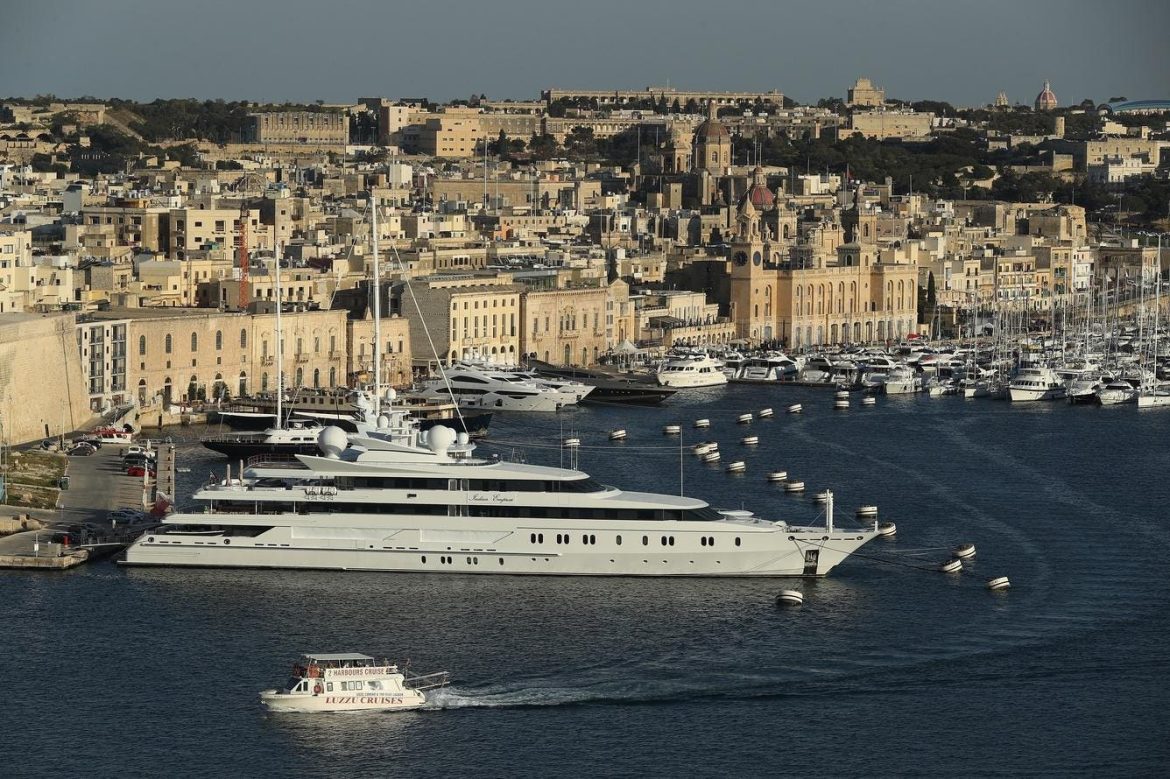
Yacht charters generate thousands for local economies, between refuelling, food supplies and local taxes
Getty Images
“The findings challenge the perception of superyachts as a purely niche luxury market,” said Dilan Saraç, executive director of The Superyacht Life Foundation. “What emerges is a deeply interconnected global economy supporting manufacturing, tourism, engineering, hospitality and thousands of highly skilled jobs.”
The research comes as the global fleet surpasses 6,100 superyachts. More than one third of those vessels are available for private charter, helping create recurring economic activity long after the initial high-impact spend of construction is complete.
Larger yachts generate 5.5x more than smaller ones
Jeff Brown, Breed Media
How Spending By Active Yachts Makes Waves
Fleet operations and tourism represent the largest share of the industry’s economic contribution, accounting for €27.1 billion ($30.7 billion) annually, or roughly half of the sector’s total impact. Spending by active yachts supports marinas, hotels, restaurants, transportation providers and a range of local service businesses in major cruising destinations—not just in terms of guest or owner spending, but crew spending, too.
Larger vessels are particularly significant contributors, with yachts exceeding 60 meters (196 feet) generating approximately 5.5 times more operational spending than smaller superyachts.
The Mediterranean remains the industry’s dominant operating region. Researchers estimate that the region accounts for €4.7 billion ($5.3 billion) in annual operational expenditure and an additional €1.9 billion ($2.1 billion) in tourism spending, reinforcing the economic importance of marina capacity, refit facilities and high-end hospitality infrastructure.
Jeff Bezos and Lauren Sanchez on their sailing yacht
GC Images
The Business Of Manufacturing And Maintaining Superyachts
On the manufacturing side, Europe continues to dominate production. The continent represents approximately 90% of global new-build market value, with Italy, the Netherlands and Germany accounting for nearly 80% of total output. New construction activity alone generates an estimated €20 billion ($22.7 billion) in economic impact and supports a network of shipyard workers, naval architects, engineers, specialized suppliers and craftspeople.
The report also points to growing opportunities in refit and modernization as an aging fleets face new operational requirements and environmental regulations. For shipyards and suppliers, maintenance and upgrade work is becoming an increasingly important source of long-term revenue. It’s stable too, as yachts periodically require servicing and maintenance periods—usually at least once a year, depending on their size.
New yacht construction alone generates an estimated $22.7 billion
Getty Images for DAGOC
Taken together, the findings position the superyacht sector as a contributor to both industrial production and service economies. While yacht construction supports advanced manufacturing and skilled labor, charter activity and vessel operations create recurring spending across coastal destinations worldwide.
Researchers describe the study as a benchmark assessment of an industry whose economic influence now reaches far beyond the shipyard gate.
