
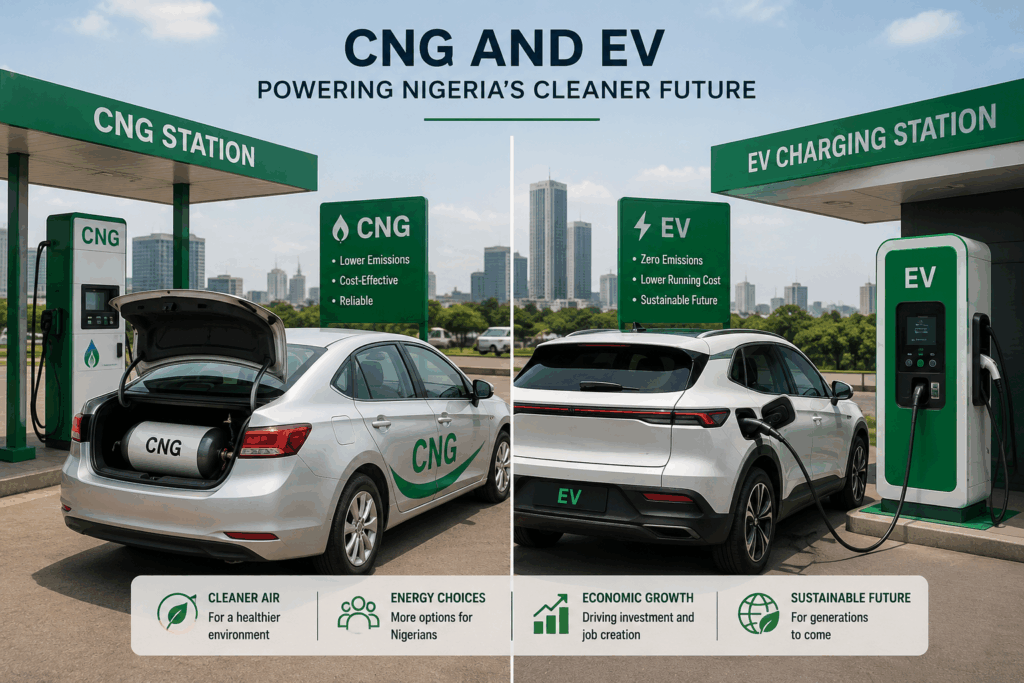
Leading automobile manufacturers, transport regulators, and government agencies have confirmed participation in the 2026 Nigeria Auto Industry Summit (NAISU), signalling growing momentum behind the country’s transition to electric vehicles (EVs) and compressed natural gas (CNG)-powered mobility amid efforts to decarbonise transportation and reduce fuel costs.
Among the major industry players backing this year’s summit are Weststar Associates Limited, Toyota (Nigeria) Limited, Jetour Nigeria, Carloha Nigeria, Simba Group, Cedric Masters Group, Coscharis Motors, and Lanre Shittu Motors.
Policymakers, investors, financial institutions, fleet operators, and technology providers are also expected at the event, organised by the Nigeria Auto Journalists Association (NAJA) in collaboration with the National Automotive Design and Development Council (NADDC).
Shehu Mohammed, corps marshal of the Federal Road Safety Corps (FRSC), has confirmed his participation as a keynote speaker and is expected to address issues bordering on road safety, regulation, and the deployment of EVs and CNG-powered vehicles in Nigeria.
Read also: What Nigeria, South Korea EV deal means for Nigeria’s automotive industry
Also confirmed as guest speakers are Joseph Osanipin, director-general of NADDC, and Ismaeel Ahmed, chairman/chief executive officer of the Presidential Initiative on Compressed Natural Gas and Electric Vehicles (Pi-CNG and EV).
They are expected to provide insights into the Federal Government’s automotive industrialisation agenda, clean mobility policies, and ongoing efforts to accelerate the adoption of EVs and CNG-powered vehicles across Nigeria.
The third edition of the summit will be held on Thursday, July 30, 2026, at the Radisson Hotel, Ikeja, Lagos, under the theme, ‘Nigeria’s Clean Mobility Future: The EV and CNG Journey Under the Bola Tinubu Administration.’
Rasheed Bisiriyu, chairman of the 2026 Auto Summit Planning Committee, said the event comes at a critical period as Nigeria intensifies efforts to drive cleaner transportation through the adoption of electric vehicles and compressed natural gas.
According to Bisiriyu, the summit will bring together government officials, automotive manufacturers, regulators, energy experts, and transport stakeholders to assess ongoing reforms and develop practical strategies for advancing the country’s clean mobility agenda.
“The summit comes at a critical period when Nigeria is implementing policies aimed at reducing transportation costs, lowering carbon emissions, and encouraging greater investment in alternative energy mobility solutions,” he said.
Bisiriyu added that discussions would review the progress made under the Bola Tinubu administration in promoting EV and CNG adoption while identifying policy, infrastructure, and financing gaps requiring urgent attention.
Read also: NAMA seeks safeguards for local auto industry amid 2026 tariff reforms
He further said that participants will examine strategies for expanding EV charging infrastructure and CNG refuelling stations, promoting local vehicle assembly, improving consumer awareness, attracting private sector investment, and strengthening the regulatory framework needed to support sustainable transportation.
Theodore Opara, NAJA chairman, said the annual Auto Summit has evolved into one of Nigeria’s foremost automotive policy dialogue platforms, bringing together government institutions and private sector operators to address critical issues affecting the industry’s growth.
According to Opara, achieving Nigeria’s clean mobility objectives requires broad collaboration among regulators, manufacturers, energy providers, transport operators, safety agencies, and consumers.
“We are bringing together regulators, manufacturers, energy providers, transport operators, safety agencies, and consumers because the transition to clean mobility requires collective action.
“The objective is not only to discuss policy but also to identify practical solutions that will accelerate Nigeria’s journey towards affordable, cleaner, and more sustainable transportation,” he said.
Organisers said the summit is expected to generate actionable recommendations to support the federal government’s drive to deepen investment in alternative fuel technologies, strengthen local automotive manufacturing, improve transport sustainability, and position Nigeria as a leading player in Africa’s emerging clean mobility ecosystem.
With participation already confirmed by leading automotive brands, regulators, and other key stakeholders, the 2026 NAISU is shaping up to be one of Nigeria’s most influential gatherings on the future of the automotive industry and the country’s transition to cleaner, more sustainable mobility.


