
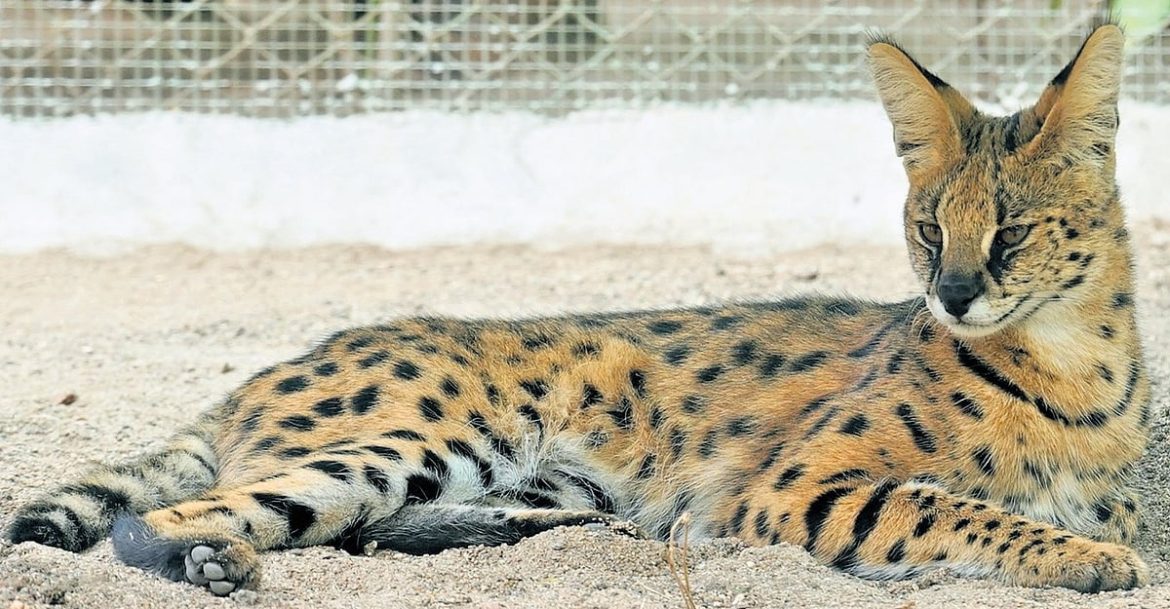
The serval (Leptailurus serval) is a medium sized wild cat native to sub Saharan Africa. It has an unusual build, with long, slender legs, a compact head and exceptionally large ears adapted to detect prey in tall grass.
Adults can weigh around 20 to 40 pounds and stand nearly two feet at the shoulder. Their golden yellow coat is marked with black spots and stripes, which can make them resemble young cheetahs.
The discovery is particularly significant from a wildlife trade perspective. Serval is listed in CITES Appendix II, meaning international trade in the species is subject to regulation.
The species is classified as Least Concern on the IUCN Red List, but that does not mean its international trade is unregulated. CITES places controls on international trade to ensure that utilisation does not threaten the species.
Forest officials said the cats were being maintained in large enclosures on either side of a central structure at the farm. The inspection team is now examining whether the animals were acquired through documented legal channels and whether the required records exist for their import, transfer and possession.
Officials also suspect that the facility may have been involved in breeding and movement of exotic animals, making the presence of three serval cubs a crucial line of investigation.
“Documents relating to the servals have been sought. We are verifying the source and the transactions. The inspection is still continuing,” the official said.
