
Rainy Rambles: Shhh, Salamanders Spawning!
Published 10:29 pm Thursday, April 16, 2026
0416 CW Rainy rambles1.jpg A red legged frog. (Rebecca Lexa photos)
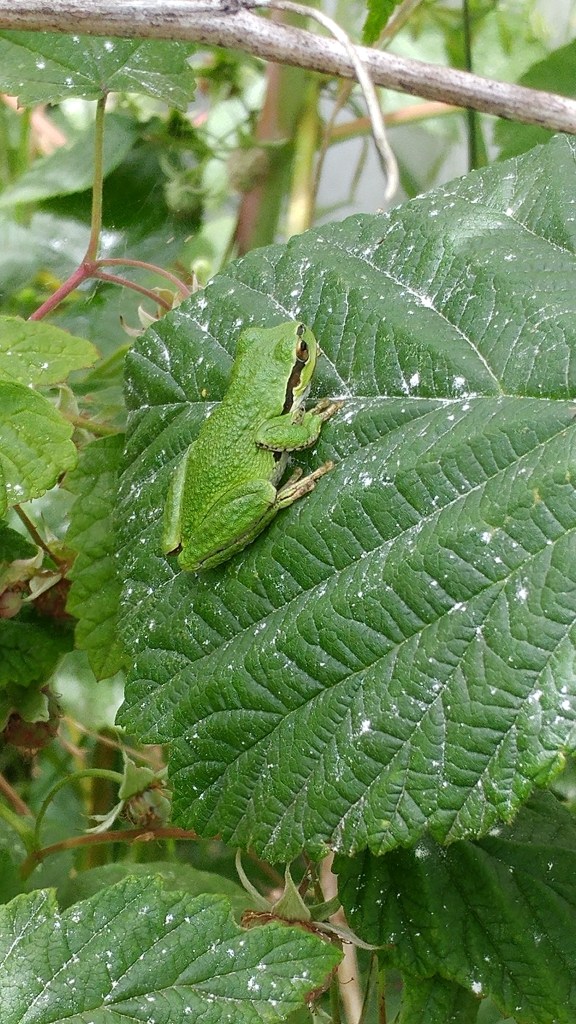
0416 CW Rainy rambles2.jpg A tree frog.
0416 CW Rainy rambles3.jpg Rough skinned newt.
0416 CW Rainy rambles4.jpg Northwestern salamander.
((Optional pull quote)) “All newts are salamanders, but not all salamanders are newts.” – Naturalist Rebecca Lexa
((Kicker)) Rainy Rambles
((Head)) Shhh, Salamanders Spawning!
The nights are still chilly, but warmer days are bringing out a variety of winter’s sleepers! Among these are local amphibians making the most of the opportunity to create the next generations. You may see or hear them in local waterways, or encounter them crossing a muddy trail on their way to food or courtship.
Salamanders and newts are quite plentiful in the Columbia-Pacific region. While sometimes mistaken for lizards, these amphibians have semi-permeable skin rather than dry, scaly skin, and they lay soft eggs in water, unlike a reptile’s leathery egg which remains on land. In spite of their small size, they are voracious little predators that eat a wide variety of insects, worms, slugs, and other prey.
All newts are salamanders, but not all salamanders are newts! Salamanders are classified under the order Urodela, which contains ten families. However, only members of the subfamily Pleurodelinae within the family Salamandridae are considered newts. Newts are semiaquatic, spending more time in water than other salamanders, and do not have the costal grooves along their ribs seen in other salamander families.
Newts have rough skin, and each little bump is a poison gland. Each one exudes tetrodotoxin, a strong neurotoxin that is also found in the blue-ringed octopus, mola mola, and even some bacteria. Rough-skinned newts, which are the most common salamander in our area, can produce enough tetrodotoxin to kill a healthy adult human. The newt is primarily dark brown in color, but may flash an orange underside to warn away potential predators.
Along with the rough-skinned newt — our only newt, by the way — you might also see other local salamanders in quiet pools and wetlands. The Oregon ensatina is similarly colored to rough-skinned newts, but has much smoother skin. As its name suggests, the western red-backed salamander’s orange or red stripe is on its back, not its belly, and the Dunn’s salamander’s stripe tends to be a less vivid yellow. Cascade torrent salamanders are also brown with a paler yellow to orange belly, but are marked by numerous tiny black and white speckles on their sides. The Northwestern salamander, on the other hand, tends to be solid brown, though the shade may vary depending on the individual. Topping out at a little over a foot long, the coastal giant salamander’s brown marbled form is rarely seen in adulthood, as they tend to live in burrows in wet ground.
Though most salamanders are primarily terrestrial, they all lay their eggs in the water. These are typical amphibian spheres, which stick to each other in a mass of clear jelly. Keeping the eggs together helps protect them from predation or being washed downstream. Gestation varies from species to species, but usually within a few weeks the eggs hatch into tiny larvae, complete with gills. These little aquatic tadpoles have larger mouths than their baby frog counterparts, and three pairs of gills instead of two. Look closely, and even newly-hatched salamander larvae have tiny buds that will turn into front legs.
Frog tadpoles look similarly like large heads with wagging tails attached, and won’t show their legs until later in development. But they too will morph into fully fledged adults with enough time and luck. They also started out in jelly-like masses of eggs laid in the water, and their forebears spent early spring days courting and mating.
Pacific tree frogs are the most numerous frogs in the Columbia-Pacific. They may range in color from bright green to medium brown, but always with a pale belly and dark stripe over the eye. Northern red-legged frogs also make frequent appearances. They may look a bit like a brown tree frog, but grow larger, reaching up to four inches and length, and the red patches on their legs set them apart as well. Coastal tailed frogs are rarely seen, in part because they spend quite a bit of time in fast-flowing rivers and streams. American bullfrogs are the only invasive amphibian in our region. They grow much larger than native frogs, and will happily eat as many as they can catch, whether as tadpoles or adults.
Frogs tend to be much more vocal than salamanders, with males emitting a variety of calls to attract females. They don’t wait until warm summer nights for this, and may be occasionally heard as early as January during odd warm spells.
Frogs and salamanders alike are very sensitive to pollution in their environments. Their semi-permeable skin easily absorbs chemicals, and some amphibians lack lungs and can only breathe through their skin. They are often the proverbial canary in the coal mine when it comes to water and land pollution. Climate change further threatens these vulnerable animals, both through warming temperatures and longer droughts, and the spread of diseases like chytrid fungus infections. However, as with all wildlife, the single biggest threat to our local amphibians is habitat loss, so every wetland and cool, damp forest that is protected means more safe havens for them.
