
Smartwatches have made great strides in recent years, with new health features and improved sensors attracting newcomers to the sector while also prompting current owners to replace their existing devices. But perhaps you don’t need to buy one anymore. You might be fed up with being a slave to your smartwatch, constantly responding to alerts and notifications, or fiddling about with all of the different apps it has to offer. Plus there’s the chore of having to charge it pretty much on a daily basis.
The good news is that the wearables market, while dominated by smartwatches, is becoming increasingly diverse, providing a range of alternatives that offer genuine benefits without the traditional smartwatch experience. Think smart rings, sleep earbuds, and posture trainers, among others — devices that deliver real value with less distraction and better battery life. Let’s take a closer look at some currently available wearables other than smartwatches to get a clearer idea of what’s available and what kind of upsides they offer.
Smart rings for health insights
Smart rings are a notable, viable alternative to smartwatches and can even do things some smartwatches can’t. Smaller, lightweight, and more discreet, you can slip a smart ring onto your finger and pretty much forget about it until you open its companion app to check out the health insights that it’s gathered for you. A prominent player in the smart ring market is Oura, the Finnish company behind the popular Oura Ring that tracks sleep, heart rate, temperature, and physical activity. It can also measure your blood oxygen level and heart rate variability, and offer things like scores for activity and sleep. Another big plus is battery life. Most premium smart rings last between five and seven days on a single charge (depending on usage), outperforming typical smartwatches like the Apple Watch and Samsung Galaxy Watch that often need daily charging.
Feedback from a smart ring’s app can encourage you to improve your fitness level, or offer ways to improve your sleep if you’re having trouble getting quality shut-eye. It might even alert you to a health issue that needs to be discussed with a doctor. However, drawbacks include a possible monthly subscription to access the full set of data. The Oura Ring 4, for example, charges $5.99 a month (or $69.99 annually) following a one-month free trial. If you’re interested, there are a few other things you should know before buying an Oura Ring.
Sleep earbuds for a superior slumber
If you’ve ever worn regular earbuds for sleeping, you’ll probably find they slip out halfway through the night. Or worse, you might wake up with earache because they’ve been pressing too hard against your pillow. That’s why, in recent years, some manufacturers have been working on earbuds designed specifically for sleeping. These so-called sleep earbuds have a shallower design than regular earbuds to reduce discomfort if you sleep with the side of your head on the pillow. They should also come with carefully designed seals that block out external sounds, which could be anything from your partner’s snoring to grating city noise. High-end sleep earbuds often come with a library of soothing sounds, Bluetooth Low Energy for longer battery life, and a built-in alarm that wakes you gently. Some buds even store audio on the buds themselves for extended operation without Bluetooth.
Anker’s A30 sleep earbuds, for example, launched in 2025 and are one of the best sleep headphones you can buy. They include features like active noise cancellation and adaptive snore masking. To achieve this, the charging case uses mics to analyze nearby snoring and adjusts the masking audio to drown it out. If you have trouble sleeping, whether due to external noises, stress, or some other issue, then sleep earbuds could be worth a try. They can help create a calmer environment more conducive to sleep, leaving you feeling more refreshed the following morning.
Posture trackers for less pain
If you’re reading this in a chair or standing up, how’s your posture? Many of us sit, stand, and walk with poor posture that over time can cause serious neck and back pain. It’s easy to quickly straighten up when you suddenly think about it, but minutes later, without even realizing, you can find yourself back in that awkward slouch or stoop, putting unnecessary pressure on our joints and bones. That’s where the a posture tracker can help.
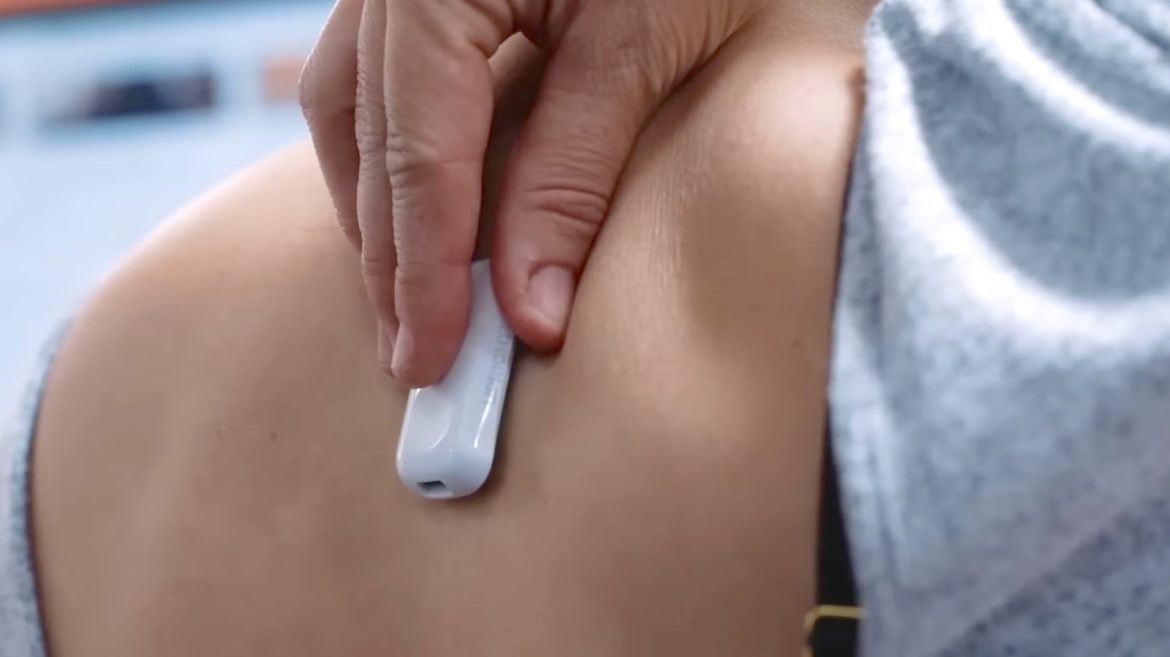
A posture tracker is usually a small, unobtrusive device that you wear like a necklace or stick to your upper back. It monitors your body position using tiny accelerometers and gyroscopes. If it detects poor posture, the device will emit a short haptic buzz to remind you to adopt a more appropriate position. Most of these trackers also come with a companion app that records your posture data and shows your progress over time. Some can even create personalized training plans to encourage you to adopt better posture habits. The idea is that, over time, proper posture will become a positive habit and the number of reminders will drop.
The Upright Go 2 is one such device aimed at improving posture. Priced at $99, the Go 2 launched in 2019, improving on the original Go that landed two years earlier after a successful Kickstarter campaign. Pain from poor posture can build up over time, so a device like this aims to set you right before things go wrong. Good posture can also help you to breathe better, sending more oxygen to the brain for prolonged mental sharpness and reduced fatigue.
Smart glasses for greater convenience
Smart glasses are another wearable that, while still a fairly niche product, are increasingly catching the attention of gadget enthusiasts. Meta’s high-end Ray-Ban Display smart glasses, for example, let you use voice commands and hand gestures (via the included Meta Neural Band) to control the device. They sport a private in-lens display that can show things like turn-by-turn walking directions, live captions, live translations, messages, Meta AI responses, and a camera preview. Launched in 2025 for $799, the high-tech glasses also let you take photos and video using a built-in camera. This is a more controversial aspect of smart spectacles as many people are uncomfortable with the idea of being recorded by a stranger without their knowledge. Still, smart spectacles can offer more comfortable, seamless interactions with data compared to a smartphone, which you always have to pull out of a pocket or bag and then wield with at least one hand.
While not yet perfect in terms of usability, advancing technology means smart glasses are now showing real promise. The device is certainly performing better than Google’s failed attempt with Glass, which launched for consumers in 2014 but was discontinued the following year due to issues such as high pricing, limited functionality, and privacy concerns.
Fitness bands for staying in shape
Most fitness trackers strap to your wrist and, as you’d expect, offer features such as heart and sleep monitoring, activity tracking, and stress management. They can also follow your progress over time and help you reach personalized fitness goals, sending data to a companion app where you can see trends and even share results with friends.
A notable newcomer to the field is Google’s Fitbit Air, which is among a selection of wellness gadgets actually worth buying in 2026. The $99.99 Fitbit Air is a more affordable screenless band that weighs a mere 0.42 ounces and can run for up to a week on a single charge, with a full charge reached in just 90 minutes. Besides activity, the band tracks metrics such as heart rate, heart rate variability, blood oxygen level, and skin temperature. It also gathers sleep data, offering a sleep score each morning just after you wake up. Helpfully for your bank balance, you can use the Fitbit Air without a subscription, though paying $9.99 a month (or $99.99 a year) for Google Health Premium allows you to access the full suite of features.
Fitness trackers can improve your life by helping you focus more on your health to gently get you in shape. Many people opt for fitness trackers over smartwatches as they provide a low-maintenance solution for targeting health goals. Notably, they also offer better battery life and fewer distractions than a smartwatch, and often come with a more attractive price tag, too.
