
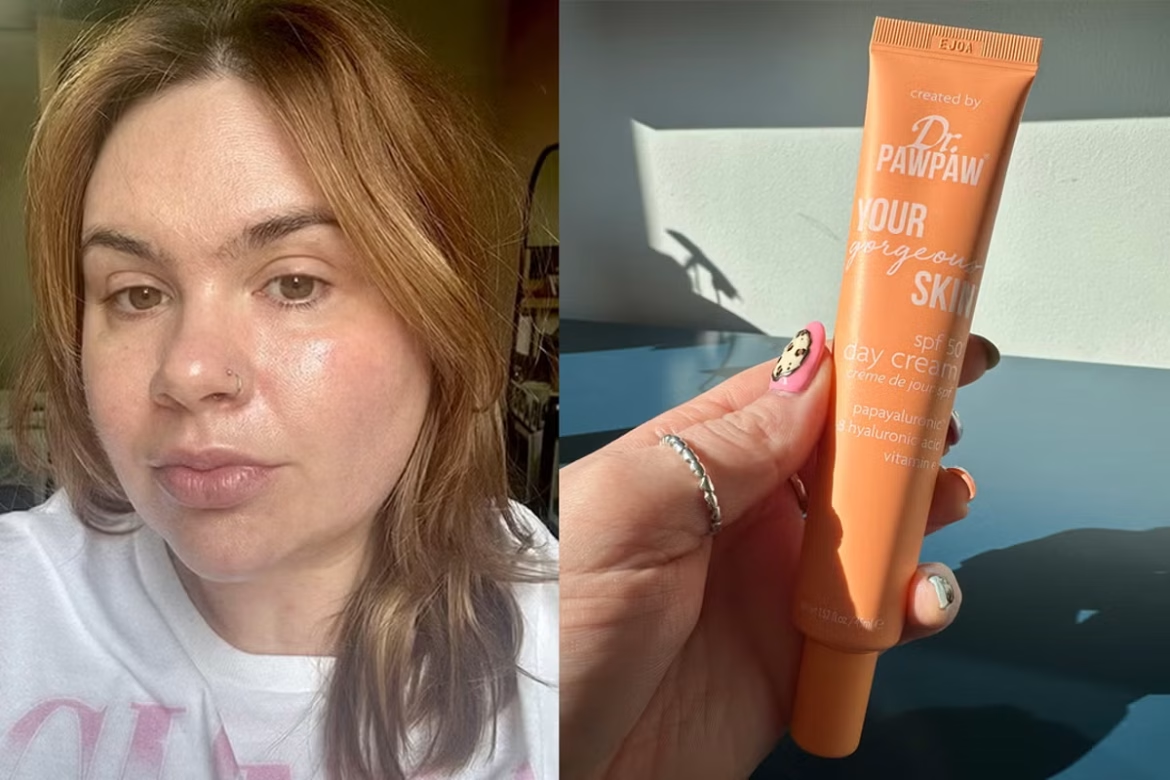
What’s the best sunscreen for your face?
In my tests, Heliocare’s 360 gel-oil free SPF50 was found to be the best facial sunscreen. It’s the perfect all-rounder, but you’ll never be disappointed by a Korean sunscreen, so either Belif or Beauty Of Joseon is a great choice. But if you don’t want to spend a lot of money, choose Byoma’s ultralight face fluid SPF30.
How I tested and selected the best face sunscreens
I incorporated these sunscreens into my daily routine for a few days at a time. The skincare paired with them remained the same each time – a hydrating serum, Byoma’s phyto mucin glow serum (£15, Amazon.co.uk) and an antioxidant, Tatcha’s the brightening serum (£86, Spacenk.com) – and I made sure each one was used underneath makeup to test if any formula piled when my foundation was applied on top.
When testing each one, I considered the following factors:
- Application: I tested how easily each sunscreen spread across my skin, how quickly it absorbed, and whether it left behind any stickiness or residue.
- Layering: I tested how well the sunscreens worked alongside my regular skincare routine, applying them after serum and antioxidant to check for any clashing or heaviness.
- Makeup compatibility: I tested whether each formula pilled, streaked, or sat smoothly under my foundation when applied as part of my usual makeup routine.
- Finish: I tested the type of finish each sunscreen left on my skin, from matte to glowy, and how natural it looked in daylight.
- Comfort: I tested how each sunscreen felt to wear over the course of the day, noticing if my skin stayed comfortable or if any product felt heavy, greasy, or irritating.
Why do you need separate sunscreens for body and face?
Just as you wouldn’t use the same skincare product for your face and body, it’s best to use sunscreens that are specially formulated for your face.
Unlike your body, facial skin is exposed to environmental factors, meaning it’s also where some of your most delicate bits of skin are found – for example, the area under your eyes. Facial sunscreens are formulated to the same standards as skincare products and are designed to be comfortable to wear on your face, as well as being more lightweight and easily absorbed than sunscreens for your body. They also aren’t perfumed, and you can invest in different formulations depending on your skin type – dry, oily or combination.
Should you apply facial SPF daily?
While it’s essential to apply facial SPF when it’s sunny, it’s also recommended to apply some sun protection daily, whether that’s a dedicated sunscreen product or a moisturiser or foundation with SPF. UVA rays can still penetrate despite clouds or even window glass, so it’s best to help protect your skin against any possible rays.
Does sunscreen prevent tanning?
Wearing SPF doesn’t prevent tanning, as formulas aren’t able to protect your skin entirely from UVA. Factor 50 will protect you from 98 per cent of rays, while factor 30 shields you from 97 per cent of rays. This means it is still possible to get a tan while helping to protect your skin from sunburn.
Does sunscreen expire?
Sunscreen has a shelf-life of between two and three years, with most formulas remaining at their original strength for at least three years. However, once opened, sunscreen generally starts to lose its SPF efficacy after six to 12 months – make sure to read the label for clear guidance. So although you can use leftover sunscreens the following year, it’s best to purchase a new one. Unopened sunscreen will also have an expiration date, telling you when it’s no longer effective.
Meet the experts
Dr Alexis Granite: CeraVe consultant dermatologist
Why you can trust IndyBest reviews
The Independent’s product reviews section, IndyBest, employs knowledgeable reviewers to test products as you would use them in your own home, to bring you an impartial list of the very best.
Lucy Partington is an established beauty editor who has worked in the cosmetics industry for more than 10 years. She’s written about everything from retinol creams and cleansing oils to aftersun lotions and body sunscreens. She’s garnered experience speaking to dermatologists and knows the ingredients to seek out (and avoid) to keep your skin safe from harsh UV rays, year-round.
Keep the rest of your skin protected from the sun, with IndyBest’s guide to the best SPFs for your body
