
What Makes Nita Ambani One of the Greatest Jewelry Collectors Ever
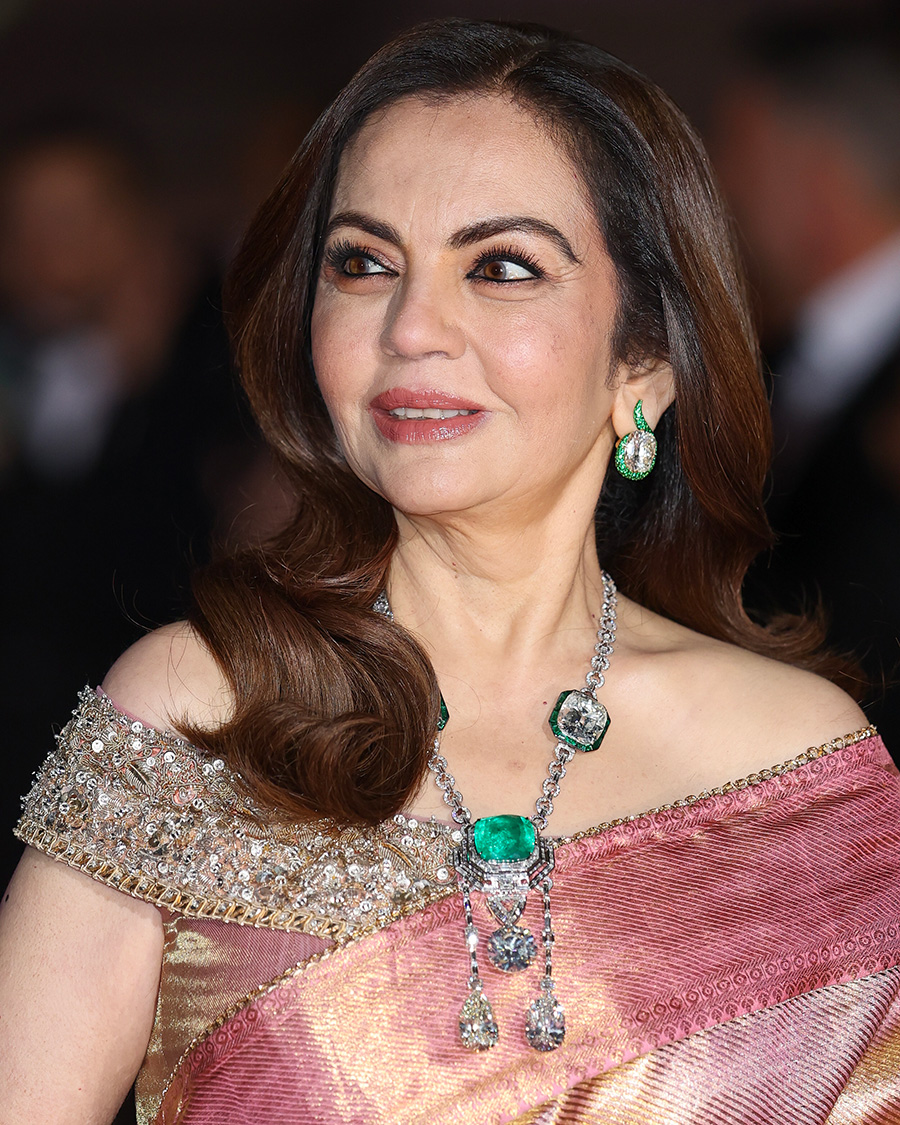
Nita Ambani attends the inaugural British Museum Ball at The British Museum on October 18, 2025. (Photo by Mike Marsland/WireImage)
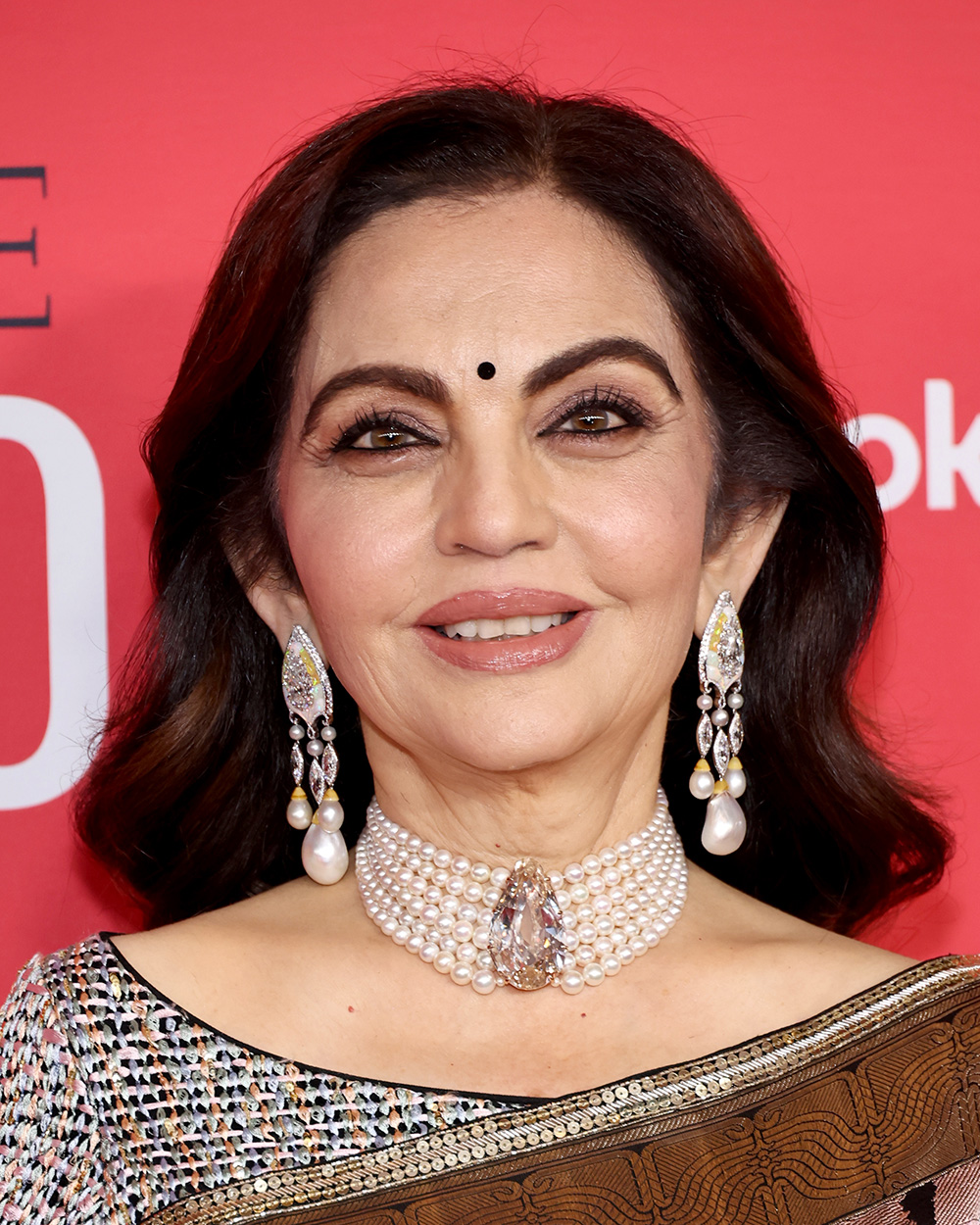
On the red carpet at the 2026 TIME100 Gala, Nita Ambani wore a six-strand Basra pearl choker centered around a 101-carat diamond so extraordinary that it became one of the year’s most memorable jewelry moments. Paired with diamond and Baroque pearl chandelier earrings, the look felt less like a red carpet appearance and more like a masterclass in jewelry collecting.
That distinction is important because Nita Ambani is not simply someone who wears exceptional jewels. She is one of the world’s greatest jewelry collectors. As the matriarch of one of India’s most influential business families, Ambani has become known for building a collection that celebrates natural diamonds, historic gemstones, and the extraordinary craftsmanship of her country.

Chris Bajda is an e-commerce entrepreneur and managing partner of GroomsDay. He has spent more than 15 years building and operating wedding-focused e-commerce businesses, with a particular focus on fine jewelry, bridal jewelry, and consumer purchasing behavior.

Zuleika Gerrish is an antique, vintage, and fine jewelry expert as well as a gemmologist and co-founder of Parkin and Gerrish with her husband, Oliver. Alongside running Parkin & Gerrish, she lectures on historic jewelry, sharing her expertise with new audiences.
A former teacher and longtime philanthropist, Ambani continues to lead the Dhirubhai Ambani International School while championing education, sports, and the arts through the Reliance Foundation. Like many Indian collectors, she views jewelry not only as adornment, but also as investment, heritage, and cultural expression. Known for layering diamonds, emeralds, pearls, and historic Indian jewels with a distinctly maximalist sensibility, she has created a signature aesthetic that feels both deeply traditional and unmistakably modern.
Ahead, discover Nita Ambani’s extraordinary jewelry collection—and learn more about her priceless heirlooms that have captivated the world.
Who is Nita Ambani?
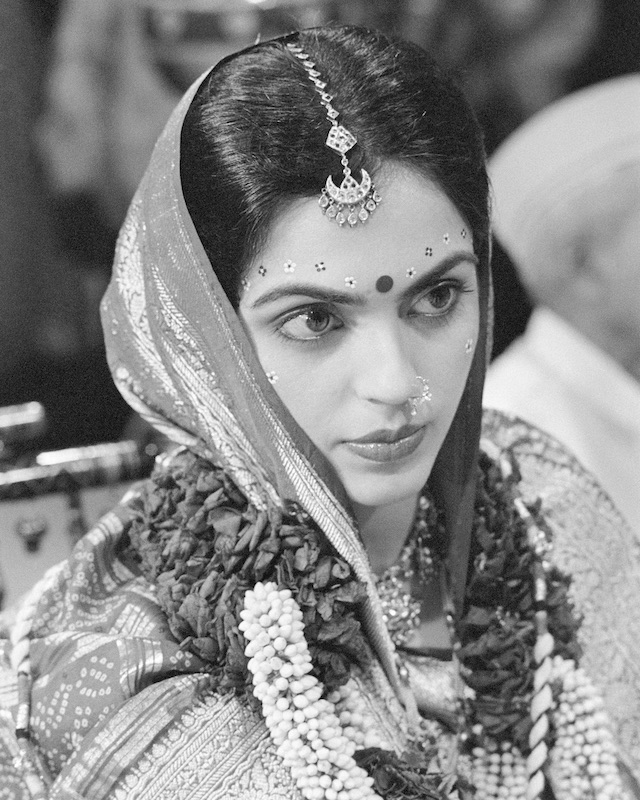
Nita Ambani was a teacher earning 800 rupees a month when she first caught the attention of her future father-in-law, the late Dhirubhai Ambani, at a dance performance in the mid-1980s. When her relationship with Mukesh Ambani became serious, she made one thing clear to his family: she intended to continue her teaching career after marriage.
Today, education remains central to Ambani’s identity. In addition to leading the Dhirubhai Ambani International School, she is the co-owner of the Mumbai Indians, the most successful franchise in the Indian Premier League; the founder chairperson of Football Sports Development Limited; the head of the Education and Sports for All initiative for children; and the chairperson of the Reliance Foundation, which supports health, education, sports, arts and culture, rural transformation, and other philanthropic initiatives across India.
She and Mukesh Ambani have three children: Akash, Isha, and Anant. In 2024, the wedding celebrations for their youngest son, Anant, became a global spectacle and were widely reported to be among the most expensive in history, with estimates reaching as much as $600 million and performances by stars including Rihanna.
The Signature Elements of Nita Ambani’s Jewelry Style
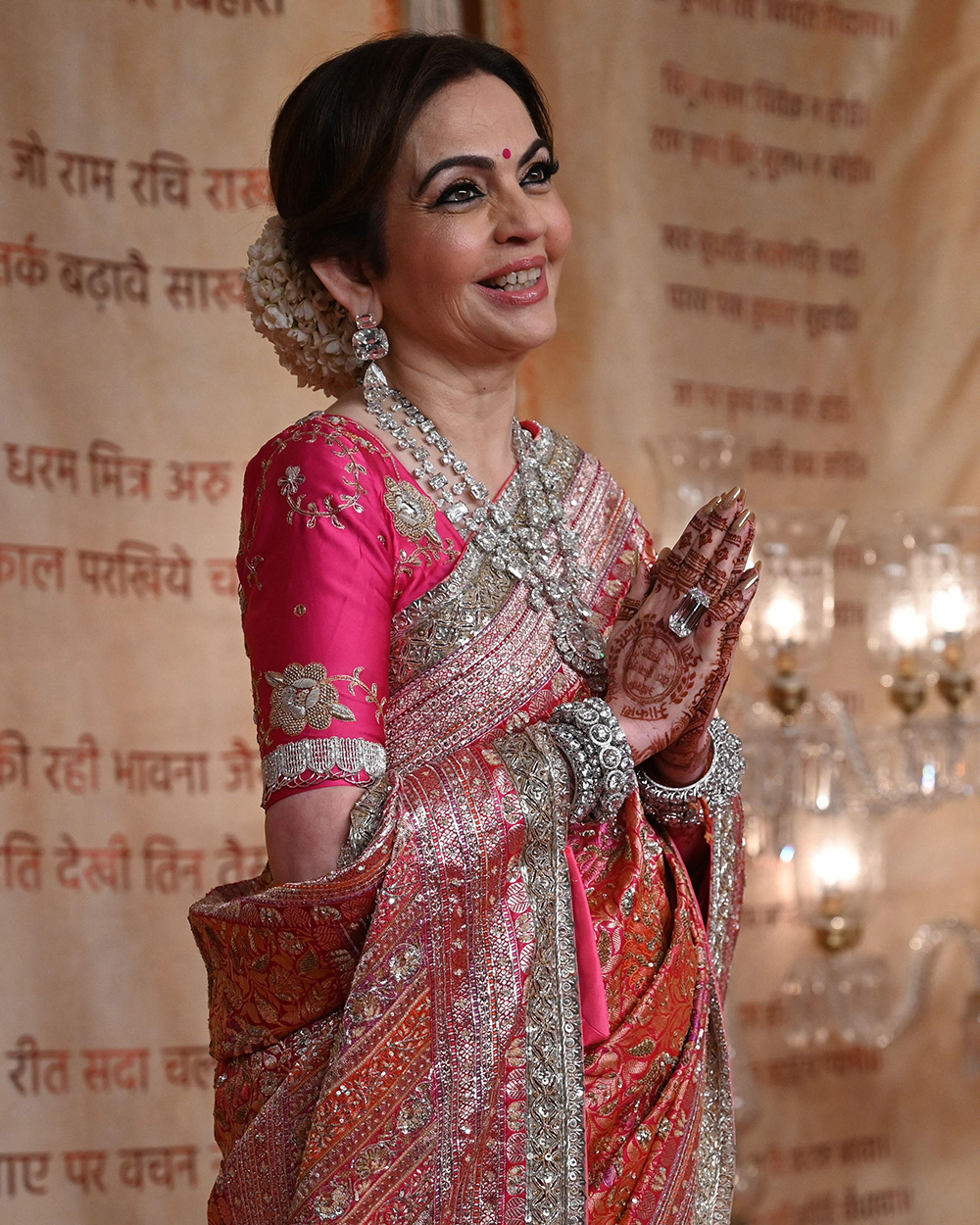
Nita Ambani’s jewelry style can be distilled into a few defining hallmarks. She is known for wearing large natural diamonds (one of many reasons we love her), bold emerald-and-diamond chokers, multi-strand pearl necklaces, and layered combinations of pearls and diamonds. She also frequently incorporates polki and kundan work—two traditional forms of Indian jewelry, with the latter using highly refined gold foil to set gemstones or glass, while polki jewelry features uncut natural diamonds. Her jewelry repertoire extends beyond necklaces to include chandelier earrings, bracelets, and maang tikkas, a traditional Indian head ornament worn along the center parting of the hair with a pendant that rests on the forehead.
According to Chris Bajda, entrepreneur and managing partner of GroomsDay, Ambani’s approach to jewelry reflects a distinctly Indian tradition of adornment. While Western collectors often focus on a single “hero” piece, Indian jewelry styling embraces layering and the idea of adorning the entire body. “Nita Ambani has multiple pieces of jewelry that complement one another, and none compete with each other,” he says. “Their individuality allows them to stand as unique pieces of adornment.”
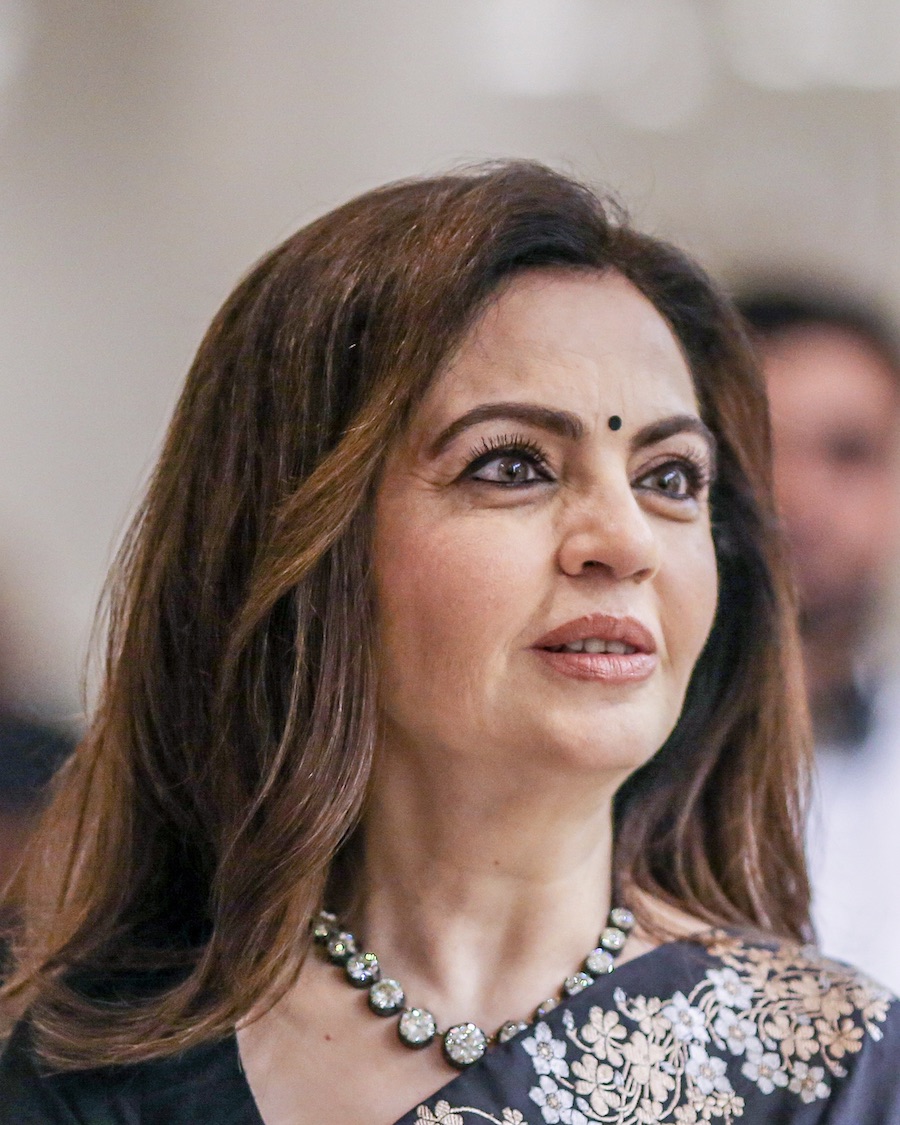
Drawing on his experience working with brides, Bajda notes that Indian and Western approaches to jewelry styling are often fundamentally different. “In Indian culture, the tradition is to decorate the entire body, not just highlight one part,” he says. “An Indian bride will build her look through a series of layering pieces, while a Western bride is focused on removing pieces until there is only one piece remaining.”
Ambani is also known for her highly intentional approach to layering. According to Bajda, each piece serves a distinct purpose within the overall composition.
“There is always one anchor piece to which the eye will return time and again, while everything else supports this anchor without drawing away from it,” he says. “While one might think that a lot is going on within these looks, in reality, there is a strong sense of completeness within them.”
Jewelry historian Zuleika Gerrish argues that what distinguishes Ambani from many other collectors is that she uses jewelry to tell a larger cultural story. “What fascinates me about Nita Ambani is that she styles diamonds as part of a larger cultural story rather than simply wearing luxury objects,” she says.
While many Western collectors prioritize provenance, maker, or rarity, Gerrish believes Ambani’s jewelry choices are often rooted in history, craftsmanship, and identity. She also points to India’s unique place in diamond history, noting that before discoveries in Brazil and South Africa, India was the world’s only known source of diamonds.
“Ambani’s jewelry feels connected to that tradition,” Gerrish says. “Even with access to the world’s greatest maisons, she repeatedly chooses to celebrate Indian craftsmanship, Indian gemstones, and Indian design traditions.”
Nita Ambani’s collection spans historic Golconda diamonds, extraordinary emeralds, and some of the most talked-about high jewelry creations of the modern era. Thanks to her family’s globally watched weddings, cultural events, and red carpet appearances, the world has had a rare glimpse inside one of today’s most remarkable jewelry collections.
Crore Emerald and Diamond Necklace
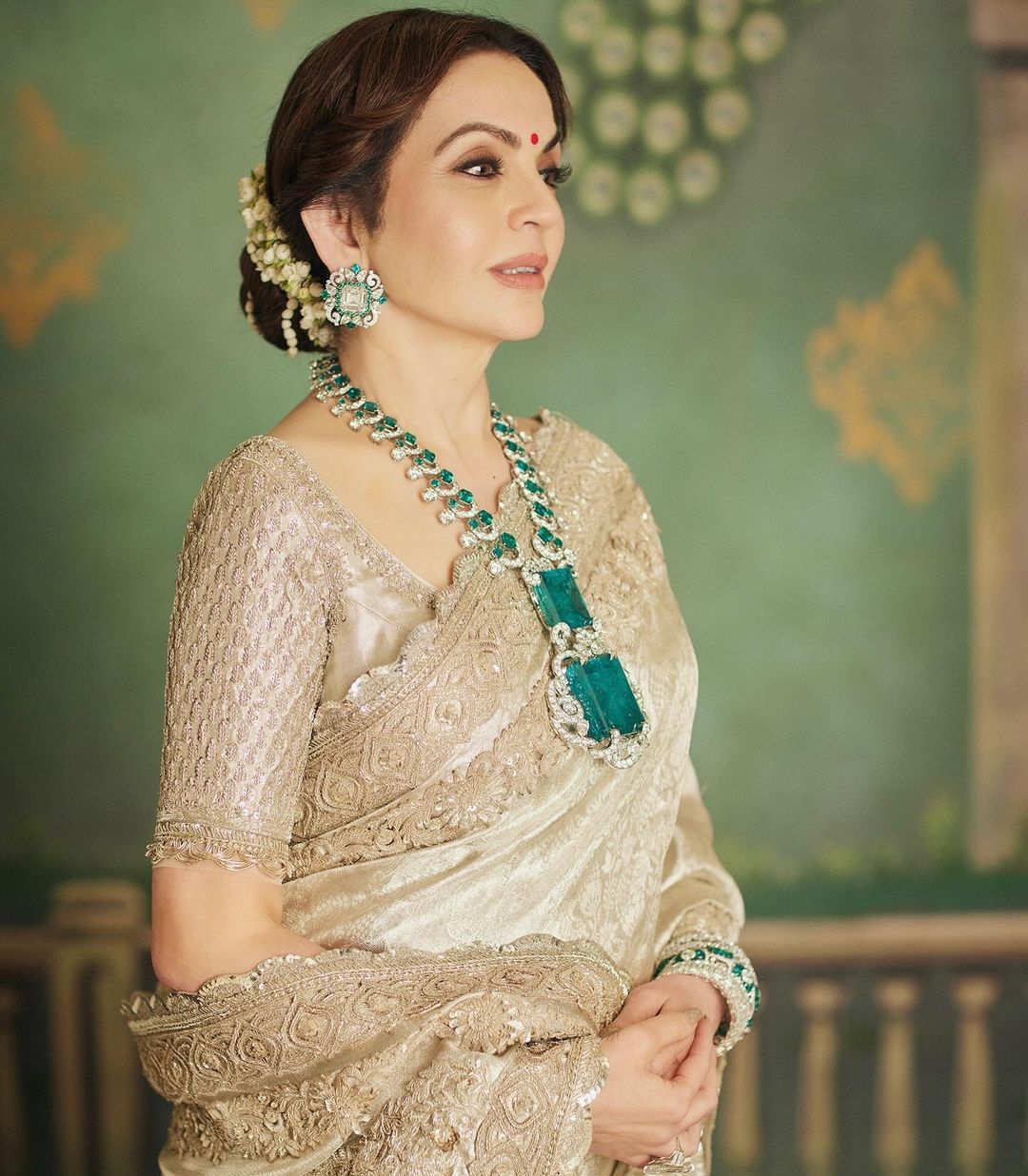
This Mughal-inspired emerald necklace, reportedly worth as much as $60 million, is set with two Colombian emeralds weighing 560 and 303 carats, totaling 863 carats, suspended within a lattice of diamonds. Nita Ambani wore the necklace to one of the many pre-wedding celebrations for her son Anant Ambani’s wedding to Radhika Merchant in Jamnagar in 2024. The necklace reportedly took more than three years to create, and she paired it with coordinating earrings, rings, and pendants.
Emerald-and-Diamond Sautoir
In 2025, Nita Ambani made a memorable appearance at the Pink Ball at the British Museum wearing an emerald-and-diamond sautoir created by Kantilal Chhotalal using stones from her own collection. Jewelry historian Zuleika Gerrish notes that the necklace paid homage to the celebrated Chaumet necklace created for the Maharani of Indore in the 1930s.
“The 1930s reference is significant,” Gerrish says. “This was the golden age of international high jewelry, when Indian rulers and European maisons were engaged in a remarkable creative exchange.”
Gerrish points out that the Maharani of Indore belonged to a generation of women, alongside figures such as Daisy Fellowes and Barbara Hutton, who helped shape international taste through the jewels they commissioned and wore. By revisiting that iconic design nearly a century later, Ambani was doing more than wearing a beautiful jewel. “She was continuing a conversation between India’s princely past and its present,” Gerrish says.
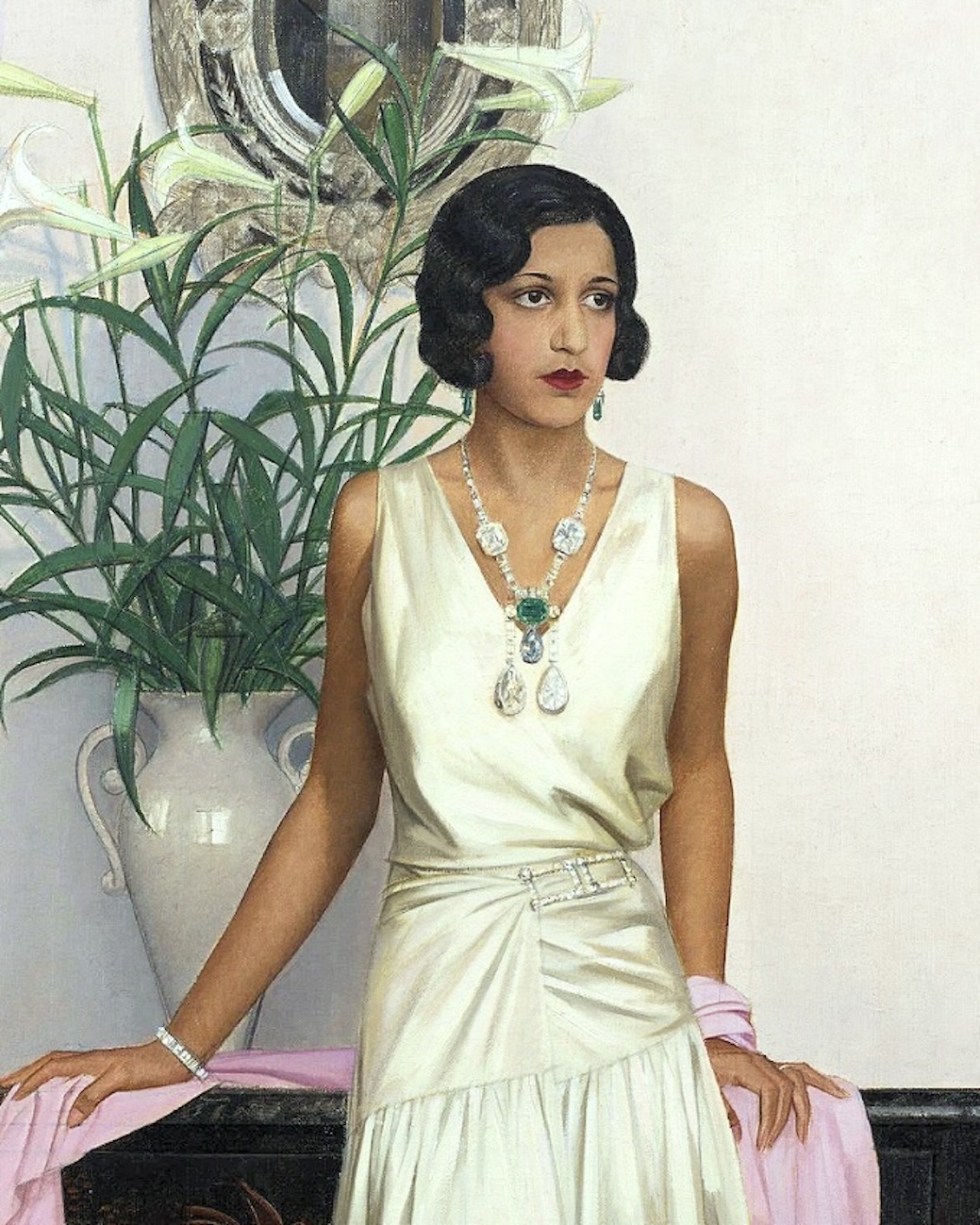
According to Gerrish, Ambani’s approach to collecting also feels distinctly Indian. Before discoveries in Brazil and South Africa, India was the world’s only known source of diamonds, and rulers prized exceptional stones not only for their beauty but also for their rarity, symbolism, and presence. “Ambani’s jewelry feels connected to that tradition,” Gerrish says. “Even with access to the world’s greatest maisons, she repeatedly chooses to celebrate Indian craftsmanship, Indian gemstones, and Indian design traditions.”
Emperor Shah Jahan’s Diamond and Ruby Bajuband
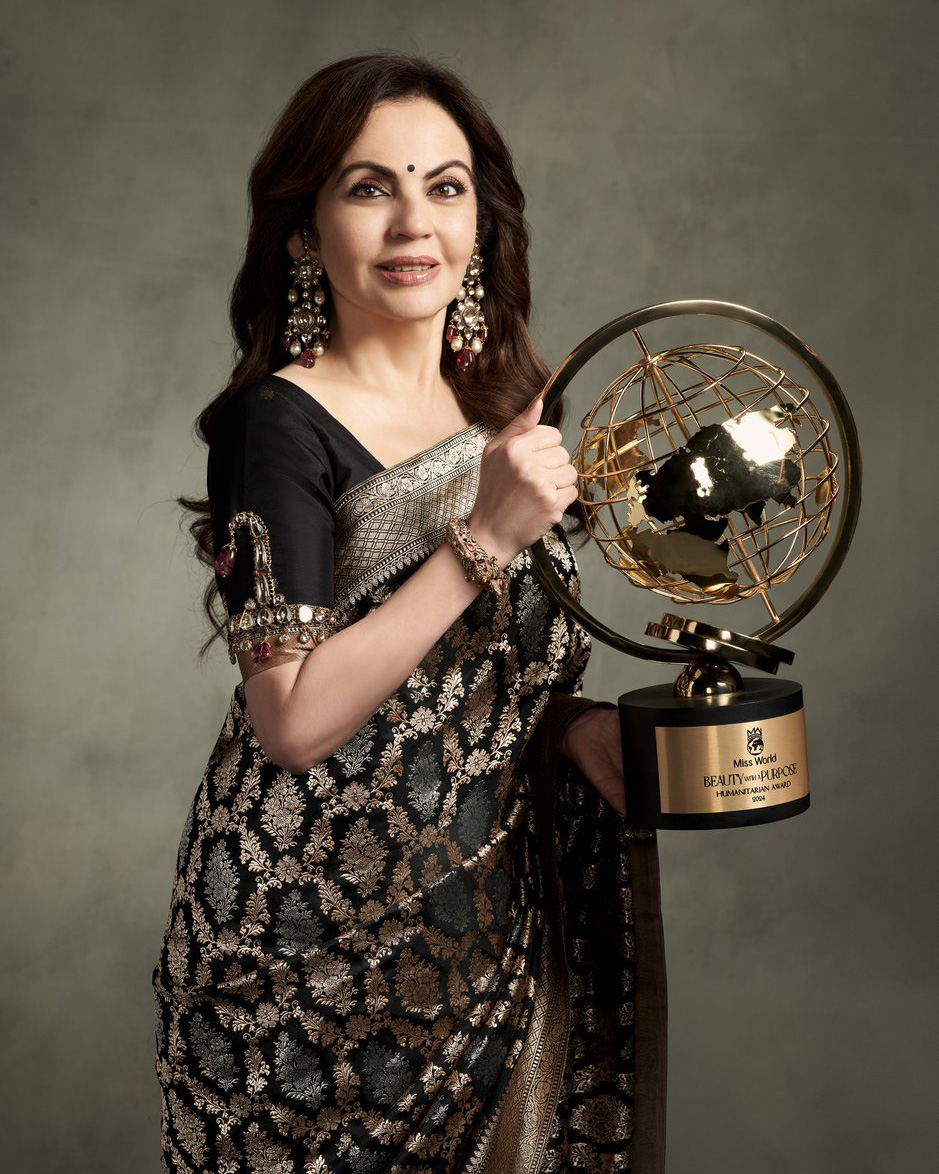
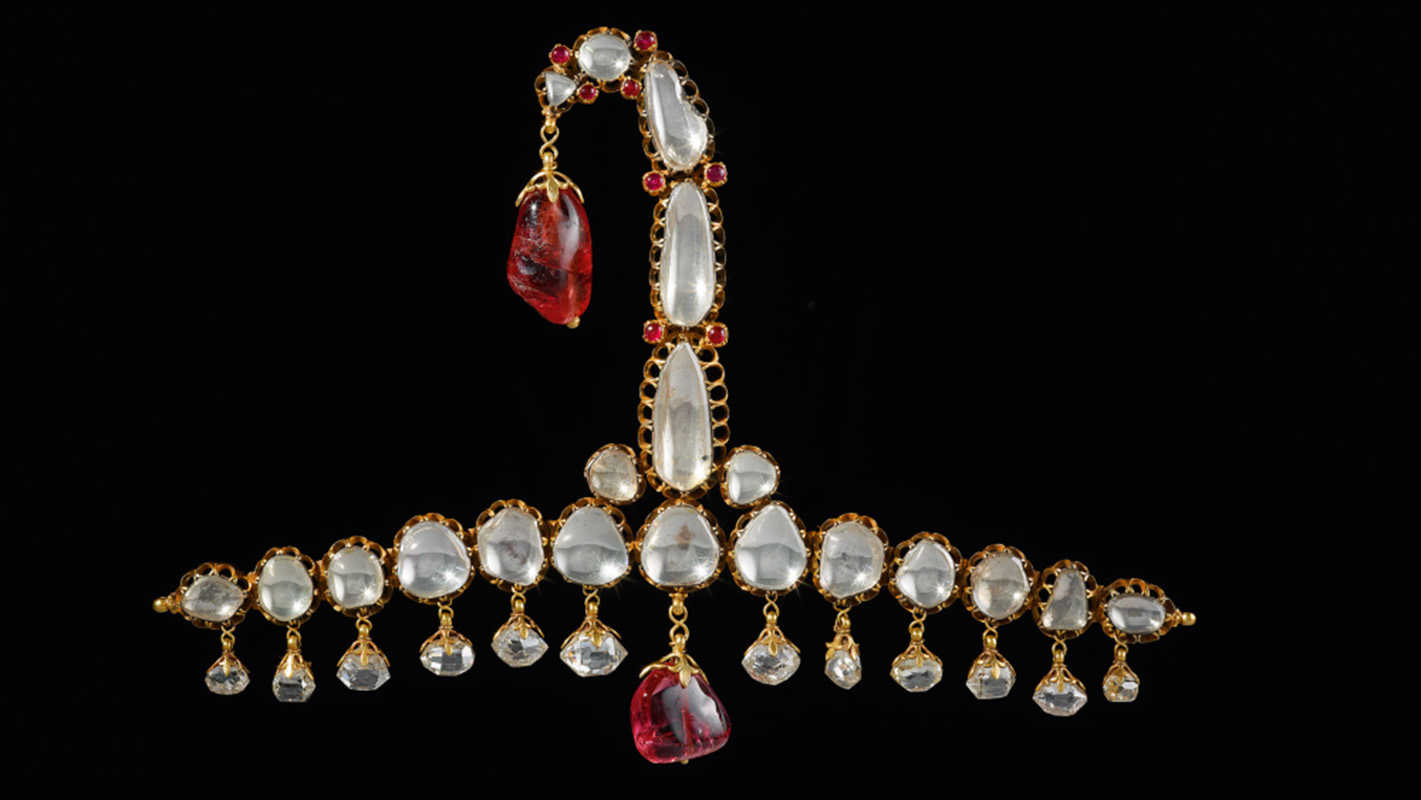
When Nita Ambani accepted the Beauty With a Purpose Humanitarian Award at the 71st Miss World Finals in Mumbai in 2024, Ambani wore a Pachchikam-style armband created from a Mughal-era ornament associated with Emperor Shah Jahan, featuring rubies, diamonds, and spinels.The piece is set with two uncut rubies and more than 30 diamonds. She paired it with a sari from Swadesh featuring gold zari, Indian silk, and meenakari detailing.
According to Bajda, Ambani’s styling succeeds because she understands the relationship between clothing and jewelry. “The clothing primarily sets the tone for an outfit, which many people don’t realize,” Bajda says. “If the garment is to support jewelry values, it must allow for maximum engagement with the jewelry.”He argues that restraint is often the missing ingredient in jewelry styling and that Ambani’s looks work because every element serves a purpose.
“Nita is very aware of this,” Bajda says. “Once you start wearing the correct amount of restraint, you know what it’s like to wear the right jewelry and have it look like it belongs with the rest of your outfit.”
101-Carat Nizami Diamond Choker with Basra Pearls
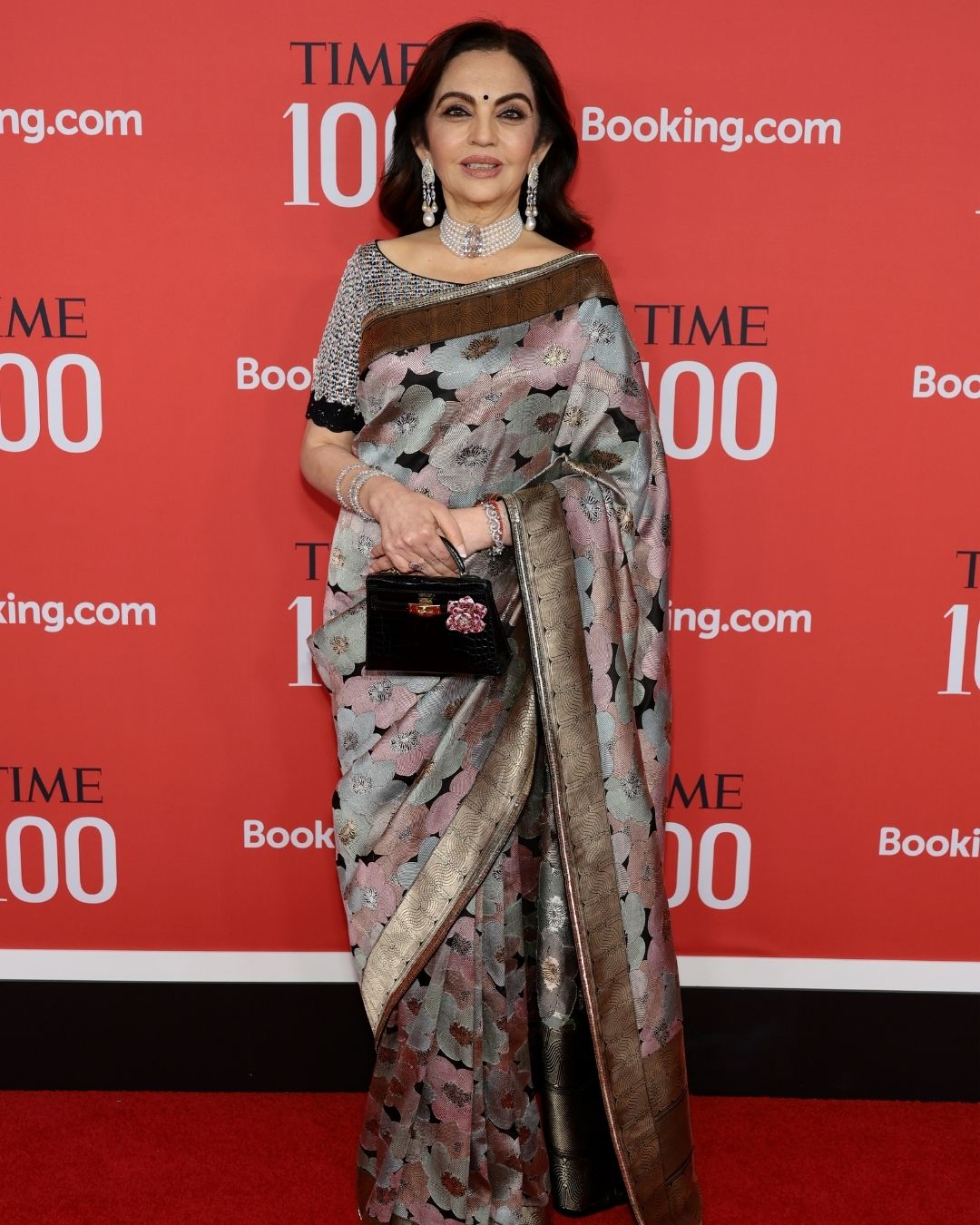
For the TIME100 Gala in 2026, Ambani captivated the red carpet in a six-strand Basra pearl choker centered around a 101-carat pinkish-brown old mine rose-cut pear-shaped diamond. She paired the necklace with diamond and Baroque pearl chandelier earrings.
To Gerrish, the jewel evoked the legendary collecting traditions of Hyderabad’s Nizams, one of the richest and most sophisticated courts in history.
“Historically, the greatest royal collectors rarely bought finished jewels,” Gerrish says. “They assembled important gemstones over decades and later commissioned masterpieces around them.”She argues that Ambani follows a similar tradition, making her feel less like a luxury consumer and more like a modern patron actively contributing to the next chapter of India’s jewelry history.
It is this approach to collecting that has earned Ambani the title of “Modern Maharani.” “While Nita Ambani is not royal, nor descended from one of India’s historic princely families, she fulfils a role once occupied by great royal women: patron, collector, tastemaker, and champion of craftsmanship,” Gerrish says.
“India’s Maharanis were not simply wearers of jewels; they shaped India’s taste, supported Indian artisans, and commissioned extraordinary works of art. Ambani appears to be continuing that tradition for the twenty-first century.”
100-Carat Yellow Diamond Necklace
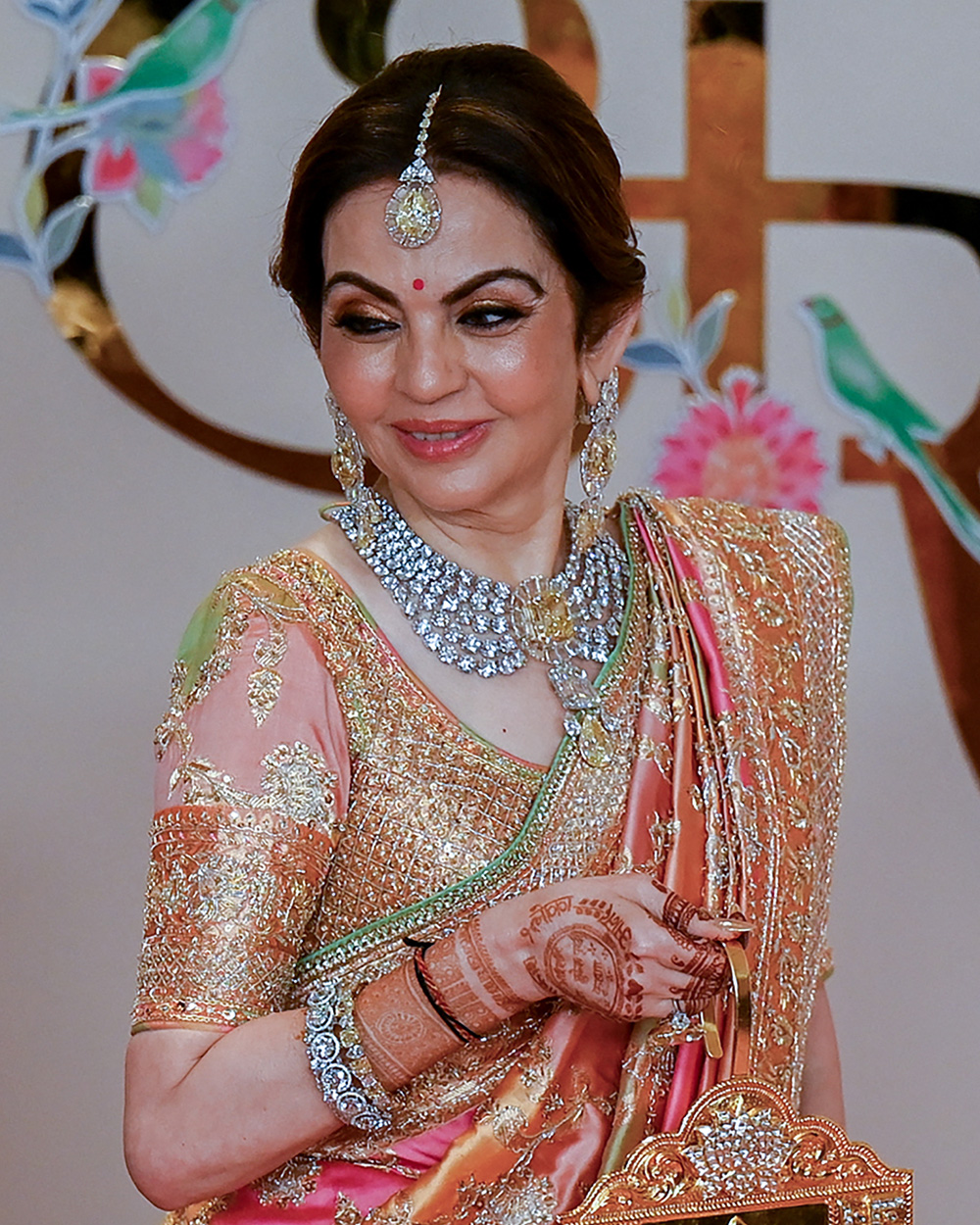
This was a showstopper, if ever there was one. For her son Anant’s baraat—a wedding procession for the groom and his family—Nita Ambani wore a bespoke necklace by Kantilal Chhotalal comprised of five rows of solitaire diamonds surrounding a 100-carat yellow diamond, paired with an 80-carat emerald-cut solitaire drop. The necklace reportedly took more than 1,000 hours to create, and it was clearly worth every minute.
Gerrish says Ambani’s strong preference for emeralds feels particularly significant. “For centuries, emeralds occupied a special place in Indian jewelry, especially during the Mughal period. They were prized not only for their rarity and extraordinary color, but also for their associations with prosperity, wisdom, and power. Some were carved with inscriptions and passed through royal collections for generations. In many ways, emeralds are among the gemstones most closely associated with India’s great jewelry traditions, and Ambani’s affection for them feels very much in keeping with that history.”
“Zillion-Dollar” Diamond Necklace
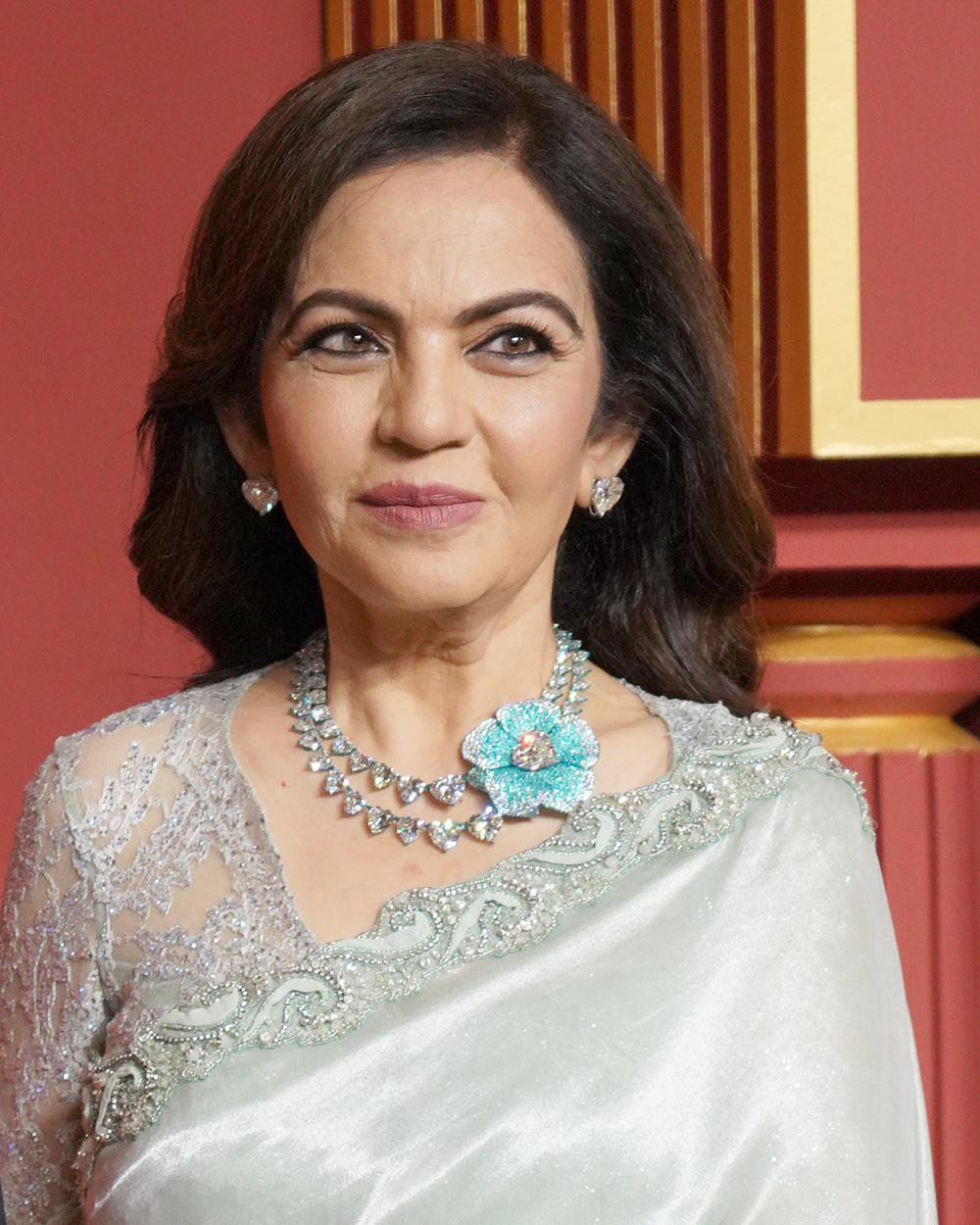
For the premiere of Aryan Khan’s Ba**ds of Bollywood in Mumbai, Ambani wore an extraordinary necklace composed of Paraíba tourmalines and heart-shaped diamonds set in turquoise titanium. The necklace originally belonged to her daughter, Isha Ambani, but Nita added even more sparkle by incorporating a 10-carat heart-shaped diamond by Glen Spiro. Following the addition, celebrity jewelry commentator Julia Chafé dubbed it the “zillion-dollar” necklace.
Mirror of Paradise Ring with a 52.58-Carat Golconda Diamond
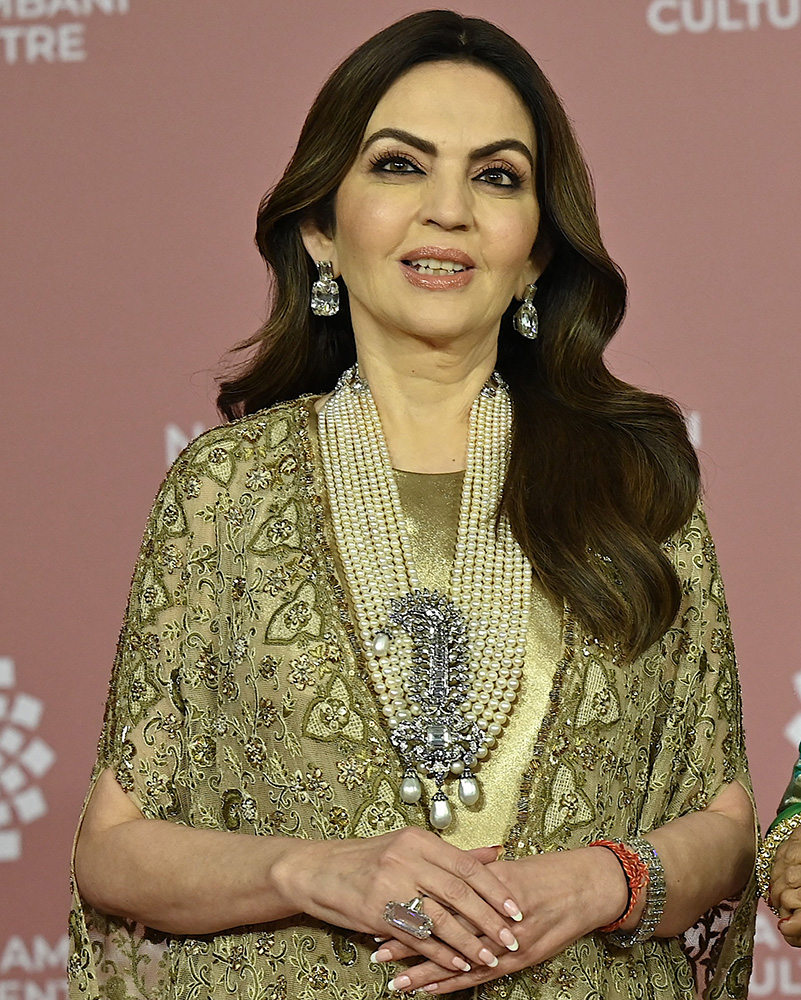
Ambani wore the much-discussed Mirror of Paradise ring to the inauguration of the Nita Mukesh Ambani Cultural Centre (NMACC) in March 2023. Centered on a 52.58-carat Golconda diamond, the ring traces its history back to the 19th century and features a stone believed to have originated from the legendary mines of India, which produced some of the most famous stones in history. When the diamond was auctioned at Christie’s in 2019, it sold for approximately $6.5 million.
Gerrish points to the ring as another example of Ambani’s deep engagement with the history, craftsmanship, and cultural significance of jewelry. Her collection, Gerrish argues, suggests a collector who values narrative as much as rarity. “That is why I believe her jewelry communicates far more than status,” Gerrish says. “It expresses personal taste, certainly, but it also feels like a proud expression of culture. Even if the scale may be impressive, the message it carries can be even more powerful.”
Why Nita Ambani’s Jewels Matter Beyond Their Value
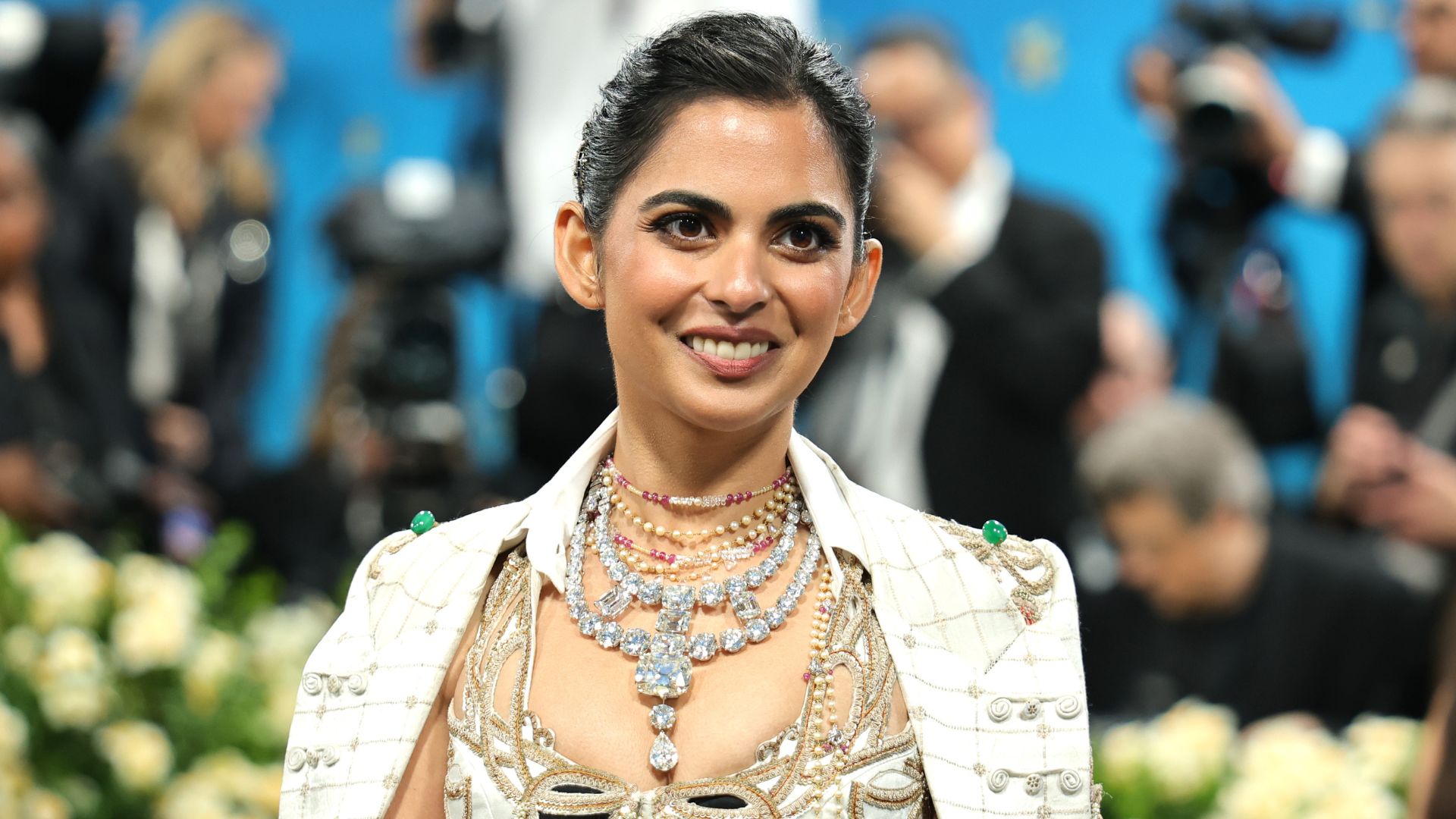
Nita Ambani’s jewelry resonates for reasons that go far beyond scale or value. Through her embrace of historic gemstones, traditional Indian craftsmanship, and unapologetic maximalism, she has become both a steward of India’s jewelry heritage and one of the world’s most influential contemporary collectors. That pride in Indian craftsmanship has become one of Ambani’s greatest contributions to contemporary jewelry culture. Through globally watched family celebrations, red carpet appearances, and cultural events, she has positioned techniques such as kundan, polki, and meenakari not as historical artifacts, but as living traditions.
Her influence also extends to a new generation of collectors. Bajda says younger consumers increasingly reference Ambani’s layered approach to styling when building their own jewelry collections.”Before, this level of layering was only available to royal families or people from history,” Bajda says. “Now, this form of layering seems to be both attainable and aspirational.”
Ultimately, what makes Nita Ambani’s collection so compelling is not simply the extraordinary treasures themselves. It is the way she uses them to tell a larger story about heritage. According to Gerrish, it is important to view Ambani’s collection through a historical lens. While contemporary audiences may sometimes interpret jewels of this scale primarily as displays of wealth, such extraordinary collections were once regarded as cultural achievements.
“The message is not that Indian jewelry can compete with the world’s best,” Gerrish says. “It is that Indian jewelry has helped define the world’s best for many, many centuries.”
