
The global watch industry is experiencing a remarkable transformation as traditional craftsmanship and modern technology converge to meet evolving consumer expectations. Once viewed primarily as tools for telling time, watches have become powerful symbols of personal style, status, wellness, and technological sophistication. From luxury mechanical masterpieces crafted by centuries-old Swiss brands to smartwatches capable of monitoring health metrics and managing daily activities, the watch market continues to expand across multiple consumer segments.
In today’s highly connected world, watches serve far more than a functional purpose. Luxury timepieces represent heritage, exclusivity, and craftsmanship, while smartwatches have emerged as indispensable digital companions that help users track fitness goals, monitor health conditions, and stay connected throughout the day. This unique combination of tradition and innovation has enabled the watch industry to remain relevant despite rapid technological change.
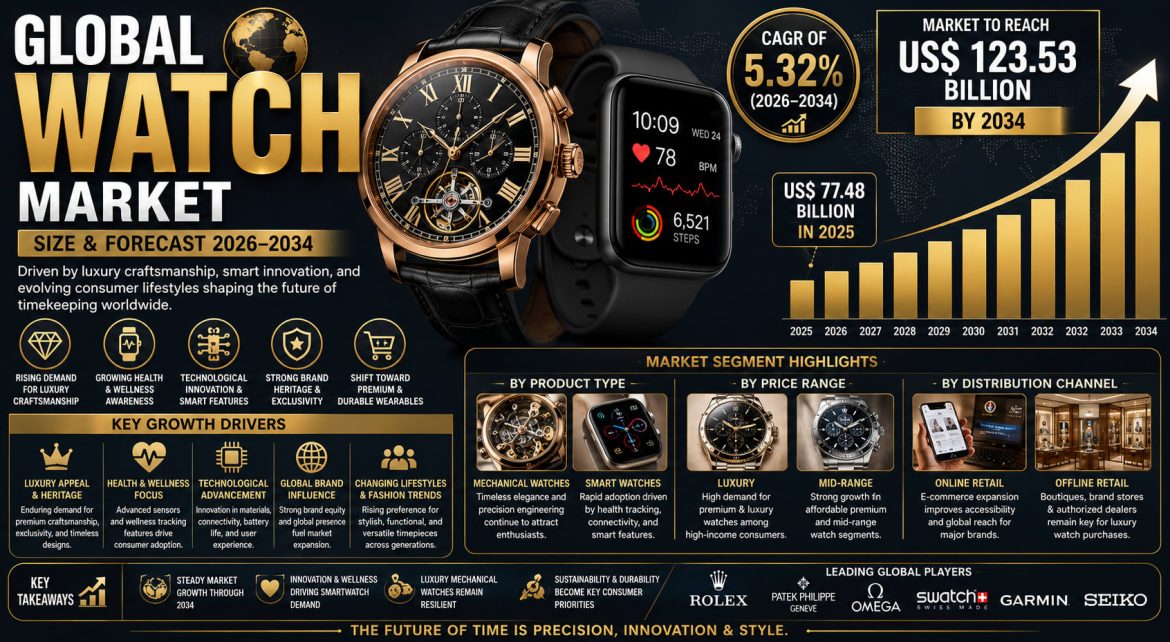
According to Renub Research, the Global Watch Market is expected to grow from US$ 77.48 billion in 2025 to US$ 123.53 billion by 2034, expanding at a CAGR of 5.32% from 2026 to 2034. Rising demand for luxury craftsmanship, expanding health-focused smartwatch capabilities, technological innovation, growing disposable incomes, and increasing interest in premium mechanical timepieces continue to drive market growth worldwide.
As consumer preferences diversify and technology advances, the global watch industry is entering a new era defined by personalization, innovation, and enduring appeal.
Watches Continue to Blend Function, Fashion, and Personal Expression
For centuries, watches have played an important role in daily life.
While their primary purpose remains timekeeping, modern watches have evolved into highly personal accessories that reflect individual tastes, lifestyles, and aspirations.
Today’s consumers can choose from a wide variety of watch categories, including traditional mechanical watches, quartz watches, electronic watches, luxury timepieces, sports watches, and technologically advanced smartwatches.
Mechanical watches continue attracting enthusiasts because of their intricate engineering, craftsmanship, and collectible value. Quartz watches remain popular for their affordability and accuracy. Smartwatches, meanwhile, have expanded the definition of wristwear by incorporating health monitoring, connectivity, navigation, and productivity tools.
This diversity enables manufacturers to serve a broad range of consumers across multiple income levels and lifestyle preferences.
Luxury Mechanical Watches Continue to Captivate Collectors
One of the strongest growth drivers within the watch market remains the enduring appeal of luxury mechanical watches.
Collectors and enthusiasts often view mechanical timepieces as works of art that combine engineering excellence with centuries of horological tradition.
Luxury brands continue investing heavily in research and development to create increasingly sophisticated movements that demonstrate technical mastery and exclusivity.
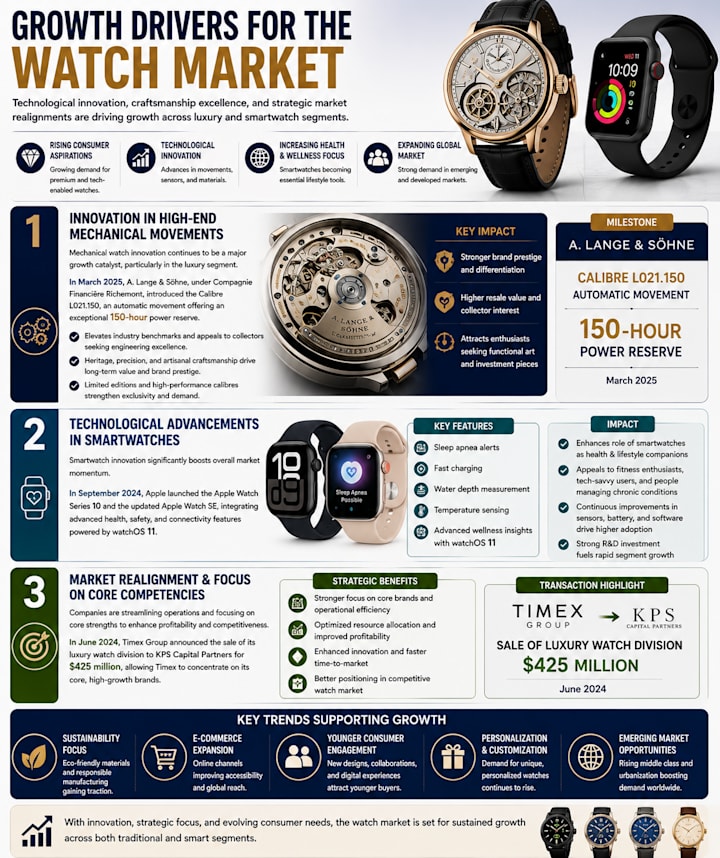
A notable example occurred in March 2025 when A. Lange & Söhne, part of Compagnie Financière Richemont, introduced the Calibre L021.150 automatic movement featuring an impressive 150-hour power reserve. This achievement reinforced the industry’s commitment to pushing the boundaries of mechanical innovation.
Such innovations strengthen brand prestige while attracting consumers who appreciate craftsmanship, heritage, and long-term value.
For many buyers, luxury watches are not simply accessories—they are investments, heirlooms, and symbols of personal achievement.
Smartwatch Innovation Is Expanding the Market
While luxury watches maintain strong appeal, smartwatches have become one of the most dynamic segments within the global watch industry.
Consumers increasingly rely on wearable technology to support health, fitness, communication, and productivity.
Modern smartwatches can track heart rate, sleep quality, physical activity, blood oxygen levels, stress indicators, and various wellness metrics. Many devices also provide smartphone notifications, navigation assistance, digital payments, and voice-controlled features.
In September 2024, Apple introduced the Apple Watch Series 10 and an updated Apple Watch SE. The devices incorporated advanced capabilities including sleep apnea notifications, temperature sensing, water-depth measurement, fast charging, and expanded wellness features powered by watchOS 11.
As consumers become increasingly health-conscious, smartwatch adoption continues expanding across both developed and emerging markets.
Health Monitoring Is Becoming a Major Purchase Driver
Healthcare and wellness have become central themes in smartwatch development.
Consumers increasingly seek devices capable of providing real-time health insights and helping them manage fitness goals.
Advanced sensors now enable watches to monitor multiple physiological indicators, offering users valuable information about their daily health habits and long-term wellness.
The growing prevalence of chronic diseases, aging populations, and increased awareness regarding preventive healthcare have strengthened demand for wearable monitoring solutions.
Smartwatches are increasingly viewed as practical health-management tools rather than simply technology accessories.
As sensor technology continues improving, future devices are expected to provide even more sophisticated health-tracking capabilities.
Artificial Intelligence Is Enhancing Wearable Experiences
Artificial intelligence is rapidly transforming the smartwatch segment.
AI-powered features allow devices to analyze user behavior, provide personalized recommendations, optimize workouts, and deliver more meaningful health insights.
In July 2025, Samsung launched the Galaxy Watch 8 with enhanced Galaxy AI capabilities, improved durability, and upgraded performance. The device demonstrated how artificial intelligence is becoming increasingly integrated into wearable technology ecosystems.
Similarly, CMF introduced its Watch 3 Pro in July 2025, incorporating AI-driven workout analytics and integrated ChatGPT functionality. Such features highlight the growing role of artificial intelligence in creating more interactive and personalized user experiences.
AI is expected to become one of the most influential technologies shaping the future of wearable devices.
Strategic Industry Realignment Is Reshaping Competition
The watch industry continues evolving as manufacturers refine business strategies and focus on core strengths.
In January 2025, Fossil Group announced its decision to exit the smartwatch category and refocus on traditional watches, jewelry, and leather goods. The move reflected broader industry trends toward specialization and brand differentiation.
Such strategic realignments allow companies to concentrate resources on areas where they possess competitive advantages.
Luxury brands continue emphasizing craftsmanship and exclusivity, while technology companies focus on digital innovation and connected ecosystems.
This segmentation helps strengthen market diversity while encouraging innovation across distinct consumer categories.
Sustainability Is Becoming Increasingly Important
Environmental responsibility is playing an increasingly significant role within the watch industry.
Consumers are paying closer attention to product materials, manufacturing processes, and sustainability commitments when making purchasing decisions.
In May 2025, The Swatch Group introduced a new mass-market collection produced using its environmentally focused “Bioreloaded” materials. The initiative demonstrated the company’s commitment to supporting circular manufacturing practices and reducing environmental impact.
Sustainability efforts not only support environmental goals but also help strengthen brand reputation among younger consumers who prioritize responsible consumption.
As sustainability becomes a core purchasing consideration, manufacturers are expected to increase investments in eco-friendly materials and production methods.
E-Commerce Is Expanding Consumer Access
Digital commerce has become a powerful growth driver for the global watch market.
Online platforms allow consumers to browse extensive product selections, compare prices, access reviews, and purchase watches from anywhere in the world.
Luxury brands, fashion labels, and technology companies increasingly utilize e-commerce channels to reach broader audiences while maintaining strong brand engagement.
Subscription services, virtual consultations, and certified pre-owned programs are further enhancing the online shopping experience.
In July 2025, Compagnie Financière Richemont expanded its certified pre-owned watch program across all of its watch brands, reinforcing consumer confidence in authenticated secondary-market purchases.
The growing integration of digital retail strategies is expected to remain an important contributor to industry growth.
The United States Remains a Global Market Leader
The United States continues to represent one of the world’s largest and most diverse watch markets.
Strong consumer interest in health-focused smartwatches, luxury timepieces, and fashion-oriented products supports broad market demand.
Apple remains a dominant force within the smartwatch segment, while luxury watch collectors contribute significantly to premium market growth.
The country’s extensive retail infrastructure, vibrant resale ecosystem, and high consumer purchasing power continue strengthening its leadership position.
Germany Values Precision and Engineering Excellence
Germany’s watch market reflects the country’s appreciation for engineering quality, reliability, and functional design.
Consumers place high value on precision craftsmanship, product longevity, and understated aesthetics.
Mechanical watches maintain strong cultural relevance, while smartwatches continue gaining popularity among health-conscious consumers.
Germany’s strong economy and preference for premium products support stable demand across multiple market segments.
China Continues Driving Global Growth
China remains one of the fastest-growing watch markets worldwide.
Rising incomes, urbanization, and increasing interest in luxury goods continue supporting strong demand for both traditional and smart watches.
Luxury Swiss brands benefit from growing collector communities and status-driven purchasing behavior, while younger consumers increasingly embrace wearable technology.
E-commerce platforms and social commerce channels play a particularly important role in shaping purchasing decisions throughout the country.
Saudi Arabia Expands Luxury and Smartwatch Demand
Saudi Arabia’s watch market is growing steadily due to rising disposable incomes, strong demand for luxury goods, and increasing interest in wearable technology.
High-end Swiss watches remain popular for gifting, personal expression, and status purposes, while younger consumers increasingly adopt smartwatches for health monitoring and connectivity.
Vision 2030 modernization initiatives continue supporting retail expansion and consumer spending growth across the country.
Challenges Facing the Industry
Despite positive growth prospects, the watch market faces several challenges.
One major concern involves the ongoing competition between traditional watches and smartwatches.
Technology-driven wearables increasingly attract younger consumers who prioritize functionality and connectivity. Traditional watch manufacturers must therefore continue innovating to maintain relevance while preserving their heritage and identity.
Economic uncertainty also presents challenges.
Luxury watches depend heavily on discretionary spending, making demand sensitive to economic downturns, inflation, and geopolitical instability. Rising production costs and currency fluctuations further complicate pricing strategies for manufacturers.
Addressing these challenges will require continued innovation, strategic positioning, and strong consumer engagement.
Final Thoughts
The global watch industry continues evolving as luxury craftsmanship and cutting-edge technology converge to meet changing consumer expectations.
According to Renub Research, the Watch Market is expected to grow from US$ 77.48 billion in 2025 to US$ 123.53 billion by 2034, driven by rising demand for premium mechanical watches, expanding smartwatch capabilities, technological innovation, and growing consumer interest in personalized accessories.
From intricate mechanical masterpieces to AI-powered health companions, watches have become far more than simple timekeeping devices. They now represent lifestyle, identity, wellness, and technological progress.
As innovation continues accelerating and consumer preferences evolve, the watch industry is well positioned to remain one of the most dynamic and influential sectors within both luxury goods and wearable technology.
