
Car enthusiasts already know that the auto manufacturing industry does not operate within isolated national borders. When you remember that a single stamped steel body panel might cross the Detroit River multiple times before it gets fitted onto a finished vehicle, it becomes especially clear that North America functions as a highly synchronized auto manufacturing engine.
On Saturday, that engine ground to a sudden halt due to last-minute trade negotiations that fell apart. This, in turn, resulted in a punishing 50% tariff on $20 billion of Canadian exports, while also destroying a carefully constructed automotive compromise that manufacturers across North America were counting on to survive.
Prior to the collapse, execs were closely watching the folks in Washington with cautious optimism. The draft agreement under negotiation would have delivered critical relief to the industry, slashing import duties on Canadian-assembled vehicles from 25% to 15% in the process. In return, Canadian PM Mark Carney was set to eliminate counter-tariffs and import quotas on American-made vehicles.
The pact was designed to launch formal negotiations to stabilize and renew the US-Mexico-Canada Agreement, namely the foundational trade framework originally negotiated during Trump’s first presidential term. Instead of a signed treaty, midnight on August 22 brought a complete breakdown in communications.
As reported by Automotive News, US Trade Representative Jamieson Greer stated that Canadian negotiators introduced late demands and walked back key commitments regarding vehicle access and trade terms.
The 11th-hour demands upended the delicate balance reached after days of intense bargaining. Carney countered that Washington had introduced last-minute demands of its own, describing the American modifications as “unfair” and “uneconomic.” This game of egos undermined the commercial predictability of any cross-border deal, leading to a suspension of negotiations.
Carney pledged that his country would retaliate dollar for dollar against US imports, setting off an escalating trade conflict that hit the automotive sector hard. The new 50% duties were executed under a rarely invoked provision of the Tariff Act of 1930, which grants presidential authority to penalize nations deemed to engage in discriminatory trade practices.

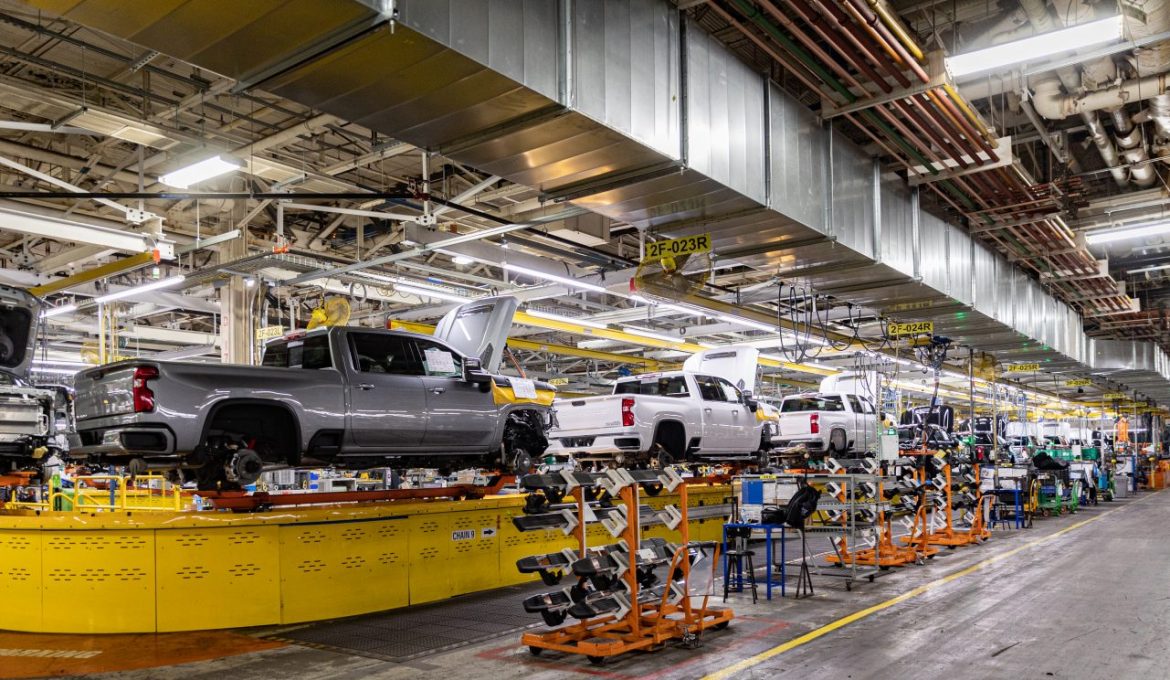
Photo: GM
Even though crude oil and critical raw minerals were excluded, the manufacturing side of the automotive supply chain was hit directly. The 50% levies land on cross-border shipments of many components, including structural plastics, electrical hardware, rubber bushings, manufacturing robots and tooling, and so forth. Economists warn that if these rates remain active, Canada could lose nearly 90,000 jobs.
The heaviest damage would be concentrated in the automotive manufacturing heartlands of Ontario, Quebec, and British Columbia. Ontario Premier Doug Ford publicly endorsed Carney’s aggressive stance, demanding retaliatory measures on American vehicles entering the Canadian market. Behind closed doors, product planners face a daunting math problem.
When double-digit duties are applied to intermediate components and finished vehicles alike, margins disappear. Whether automakers market heavy-duty pickups or a commuter hatchback, these massive tariffs force window stickers upward, pricing everyday consumers out of the showroom. With no further trade talks scheduled between Ottawa and Washington, the automotive industry finds itself trapped in an operational deadlock.
The 50% tariff heavily impacts high-volume models assembled across the Ontario-Michigan corridor, where vehicles and components frequently cross the border during production. Canadian-built models subject to the 50% tariff include the Toyota RAV4, Honda CR-V, Chevrolet Silverado, GMC Sierra, Chrysler Pacifica, Dodge Charger, Lexus NX, and the larger RX.
As for the most important US-built vehicles exported to Canada, the list includes the Ford F-150 and Explorer. Both the half-ton pickup and the mid-size sport utility vehicle are subject to Canada’s retaliatory counter-tariff.
