
.png?trim=0,0,0,0&crop=&width=640&quality=70&enable=upscale)

The rising oil price and the huge advances in technology may now have shifted the economic equation when it comes to buying a new car, experts have suggested.
A boost in the demand for electric vehicles (EVs) drove the UK’s new car market to its strongest May sales performance since before the coronavirus pandemic, new figures show.
Some 160,662 new cars were registered last month, the Society of Motor Manufacturers and Traders (SMMT) said, with registrations of pure battery electric new cars up 34.2% to take a market share of 27.3%.
The SMMT said this was driven by more choice, “substantial” discounting by manufacturers, and “economic and geopolitical uncertainty” – a reference to the latest conflict in the middle east and the subsequent spike in petrol prices.
So have we now reached a point where it makes more sense for your wallet, as well as the environment, to go electric?
“We have probably been there for about six months now to be honest,” Nat Barnes, head of PR at smart home charging company Ohme, said.
Dale Lewington, Director of Commercial at independent charge point operator Source, initially established by TotalEnergies and SSE, which provides ultra-fast charging points across Scotland, agreed.
“I think we are at a tipping point of buying an EV over a petrol car,” he said. “The recent fuel price volatility has helped with that. The reliability is better, the cost is coming down and there is an increasingly good second-hand market for EVs.”
One of the biggest issues still holding back EV ownership is the issue of charging, with a huge difference between the cost of ‘off-street’ parking and more expensive public chargers.
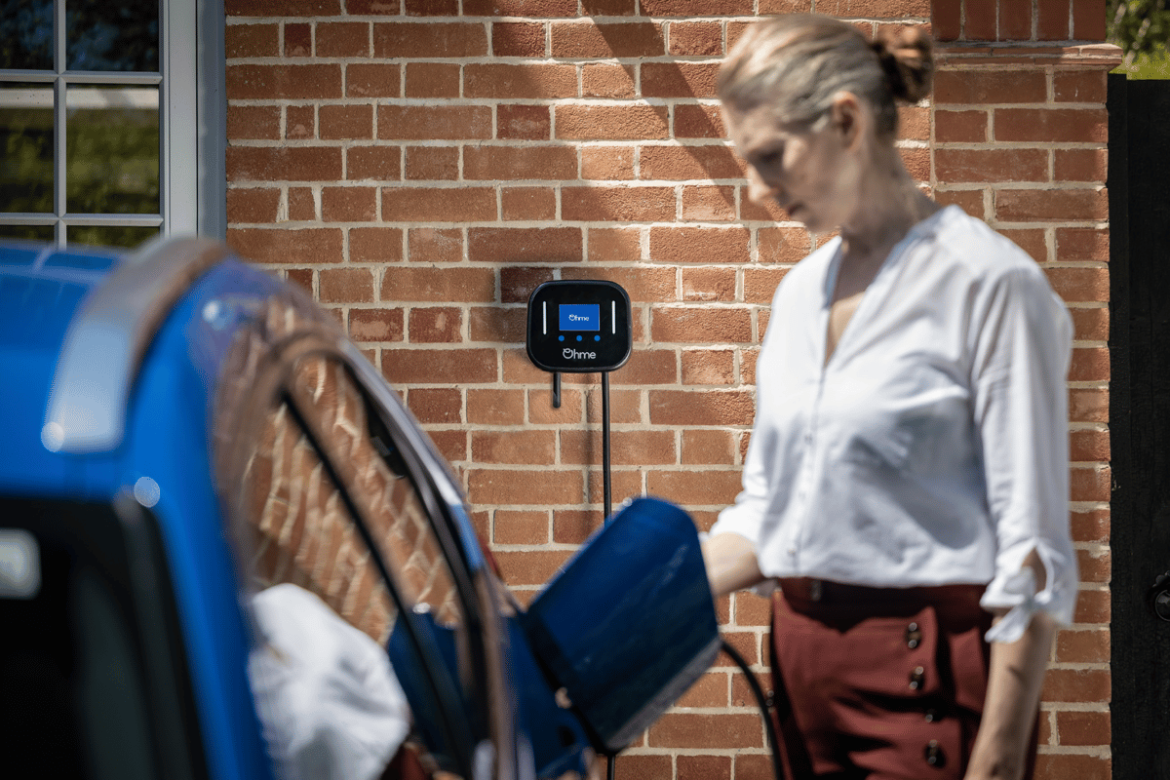
If you are able to install a home charger, the cost of which is often rolled-into the price of the car itself, you can bring the cost of powering a typical EV down to as low as 2p per mile – compared to 27p per mile for a petrol car.
Even using the standard electricity rate, over the course of a year an EV owner charging at home could expect to pay around £450 to cover 6200 miles a year – the average distance covered by a car in Scotland last year.
For a petrol car covering the same distance the price would be £1219, based on the UK average of £1.58p per litre – which most drivers would struggle to find at the pumps.
If you don’t have access to off-street parking, fast charge ports at service stations can give you a full battery in around 20 minutes or less – but cost significantly more. A typical ultra-fast charge can be 75p per kilowatt, which makes it almost as expensive as petrol.
“There’s no doubt it has been a ‘have and have-not’ situation – if you don’t have off-street parking it will cost you more,” admitted Nat. “However it’s worth noting one thing – the price of petrol is only going to go up.”
Dale insists that work is being done to bring down the cost of fast chargers for the public, to help widen the access for EV ownership.
“It is still a big difference, but we are working to bring down the price of ultra-rapid chargers,” he said. “There are various levers the government can pull on this. VAT for example – currently public chargers are taking 15% vat, so we are campaigning with the rest of the industry to get that changed, which could make a huge difference to the price.”
A Transport Scotland spokesperson said: “Scotland now has one of the most comprehensive public EV charging networks in the UK, with over 12,700 public charge points and more than 3,200 rapid and ultra rapid chargers.
“We are also continuing to support the provision of home and workplace EV charging with targeted support for lower income households and households who do not have access to dedicated off street parking, flatted properties”.
A full digital map of all the council-run stations in Scotland is available online at https://chargeplacescotland.org/
