
Ask anyone who has been to Monterey Car Week in the past few years, and they’ll tell you one of the best recent developments is how popular Japanese Domestic Market cars have gotten. And I don’t just mean you’ll see things like R34 Skyline GT-Rs, S15 Silvias and Toyota Centuries driving around the Peninsula. There were lots of Japanese cars showcased at events like The Quail and the Pebble Beach Concours d’Elegance, with some specific JDM classes at both, and the Rolex Monterey Motorsports Reunion featured all sorts of iconic Japanese race cars speeding around Laguna Seca, many of which were then on the lawn on Sunday. That’s to say nothing of the representation at all of the smaller events peppered around the Peninsula throughout the weekend.
I saw some Japanese cars that I’ve never seen in person before, ones that I wouldn’t expect to see even on a day of Tokyo carspotting from Ginza to the Daikoku parking lot. Out of all of the rare stuff I saw in Monterey, one of the rarest JDM cars was a Ferrari. You really never know what to expect from Car Week.
It starts on the streets
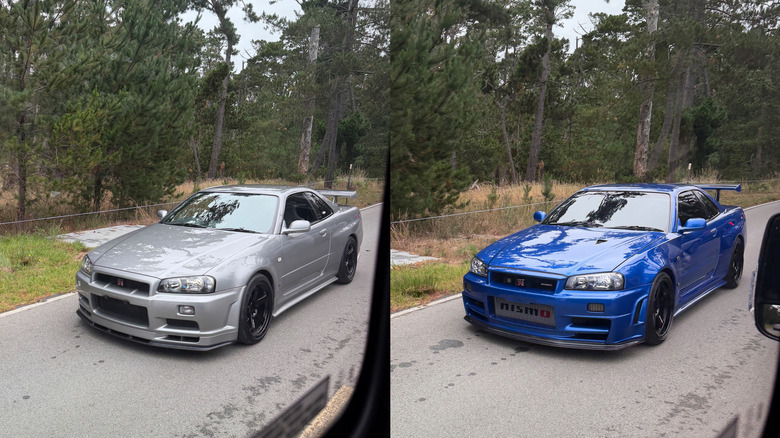
My week started off strong. As soon as I arrived to my hotel I had to hop in my boring gray Bentley GTC, make my way through horrible traffic and park in a dirt lot so I could get in a shuttle bus that would take me to the McLaren house to see the new McL 6GT. I always try and sit at the window, facing oncoming traffic, because you really never know what you’ll see driving around Monterey. Case in point, mere moments after getting onto the bus I saw two R34 Skyline GT-Rs driving together, and then an S15 Silvia going by thirty seconds later.
 Daniel Golson/Jalopnik
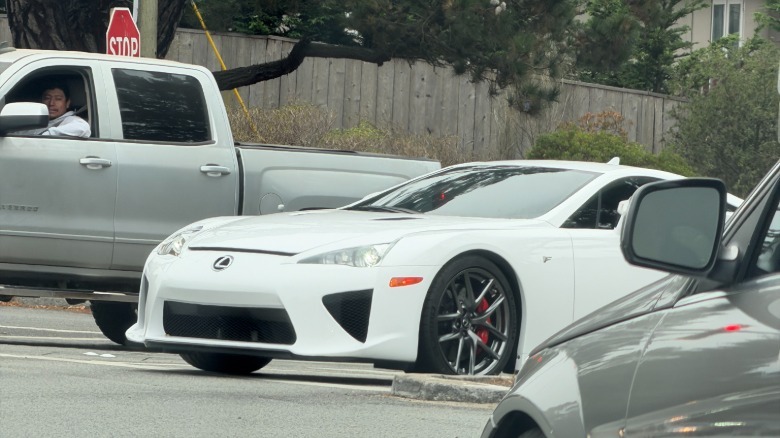
After leaving McLaren, I got back in the Bentley to drive to another part of the area to see Lucid’s reveal. A white LFA pulled up to the same intersection as me, across the street at another light appeared a black Dodge Viper. Just two great V10s, out for a drive. While I respect the Viper, it’s not really my thing. The LFA, though, I absolutely love. And you better believe I can tell when someone is an LFA bandwagoner, versus being like me who has been an LFA lover and defender from the very beginning. I remember when y’all were hating on it! Don’t try to rewrite history!
A design throughline
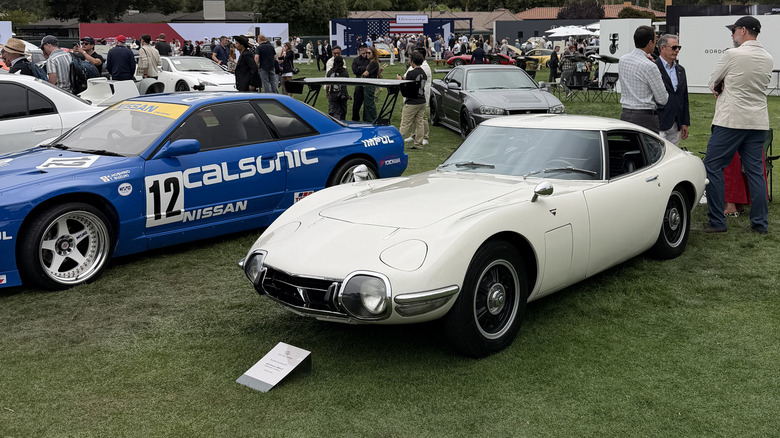
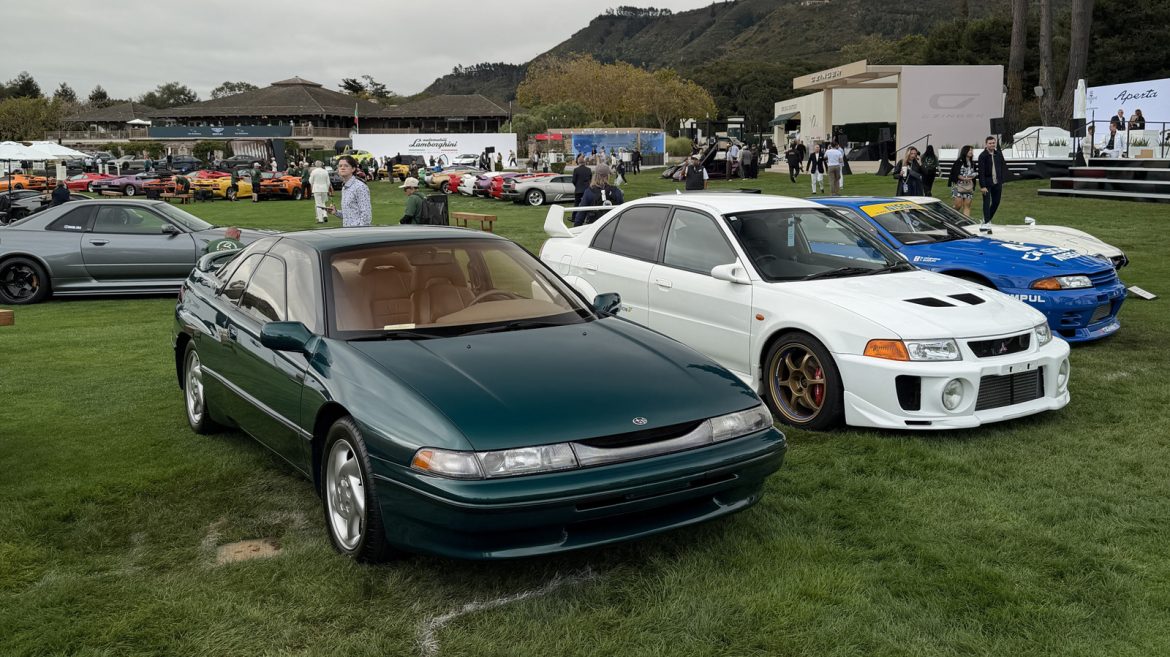
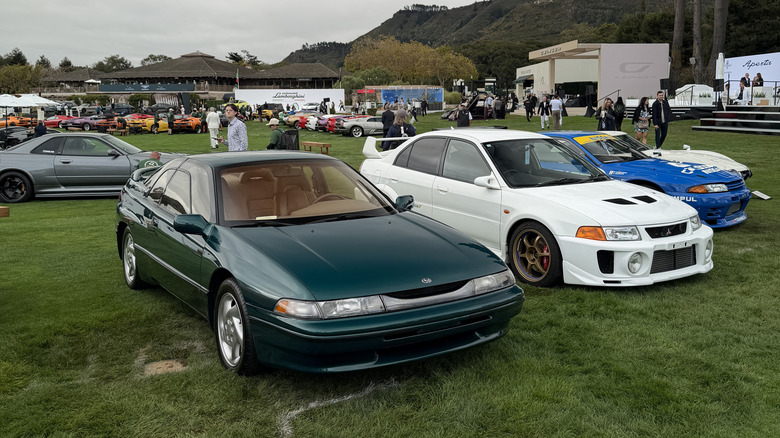
One of the featured classes at The Quail was The Legacy of Japanese GTs, with a 1968 Toyota 2000GT being the well-deserved winner. But the car that everyone was talking about was the green Subaru SVX, surely the nicest example of the coupe that I’ve ever seen. It was parked next to a great Mitsubishi Lancer Evolution V and a drift-ready R32 Skyline wearing the Calsonic livery, with an Acura NSX Type S, a pristine Mitsubishi 3000GT, a fab Nissan 240Z, two R34 GT-Rs and an R33 Nismo 400R filling out the lineup.
 Daniel Golson/Jalopnik
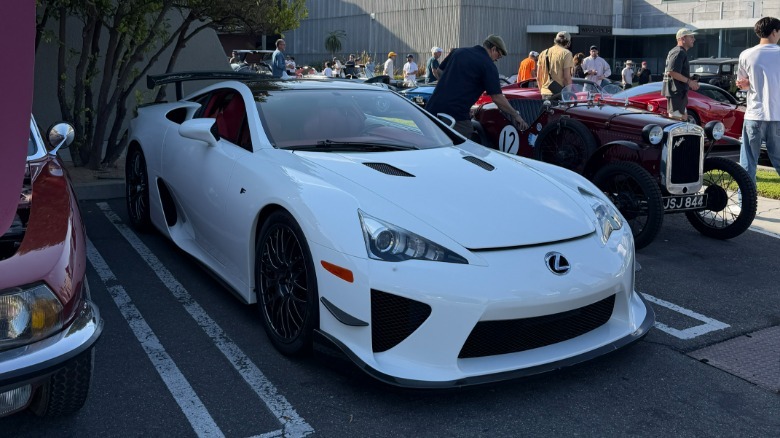
On display in the same area but not competing was one of the best LFAs I’ve ever seen, one of the 64 fitted with the $70,000 Nürburgring package (25 of which came to America). Yes, as with so many LFAs it’s plain white on the outside, though I do enjoy that the color name is Whitest White. These cars do look good in white, and it makes it even easier to see the 2000GT design inspiration, but there were far more interesting options available, so it’s a shame… until you peer inside.
 Daniel Golson/Jalopnik
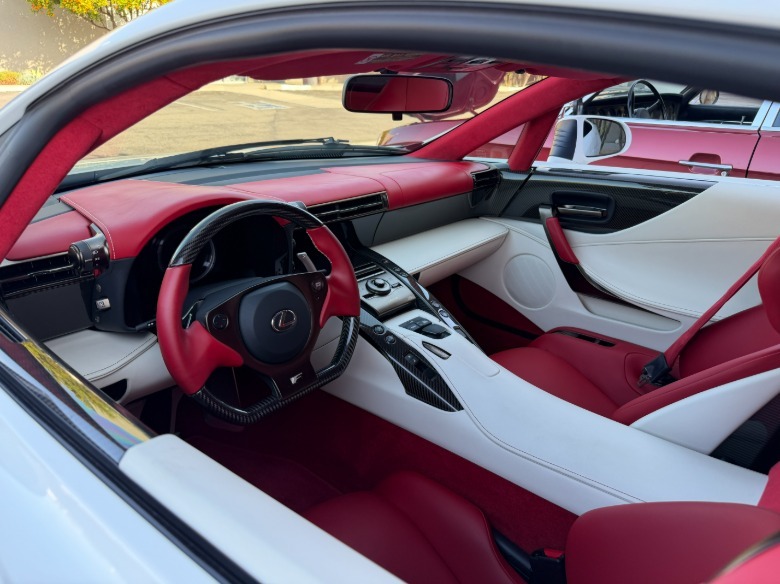
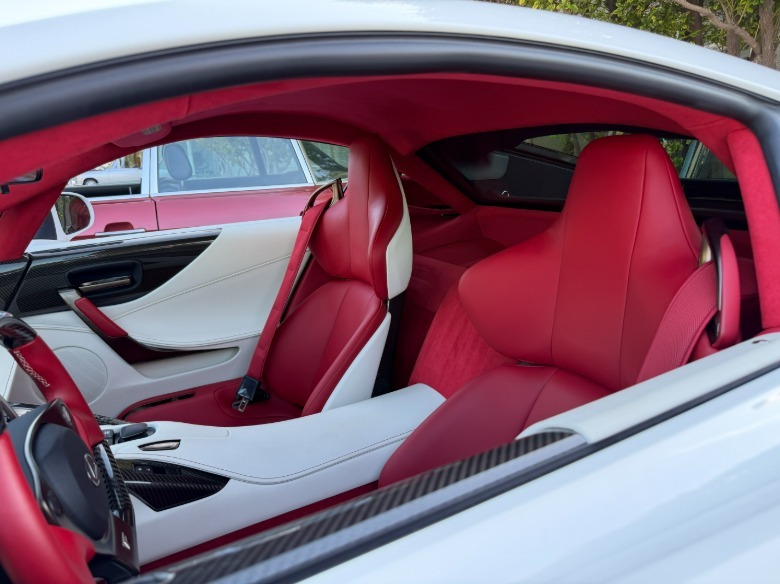
Then you’ll see the spectacular white and red interior, made even better by the fact that it’s all luscious leather, not the suede upholstery that most LFA Nürburgrings got. White is used on the door cards, center console, lower dashboard and seatbacks, while everything else is bright red, from the upper dash and steering wheel to the carpets and seats and headliner. It’s just divine. (I saw the car in LA a few weeks ago, which is where I took the pics you see here as the windows were up at The Quail.)
 Daniel Golson/Jalopnik
Broad Arrow brought the car to Monterey to try and hook a buyer, as instead of being auctioned off it’s available for private sale. With only 72 miles on the odometer, you’re looking at a Lexus that’s worth more than a Bugatti Veyron — three years ago, a more boring orange-over-black LFA Nürburgring with double the mileage sold for $1,875,000.
Toyota needs to bring this livery back
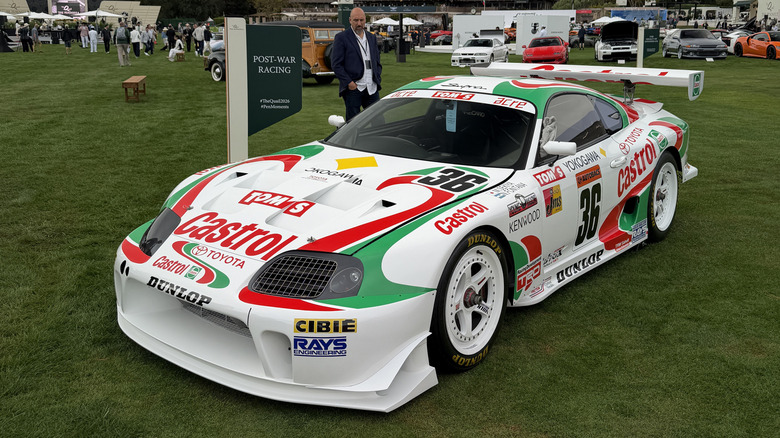
Oh yeah, there was also a TOM’S Supra race car wearing the Castrol livery in the Post-War Racing class, the same one that Larry Chen recently featured. The Castrol JGTC Supra is one of my most-driven cars in “Gran Turismo 7,” though that particular #36 car is from 1997 and has a slightly different aero package than this #36 car, which is from 1998. In 2022 I saw the ’97 car at Honda’s museum at Mobility Resort Motegi, where it was parked with the R34 and Honda NSX racers from the same era.
This has got to be one of the greatest liveries of all time, right? Although I’d argue it’s even better on the Celica rally cars. Honestly, Toyota and Castrol need to team up again for all of the new Gazoo Racing models. Imagine the new Celica with a factory graphics package that looks like this. Or the same idea on the upcoming MR2, or the GR GT, or the next-gen 86 or next-gen Supra… I’m onto something here.
You definitely haven’t seen one of these before
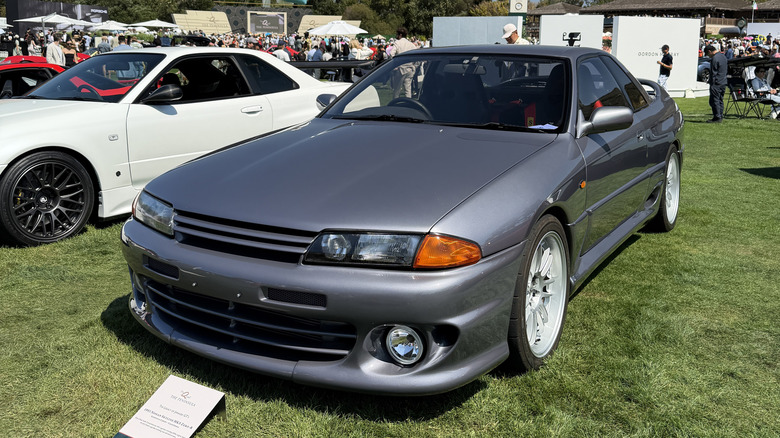
What really caught my eye at The Quail was this gray R32 GT-R. I’ve seen a lot of gray R32s in my day, and usually they don’t pique my excitement anymore, but this one’s chinny front bumper with large round fog lights immediately got my attention. It’s an HKS Zero-R, one of just four surviving production cars built in 2003 that followed ten prototypes initially developed in 1993. In addition to wearing that (honestly ’90s Dodge-like) body kit, these beasts were bored out to 2.8 liters and given HKS’ V-Cam variable valve timing system. The back seats were taken out, with the fuel tank installed in their place for better weight distribution. Total output was around 600 horsepower, and they could hit 186 mph.
This particular Zero-R seems to be the same Edition III model that was sold at the Tokyo Auto Salon in 2019 for the equivalent of around $150,000 (it was $212,000 Australian dollars).
So many GT-Rs
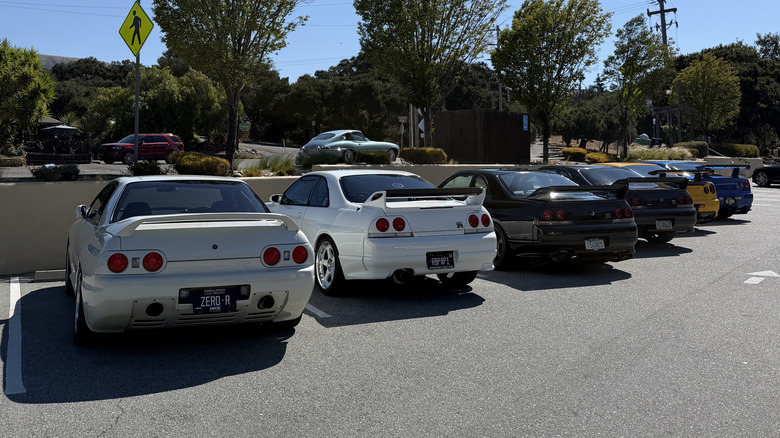
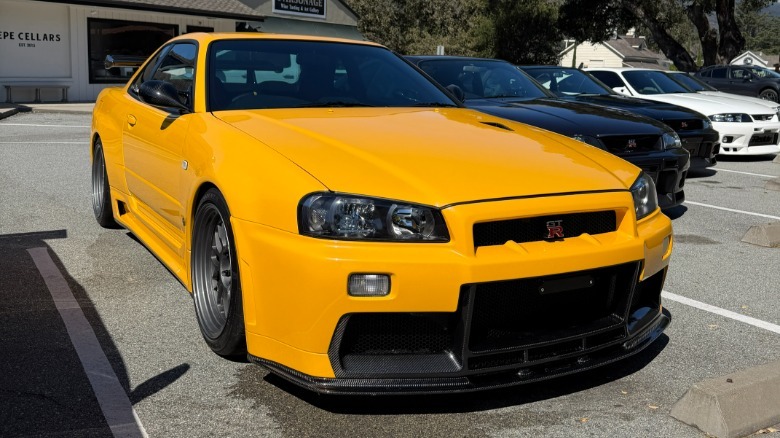
The next day, while on my way to Bentley’s Stazione Remota event, I happened upon a group of six Skyline GT-Rs that had just stopped for breakfast, all of which were tastefully modified. The yellow R34 is a Built By Legends Mine’s car, the same light restomod as the white one at The Quail. But the real shocker was the white R32 at the very end — it was another HKS Zero-R! I mean, what are the odds of that?
Luckily, the owners of this white Zero-R met up with the people who brought the gray one. There’s only four of these in the world, and here in this little Californian town we had two of them driving around together. Now that’s magic. I love a kinda-bulbous ’90s body kit, so these Zero-Rs are right up my alley, and I think the white really works here. The exhaust and diffuser treatment is particularly great.
 Daniel Golson/Jalopnik
I’ve gotten a bit jaded by my eight years of living in Michigan, as Skyline owners would drive over the Canadian border for car shows in Detroit all the time, so I’ve been seeing R32s, R33s and R34s in the U.S. long before they’ve been old enough to officially import into. Still, that doesn’t make it any less cool to see a GT-R, especially not this many in one place.
A dozen race cars
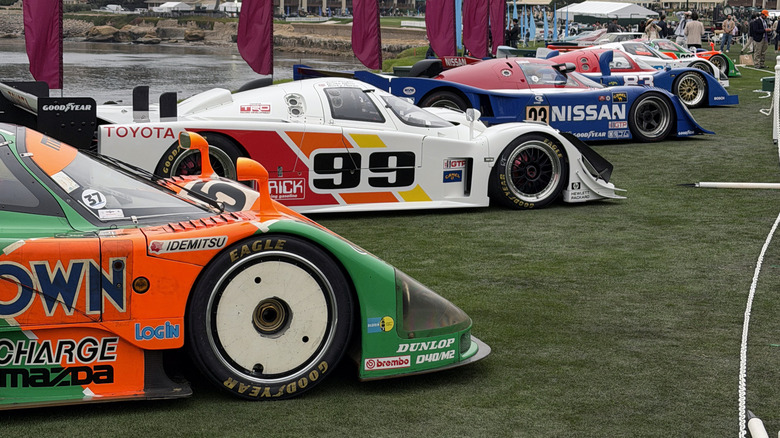
One of the featured classes at the Pebble Beach Concours d’Elegance was Japanese Motorsport, which occupied a primo section of real estate right along the water. The crowds were heavy over there all day, and I’m sure they would’ve been even if there hadn’t been multiple rotary-powered Mazda racers.
First place went to a Dome-developed 1985 Toyota 85C L Longtail Le Mans Coupe (that was brought over by a Japanese collector), while a 2010 Honda HPD ARX-01c Le Mans Prototype came second and a 1990 Toyota Eagle HF89 IMSA GTP Coupe placed third. Sorry to say I didn’t get a good photo of any of them, though that bronze winner is the number 99 car you see in the top of this slide.
 Daniel Golson/Jalopnik
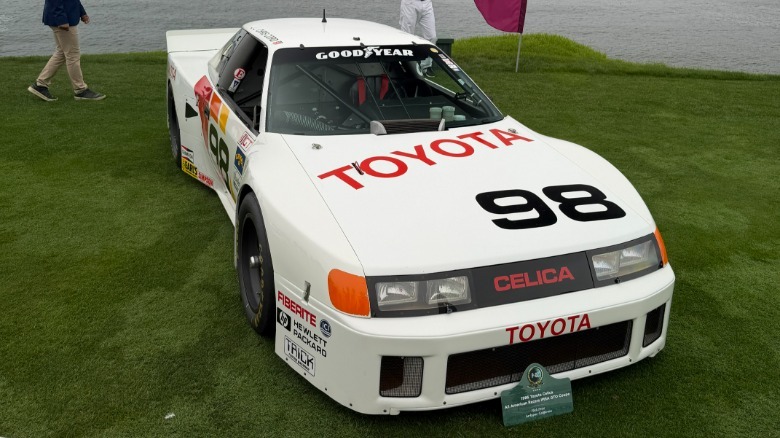
The 1986 Toyota Celica All American Racers IMSA GTO Coupe that you see above is one of three made between 1986 and 1988, and I just love how it looks. Also competing in this category were a 1988 Nissan GTP ZX-T prototype created for IMSA GTP racing; its replacement, a 1990 Nissan NPT-90 IMSA GTP Coupe; the 1990 Nissan R91CP Group C prototype won the 1992 24 Hours of Daytona; a 1991 Toyota AAR Eagle Mk III IMSA GTP Coupe owned by the same guy as the third-place winner; a 1996 Honda NSX-GT2 Le Mans racer; and the Toyota RS050 Hybrid that won the 2018 24 Hours of Le Mans, still wearing its dirt and battle scars.
Ahh, that’s history
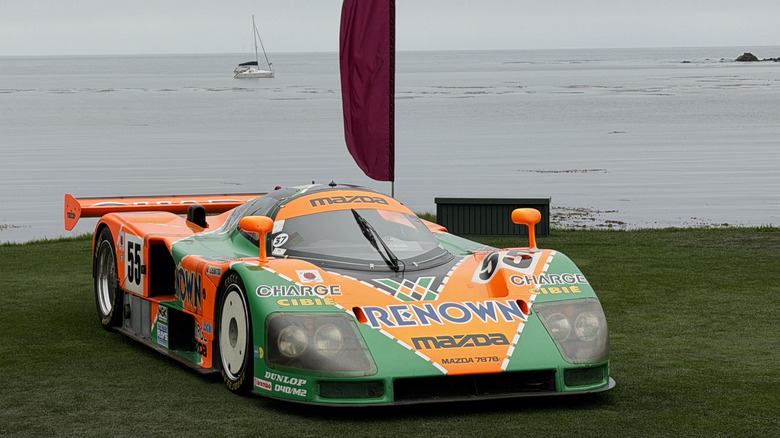
But yeah, the rotary-powered Mazdas were the fan favorites, especially as one of the three was a privately-owned 1989 767B (chassis 003) that had caught fire at Laguna Seca just a few days before. Luckily the damage wasn’t too bad, and it was there on the golf course alongside all the other Japanese metal. The other two cars on display were both brought by Mazda: a white and blue 1990 787 (chassis number 002), and the orange-and-green 1991 787B (chassis 003) that won the 1991 24 Hours of Le Mans.
That Le Mans winner, seen here, has never been repainted, restored or reconstructed since its win, still wearing the same iconic Renown livery. Its 2.6-liter four-rotor R26B engine makes about 700 horsepower, and indisputably one of the best noises in automotive history. The 767B came first in its class at Le Mans in 1990, and while the ’90 787 dropped out of the race that year, it joined chassis 003 at Le Mans in 1991, coming eighth overall.
More than you can afford, pal, for real
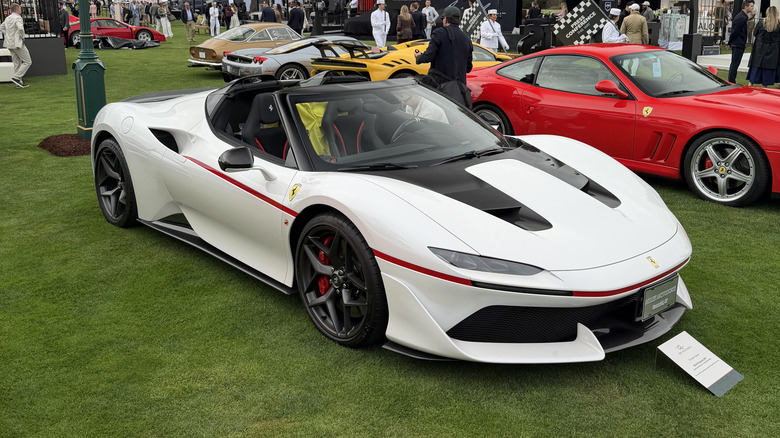
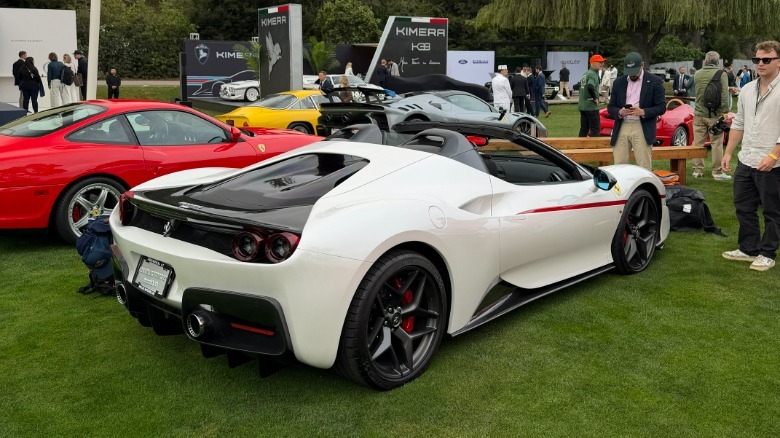
But out of all of the fantastic Japanese cars I saw at Monterey Car Week, one of the rarest and definitely the most unexpected was this Ferrari J50. Yes, I know that Ferrari is an Italian brand, but this car is most certainly JDM. Ferrari is absolutely huge in Japan, so to celebrate its 50th anniversary of entering the country, it came out with the J50 in 2018. Only ten of them were built, all for the Japanese market only and each one wearing a custom spec commissioned by their VIP owners.
I think the J50 is a lovely bit of design, definitely nicer than the 488 it’s based on, and the Bianco Liana paint suits it well. There are some nice heritage design touches, like the F40/F50-aping band that runs from the nose along the doors, here painted red. Instead of the 488’s complex folding hardtop the J50 has two removable targa panels that give it a double-bubble look. The twin-turbo V8’s power was increased by 20 horses to 681 hp.
 Daniel Golson/Jalopnik
As far as limited-run Ferraris go, the J50 is pretty under-the-radar in terms of its styling and performance, and its Japanese exclusivity makes it one of the lesser-known models, too. They basically never come up for sale — a black one was listed for $3.6 million in 2021, and this white one was listed for sale in Japan in 2024. The car now lives in the U.S., and was brought to Monterey by Connecticut dealership Miller Motorcars and UK specialists DK Engineering.
Meanwhile, also at The Quail, a taxi-themed Toyota Crown won the Car Park Concours de Quailegance award, given out to the coolest car in the parket lot. And that really is Monterey Car Week in a nutshell. Among all of the priceless hypercars and vintage metal, a seemingly mundane Japanese taxi won a trophy. I hope I’ll be seeing amazing, rare, weird Japanese cars at Pebble Beach for years to come.
