
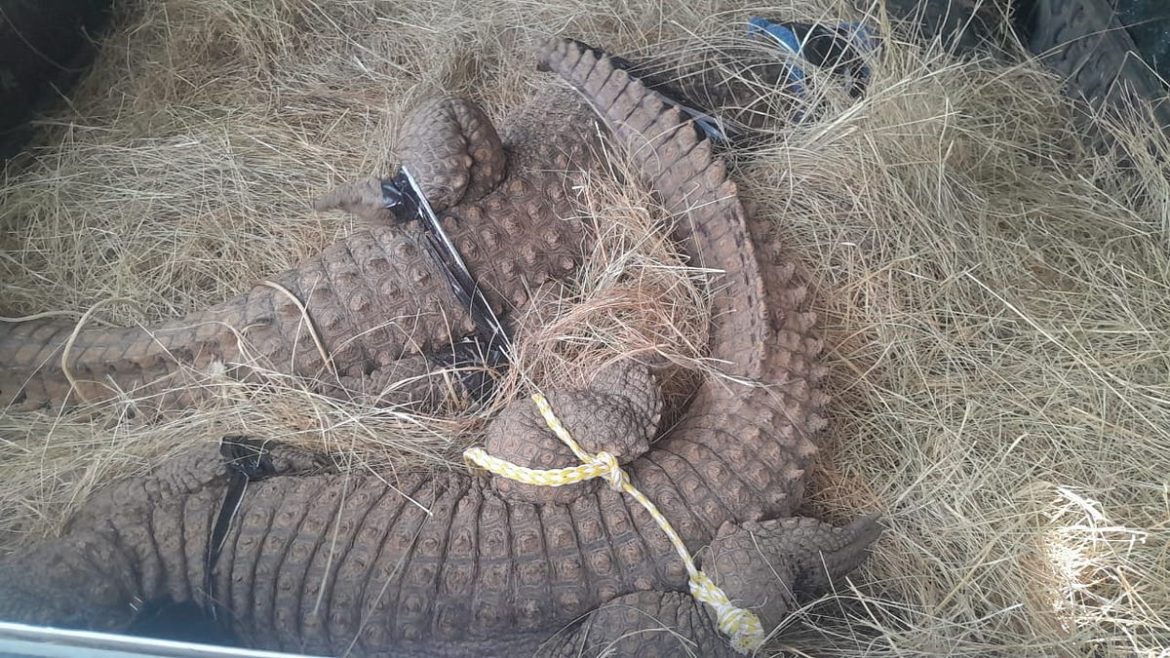
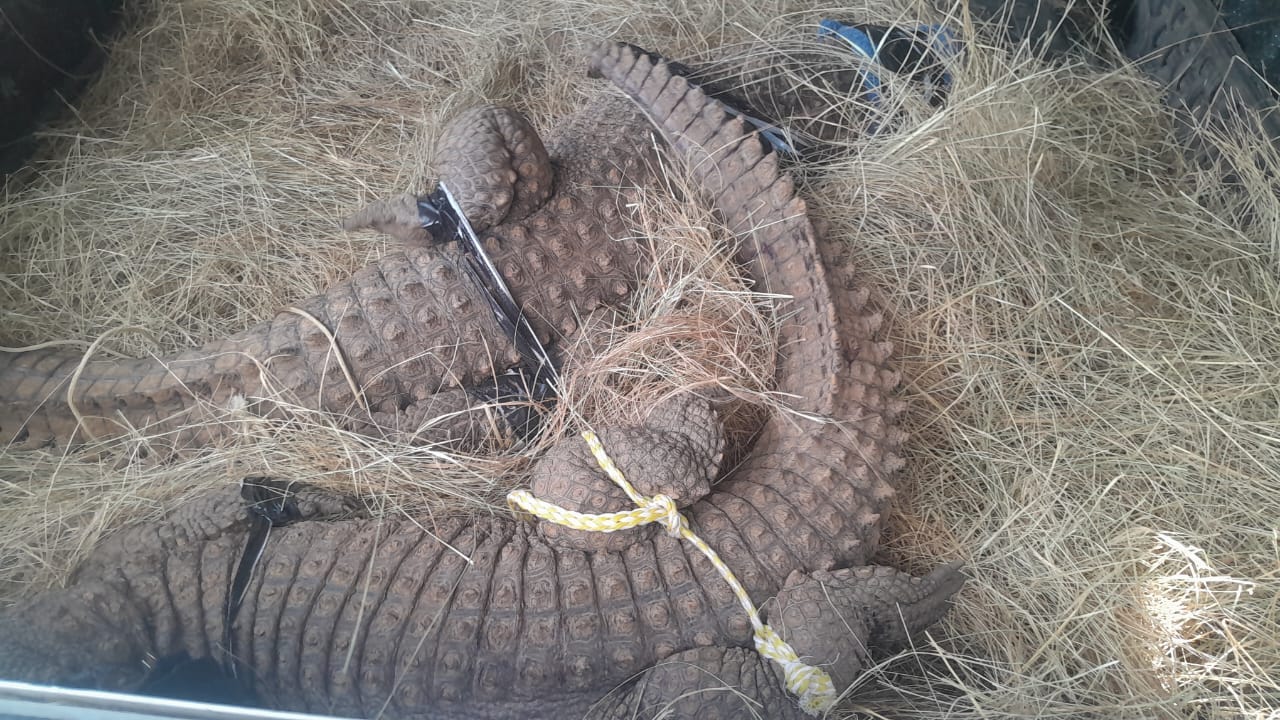
Johannesburg, South Africa — Environmental authorities in South Africa have seized two illegally kept Nile crocodiles from a residential property in Gauteng Province, highlighting ongoing efforts to combat wildlife crimes and protect the country’s biodiversity, writes Emmanuel Koro.
The operation, led by the Gauteng Department of Environment (GDEnv), was conducted on May 25 in Petersfield, Springs, following reports that protected wildlife was being kept unlawfully at a private residence.
The seizure came days after South Africa commemorated the International Day for Biological Diversity and underscored the government’s commitment to conserving biodiversity and enforcing environmental laws.
Environmental Management Inspectors, supported by the Tshwane K9 Unit, the Vereeniging South African Police Service, the Tshwane Law Enforcement Support Unit, the Johannesburg Wildlife Veterinary Hospital and the Springs Society for the Prevention of Cruelty to Animals (SPCA), executed a search warrant at the property.
During the operation, inspectors discovered two Nile crocodiles measuring approximately 1.48 meters and 1.70 meters in length.
Authorities said the reptiles were being kept without the permits required under South Africa’s National Environmental Management: Biodiversity Act (NEMBA), which regulates the possession of threatened and protected species.
The crocodiles were confiscated and transported to the Johannesburg Wildlife Veterinary Hospital, where they underwent assessment and received appropriate care.
Officials confirmed that the animals were found in good condition. However, investigations revealed that the owner had failed to comply with both biodiversity regulations and animal welfare requirements enforced by the SPCA.
According to investigators, the property owner did not possess the necessary Threatened or Protected Species (TOPS) permits required to legally keep crocodiles.
A criminal case has since been opened at the Springs South African Police Service station, while environmental authorities continue their investigation.
Under NEMBA, the illegal possession of threatened or protected species without the required permits is a serious offense.
Convicted offenders can face fines of up to 10 million South African rand (about $560,000), imprisonment of up to 10 years, or both, depending on the severity of the violation.
The Gauteng Department of Environment said it would continue working closely with law enforcement agencies and conservation partners to strengthen compliance monitoring and combat wildlife-related crimes across the province.
Officials emphasized that illegal wildlife ownership poses risks not only to conservation efforts but also to public safety, particularly when potentially dangerous animals are kept in residential areas.
The department thanked all agencies involved in the operation for their swift response and cooperation in removing the crocodiles from the property.
“The successful seizure demonstrates the importance of collaboration among environmental authorities, law enforcement agencies and animal welfare organizations in protecting South Africa’s biodiversity,” the department said.
Authorities have also appealed to members of the public to report suspected environmental crimes and biodiversity offenses, stressing that the protection of wildlife remains a shared responsibility.
Members of the public can report environmental crimes to the Gauteng Department of Environment’s Green Scorpions unit or to the Department of Forestry, Fisheries and the Environment.
Conservationists say public reporting plays a critical role in identifying illegal wildlife activities and supporting efforts to safeguard South Africa’s rich biodiversity for future generations.
The seizure comes amid growing concerns over wildlife trafficking and the illegal possession of protected species across southern Africa, where conservation authorities continue to strengthen enforcement measures against environmental crimes.
