

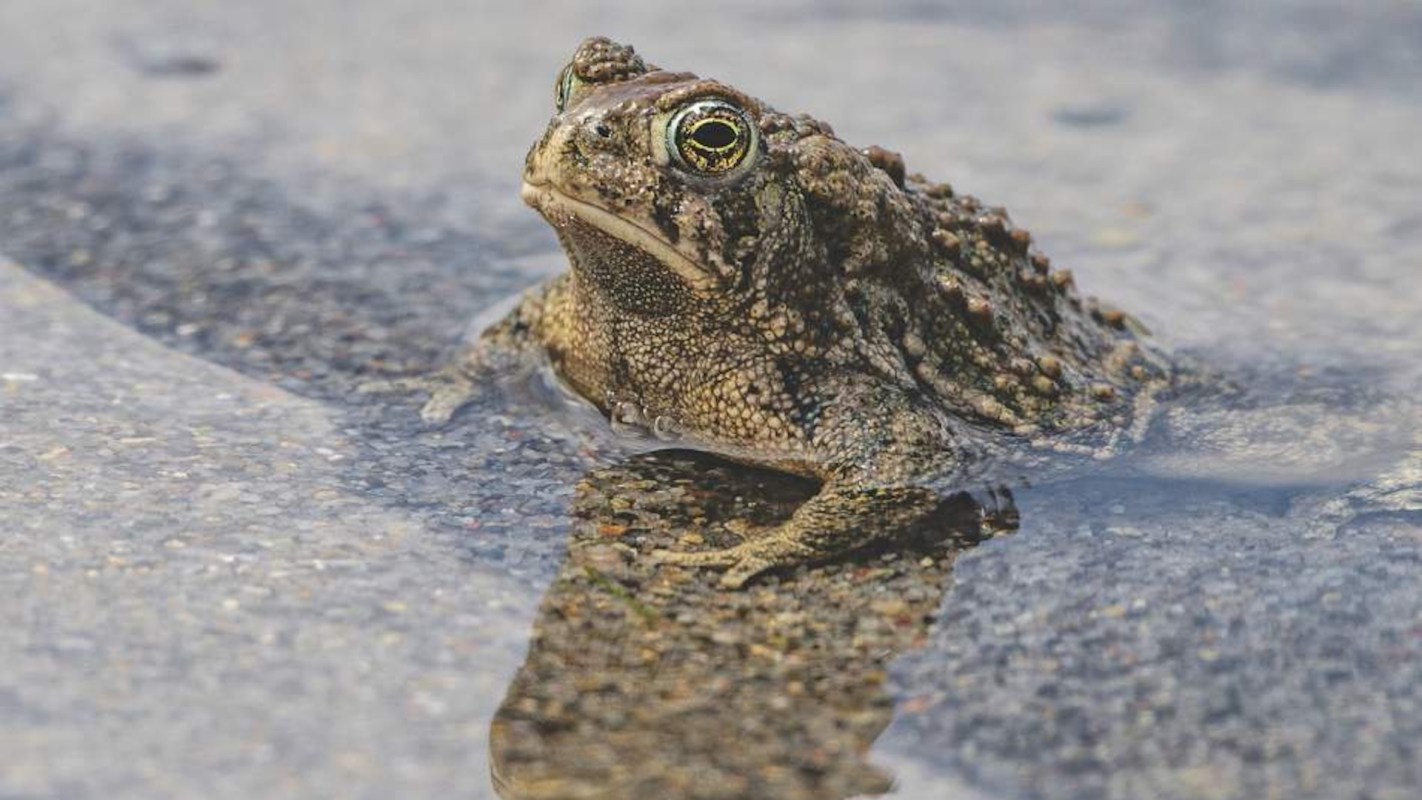
Photo Credit: Patrick Owen / WGFD
At Como Park Zoo & Conservatory in St. Paul, Minnesota, Meatball is the only Wyoming toad in zookeeper Allison Pizel’s 2025 breeding program to survive from egg to tadpole to toad.
Meatball represents a tiny but meaningful win for one of North America’s most endangered amphibians, according to WyoFile.
What’s happening?
Meatball’s survival fits into a broader recovery campaign spanning multiple states. Como is one of seven zoos, along with two other breeding sites, working with wildlife officials to increase Wyoming toad numbers and release them back into the Laramie Basin, the species’ native habitat, per WyoFile.
In a biosecure basement space, Pizel keeps the toads under strict safeguards meant to block chytrid fungus, a deadly skin disease that has devastated amphibian populations, essentially spurring a mass extinction of the creatures.
That single complete egg-to-toad success did not stop Como from contributing animals for release. According to WyoFile, Pizel said she sent about 3,000 tadpoles to Wyoming for reintroduction.
Breeding does not happen without heavy intervention from the zoo’s team. To help trigger it, Pizel first gives some toads a short hibernation in a “fancy refrigerator,” then uses hormones and recorded croaks played from “an ancient CD player,” as WyoFile reported.
Why does it matter?
By the mid-1980s, the Wyoming toad had declined so sharply that many people believed the species was extinct, WyoFile reported.
The species later turned up again at a private fishing pond, Wyoming Game and Fish Department herpetological coordinator Wendy Estes-Zumpf told the outlet, but “it started crashing in 1989.” Estes-Zumpf added that the entire living population traces back to roughly 10 toads, leaving the species with an alarmingly small genetic pool.
“Genetic diversity is what helps species adapt to new threats, diseases,” she told WyoFile, adding “That’s sort of the biggest issue in trying to help them battle chytrid fungus.”
The problem reaches far beyond a single species. Amphibians play an important role in wetland ecosystems, and their declines can signal deeper environmental stress caused by disease, pollution, habitat loss, and drought. The loss of amphibians impacts other species that depend on them as well.
Get TCD’s free newsletters for easy tips, smart advice, and a chance to earn $5,000 toward home upgrades. To see more stories like this one, change your Google preferences here.

