
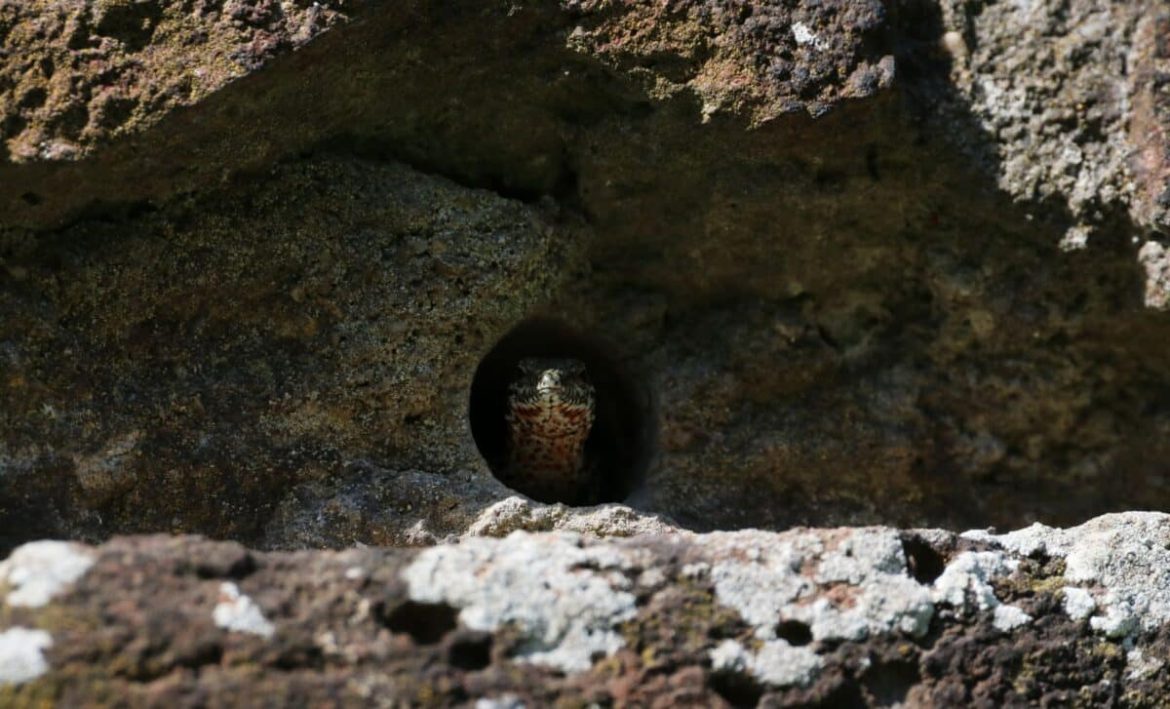
A rare reptile species, known to local Wiimpatja Aboriginal Owners as Kungaka, meaning “the Hidden One,” has been identified as a brand-new species. This elusive lizard, now scientifically named Liopholis mutawintji, is already facing an uncertain future, with fewer than 20 individuals known to exist. Found only in the remote Mutawintji National Park in New South Wales, the Kungaka is quickly becoming one of Australia’s most threatened reptiles.
Once believed to be a variant of the common White’s Skink, the Kungaka has now been confirmed as a distinct species after genetic testing. The discovery, published on April 14, 2026, highlights the urgency of protecting the species, as it lives in an incredibly small and fragile environment.
The Kungaka’s Hidden Home in Mutawintji National Park
Mutawintji National Park, known for its rugged and isolated terrain, has become the only place where the Kungaka skink is found. In a small, protected gorge surrounded by harsh plains, this lizard survives against the odds. It was once mistaken for part of the White’s Skink population, but thanks to genetic research, it has now been recognized as a completely separate species.
Tom Parkin, a researcher from the Australian Museum, said this discovery reveals just how much we still don’t know about Australia’s wildlife.
“The Kungaka represents an ancient lineage that likely originated earlier when the environment was quite different. Today, it survives in a tiny, isolated pocket of sheltered gorge in Mutawintji. Through this research, we not only better understand a species, but also the history behind the surrounding environment.”
Unfortunately, the Kungaka’s small habitat makes it vulnerable to a number of threats. As mentioned in research avaliable in Zootaxa being confined to a tiny, isolated area means it is especially vulnerable to environmental shifts and external pressures, particularly as climate change and human activities affect the region.

How Indigenous Knowledge and Science Team Up
One of the key reasons this discovery is so special is the strong collaboration between Indigenous groups and scientists. As explained in a press release published by the Australien Museum, the Wiimpatja Aboriginal Owners, who have lived in the area for generations, have long known about the Kungaka skink and referred to it as “the Hidden One.” Warlpa Thompson, from the Mutawintji Board of Management, shared that local Indigenous people have been involved in protecting the skink’s habitat for years.
“The Mutawintji Board of Management and NPWS will continue to build on the work that has already been done, but given that Kungaka are on the verge of extinction, we are seeking further support to create an in-Country sustainable solution,” he remarked.
This partnership between the Wiimpatja Aboriginal Owners, the NSW National Parks & Wildlife Service (NPWS), and the Australian Museum is vital in preserving the Kungaka. Thompson hopes that the recognition of the Kungaka as a distinct species will lead to more support for its protection.
Climate Change and the Rise of Invasive Species
The Kungaka skink faces several threats that could push it to the brink of extinction. Feral goats are a major concern because they damage the skink’s habitat by overgrazing, while introduced predators like foxes and cats also pose a serious risk by preying on the lizard. On top of that, climate change is increasing temperatures and drought in the area. Experts agree that saving the Kungaka requires immediate action. Dr. Jodi Rowley, Curator of Amphibian and Reptile Conservation Biology at the Australian Museum,
“Their survival depends on sustained, long-term collaborative partnerships, and continued monitoring and evaluation. Working with our colleagues, Wiimpatja Aboriginal Owners and NSW Government has delivered the important first step in its continued existence.”
And as Thompson, in an article by ABC News, made it clear that this rare Australian reptile, which has not been seen for years, should be protected.
“We want to try and maintain that population while we work out a strategy to raise the numbers. So, we need to take some fairly drastic action over the next five years.”
