
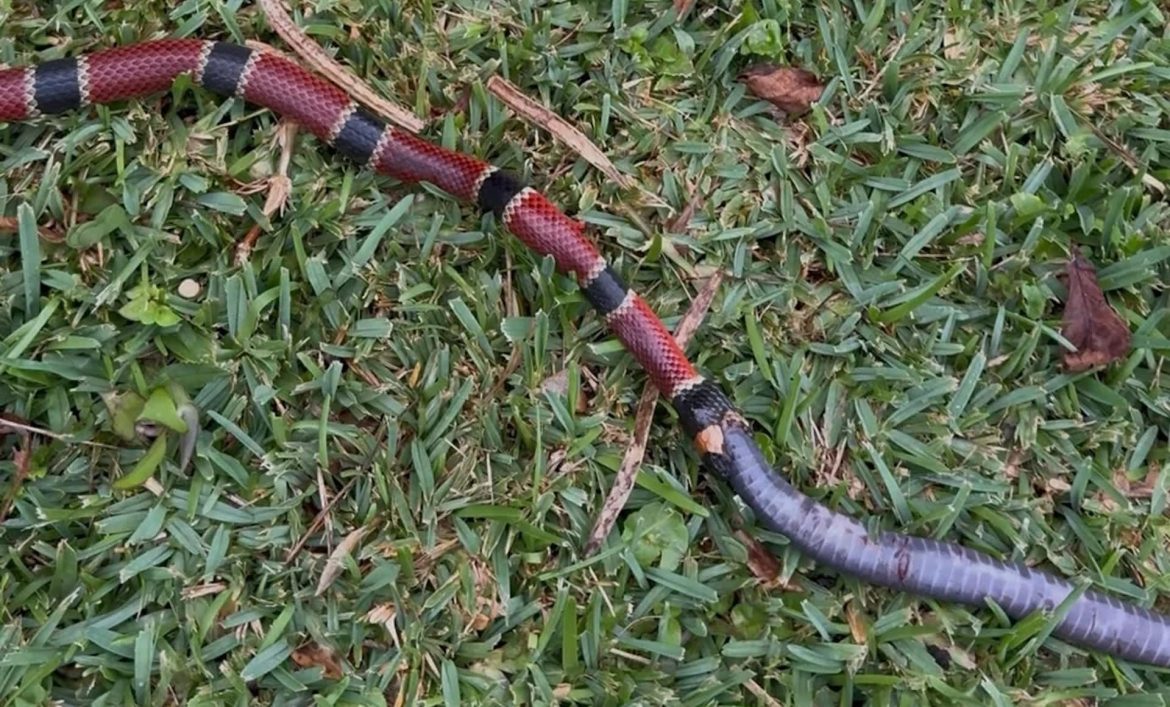
A Reddit photo sparked debate because it seemed to show one snake consuming another.
Users eventually concluded that only one of the animals was actually a snake: the predator was a banded coral snake, while the prey was a caecilian, a limbless amphibian whose odd shape made the image harder to interpret.
What happened?
One user shared the image in a thread on Reddit, writing: “Is this a snake eating another snake? The one on the left (alive) is eating the one on the right so I couldnt get its head in the picture.”
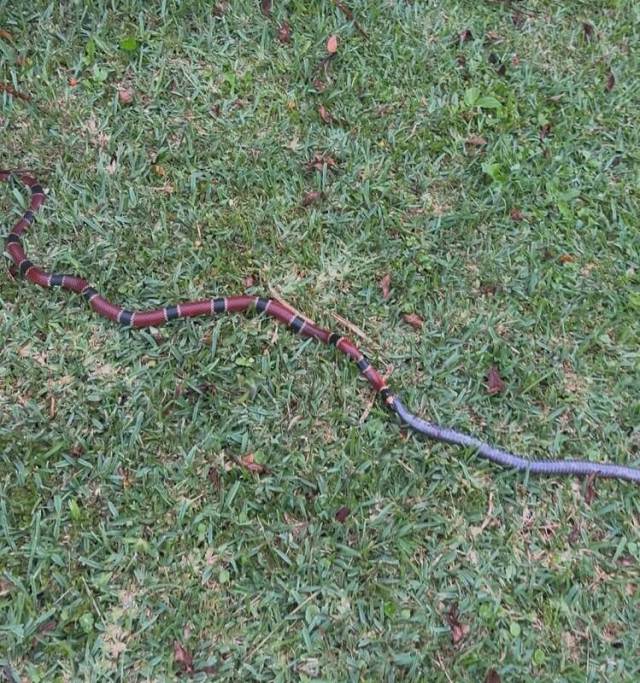
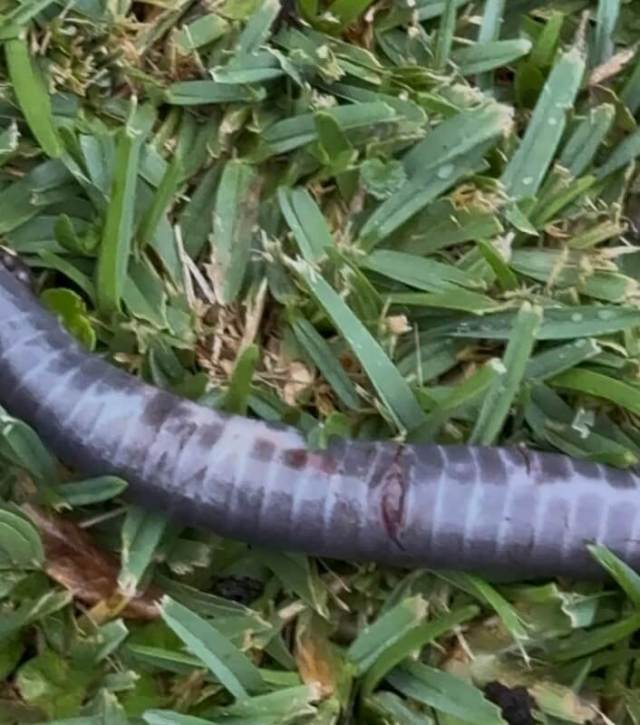
People in the comments said the animal being eaten was not a second snake at all. They identified it as a caecilian, a burrowing amphibian that can be easy to mistake for a snake at first glance.
The predator, meanwhile, was identified as Micrurus nigrocinctus — the venomous Central American coral snake.
According to experts in the thread, the prey’s body shape was the key to telling the difference. Caecilians are marked by complete ring-like annuli around the body, features associated with segmental musculature rather than the overlapping ventral scales found on snakes.
In close-up photos, they can give them a more swollen, evenly rounded look — often compared to a “bloated sausage” — that helps separate them from true snakes.
Why does it matter?
In this case, one commenter noted that the coral snake was “best observed from a distance,” sensible advice for anyone who comes across unfamiliar wildlife.
The encounter shows how much biodiversity can go unnoticed. Caecilians are rarely seen because many spend much of their lives underground or in wet leaf litter, yet they still play an important role in healthy ecosystems alongside more familiar reptiles and amphibians.
Habitat disruption can also change how and where animals hunt, making unusual scenes like this easier for humans to witness. Protecting intact habitat helps wildlife behave naturally while reducing risky close contact with people.
What are people saying?
One commenter wrote, “likely Micrurus nigrocinctus, venomous, best observed from a distance, they include other snakes in their diet.”
Another clarified the real surprise: “actually the prey is a caecilian, a legless amphibian, common in this coral snakes diet.”
A different user added, “caecilians are super weird, many produce milk from the cloaca to feed their young.”
As one person put it: “great observation, randomly coming across a coral snake eating a caecilian is wild.”
Get TCD’s free newsletters for easy tips, smart advice, and a chance to earn $5,000 toward home upgrades. To see more stories like this one, change your Google preferences here.

