
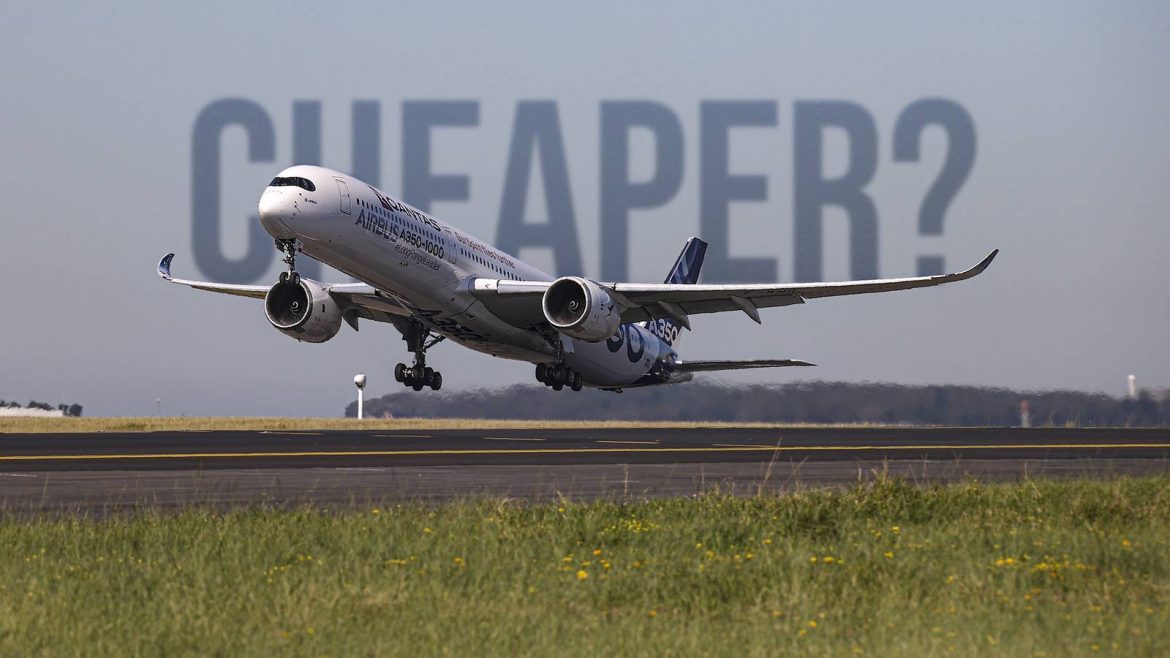
Airbus spent roughly $15 billion developing the A350, while Boeing’s 787 program cost $30-32 billion. The gap stems from Boeing’s outsourced production and delays. Airbus retained tighter control, avoiding major redesigns and supply chain breakdowns.
Boeing outsourced 70% of the 787’s production, leading to coordination failures and component incompatibilities that pushed its entry from 2008 to 2011. Airbus, by contrast, managed the A350’s supply chain internally, minimizing redesign cycles and keeping development costs significantly lower despite similar composite technology use. The 787’s technical complexity and global supplier network drove up expenses.
Airlines now choose between the two based on route demand: the 787 serves thinner long-haul routes with 242-335 seats, while the larger A350 carries 300-410 passengers on busier corridors. The A350 also offers slightly greater range, enabling ultra-long-haul operations with heavier payloads. Both deliver improved cabin comfort, but their design philosophies reflect divergent development strategies.
Airlines face different cost structures when selecting between these aircraft, affecting fleet planning and route profitability. The 787’s higher development cost may influence pricing and availability, while the A350’s efficiency on high-capacity routes offers long-term operational savings.
