
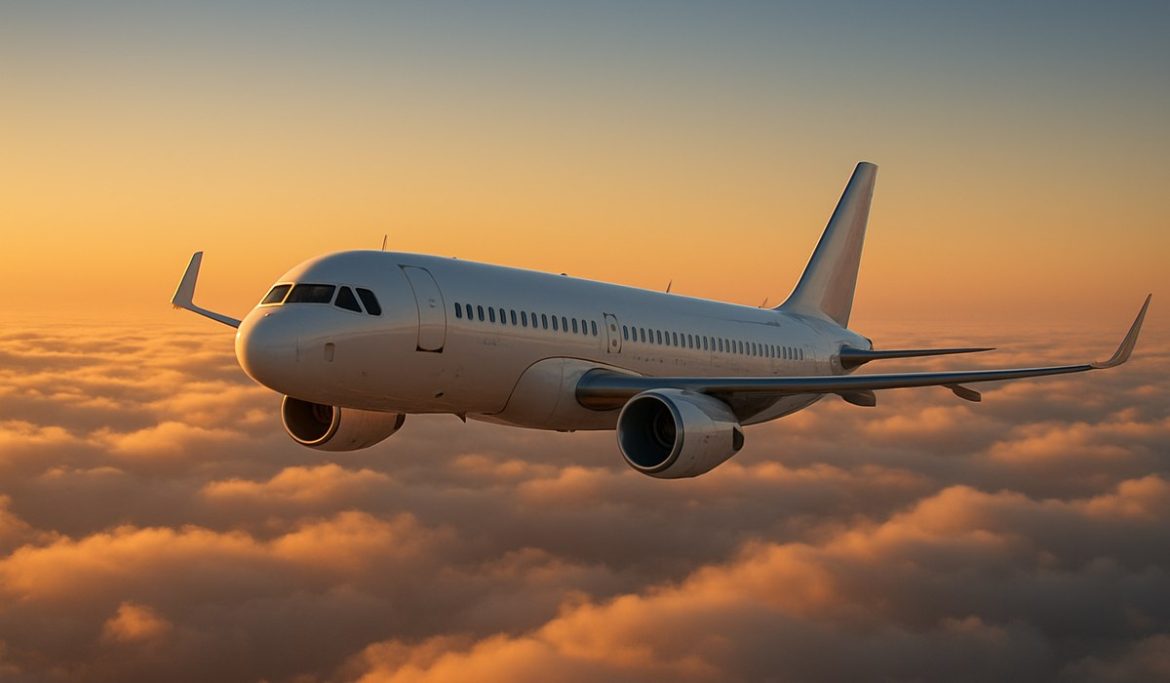
How Airbus Aircraft Defined Aviation’s Competitive Landscape
Airbus aircraft defined modern aviation by systematically challenging American aerospace hegemony that had dominated commercial skies since the 1960s. When the European consortium launched operations, Boeing and McDonnell Douglas controlled nearly every major global route. Over five decades, Airbus introduced six groundbreaking airframes that rewrote efficiency standards, revolutionized cockpit technology, and fundamentally altered the economics of commercial travel. These aircraft didn’t just compete—they forced the entire industry to reimagine what modern aviation could achieve.
The European Challenge to Boeing’s Dominance
The 1970s marked a turning point when European manufacturers unified under Airbus to compete against entrenched American aerospace giants. Boeing’s monopolistic grip seemed unshakeable, commanding over 80% of the widebody market. Airbus entered with a radical premise: build aircraft around pilot ergonomics, fuel efficiency, and standardized cockpit design across all models. This philosophy attracted pilots and operators tired of learning different systems for each aircraft type. Airlines discovered they could reduce training costs dramatically when transitioning between Airbus variants. By 2026, airbus aircraft defined competitive advantage through innovation rather than legacy market position. The European manufacturer captured approximately 50% of new aircraft orders globally, fundamentally restructuring aerospace economics.
Revolutionary Cockpit Design and Efficiency Standards
The A300 introduced the first truly standardized digital cockpit for widebody aircraft, establishing protocols that Airbus would replicate across its entire fleet. This approach meant airlines could rotate pilots between aircraft families with minimal retraining. Traditional Boeing designs required separate type certifications for each model, driving operational costs upward. Airbus prioritized commonality—a engineering philosophy that became industry-standard within two decades. Modern aviation embraced fly-by-wire systems first implemented on the A320, eliminating mechanical linkages and enhancing safety margins beyond conventional alternatives. Fuel efficiency improvements averaged 20-25% compared to competing aircraft from the previous generation. Cockpit ergonomics incorporated human-factors research that made long-haul operations less taxing for flight crews. These innovations transformed how airlines calculated operational budgets and staffing requirements.
Six Airframes That Changed Aviation Forever
The A300 (1974) launched the widebody twin-engine era, directly competing against Boeing 747s and Douglas DC-10s. Early skeptics questioned whether two engines could safely carry 300 passengers across oceans. Airbus proved reliability through redundant systems and superior aerodynamics. Airlines immediately recognized fuel savings and lower maintenance costs compared to four-engine giants.
The A320 (1987) revolutionized narrowbody travel by introducing fly-by-wire technology to civilian aviation. Its advanced control systems, standardized cockpit across variants, and remarkable fuel efficiency made it the best-selling commercial aircraft in history. By 2026, over 10,000 A320 family aircraft operated globally.
The A330 (1993) entered the widebody market as a direct 777 competitor, offering exceptional range and cargo capacity. Its reliability in high-utilization routes between Asia and Europe made it indispensable for freight operators post-pandemic.
The A350 (2015) represented a quantum leap in materials science, featuring composite airframes that reduced weight by 20% compared to aluminum designs. Its aerodynamic efficiency meant airlines could operate longer routes with smaller crews and reduced fuel consumption.
The A380 (2007) became the world’s largest passenger aircraft, seating 555 in three-deck configurations. While controversial, it demonstrated that Airbus could compete in every market segment Boeing dominated. Its economic viability on ultra-high-capacity routes between hub cities reshaped international aviation networks.
The A220 (2018) represented Airbus’s expansion into the 110-150 seat segment previously dominated by Boeing’s 737 family. Its superior cabin comfort, advanced avionics, and exceptional fuel economy attracted regional carriers globally.
Economic Impact on Global Travel and Airline Operations
Airbus aircraft defined airline economics through lower operating costs that translated directly to competitive pricing. When the A320 family achieved 99.7% dispatch reliability, operators reduced maintenance reserves and spare-parts inventory. Fuel consumption improvements of 20-30% across the Airbus fleet meant airlines could maintain profitability during volatile energy markets. Between 2010 and 2026, Airbus deliveries generated approximately $400 billion in aircraft sales, supporting employment for over 200,000 workers across Europe, Asia, and North America.
Competition between Airbus and Boeing drove continuous innovation. Modern aviation evolved faster because manufacturers pursued competing engineering philosophies. Airlines benefited from manufacturer competition through pricing negotiations, performance improvements, and enhanced safety features. The competitive environment also accelerated adoption of next-generation engines, satellite communications, and predictive maintenance systems. According to FAA data, commercial aviation safety improved measurably as manufacturers invested in competing technologies.
Pilot training costs declined 40% when airbus aircraft defined standardized cockpit interfaces across aircraft families. Airlines could deploy crews more flexibly, reducing labor expenses and improving schedule reliability. Passenger benefits included newer aircraft with superior cabin pressurization, quieter cabins, and improved inflight systems.
Key Facts: Airbus Aircraft Defined Modern Aviation Standards
| Aircraft Model | Year Introduced | Seating Capacity | Key Innovation | Global Fleet (2026) |
|---|---|---|---|---|
| A300 | 1974 | 266-323 | First widebody twin-engine | 380 active |
| A320 | 1987 | 150-195 | Fly-by-wire, standardized cockpit | 10,400+ active |
| A330 | 1993 | 250-380 | Long-range widebody reliability | 1,600+ active |
| A350 | 2015 | 280-350 | Composite fuselage, 20% weight reduction | 680+ active |
| A380 | 2007 | 555 (three-deck) | World’s largest passenger aircraft | 250+ active |
| A220 | 2018 | 110-150 | Superior fuel efficiency, regional markets | 370+ active |
What This Means for Travelers in 2026
Modern aviation benefits directly from decades of Airbus-Boeing competition. When you book flights on airbus aircraft defined routes, expect newer technology, more comfortable cabins, and potentially lower fares. Here’s what travelers should know:
-
Newer aircraft offer superior comfort: A350 and A220 models feature higher humidity levels (maintaining 40% instead of traditional 15%), reducing jet lag and dehydration.
-
Fuel efficiency translates to lower environmental impact: Airbus aircraft defined sustainability standards through 20-30% fuel reductions compared to older aircraft types.
-
Enhanced safety systems: Modern Airbus models incorporate redundant fly-by-wire systems that prevent many categories of pilot error.
-
Better cabin pressurization: Newer airframes maintain equivalent cabin altitude of 6,000 feet instead of 8,000, reducing fatigue on long-haul flights.
-
Improved inflight entertainment: Standardized Airbus cockpits allow faster technology integration, meaning newer models receive latest connectivity and entertainment systems.
-
Schedule reliability: Airbus aircraft demonstrate 99%+ dispatch rates, meaning fewer flight cancellations and delays.
When booking international flights, verify aircraft type through airline websites or FlightAware to identify flights operating newest Airbus models for optimal travel experience.
Frequently Asked Questions About Airbus Aircraft
What does “airbus aircraft defined” mean in modern aviation context?
It refers to how Airbus introduced engineering standards—particularly standardized cockpits, fly-by-
