
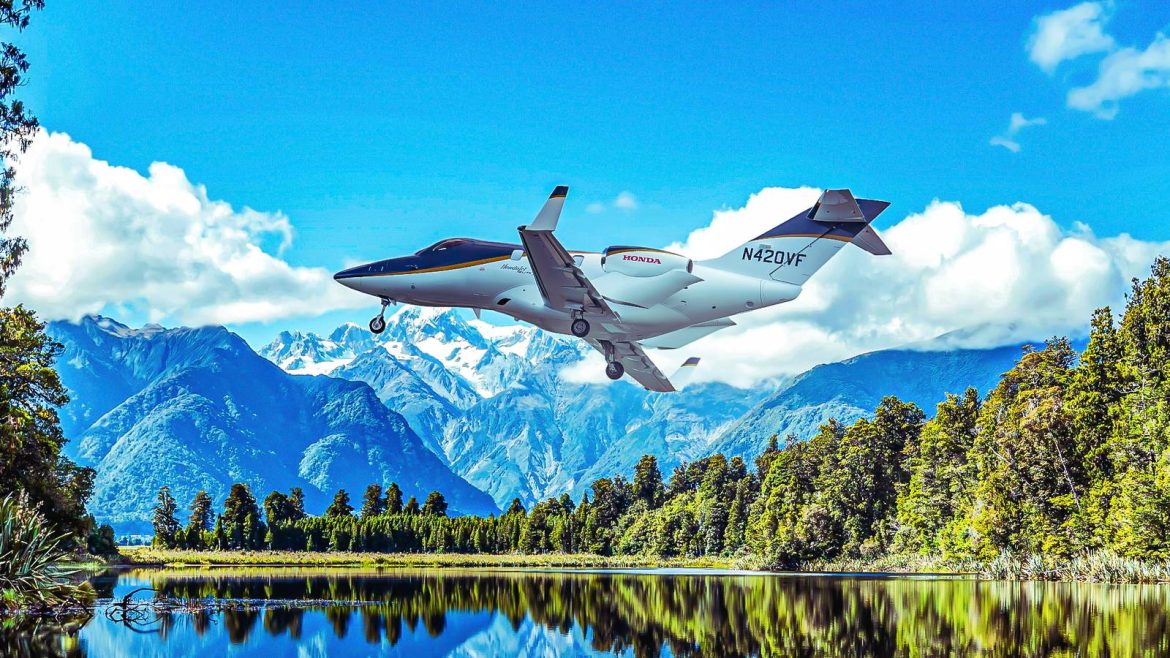
The HondaJet, first developed as the HA-42 model, is a very light business jet manufactured by the Honda Aircraft Company in Greensboro, North Carolina, United States. It was first developed in the 1990s and has some interesting design features. It first flew in December 2003 but Federal Aviation Administration (FAA) certification was not achieved until December 2015, when deliveries also started. As of February this year, 200 HondaJet have been produced and it still remains in production today. Let’s find out more about the HondaJet series.

A basic rundown
The aircraft has space for six or seven passengers and has a composite fuselage and an aluminum wing, It has two GE Honda HF120 turbofan engines attached to pylons above the wing and produce 2,050 pounds of thrust. In the cruise, the aircraft can reach speeds of 422 knots or 782 kilometers per hour. The HondaJet HA-42 has a range of 1,547 nautical miles or 2,865 kilometers. The aircraft manufacturer has received awards for the HondaJet’s innovative design.
Still in production today, Honda first looked at the development of a small-size business jet in the late 1980s and assembled the MH01 turboprop and the MH02 prototypes at the Mississippi State University Raspet Flight Research Laboratory. Flight testing continued until 1996, when the aircraft was moved to Japan. The aircraft was designed by Honda Aircraft’s founder, Michimasa Fujino, who interestingly designed the aircraft’s nose, influenced by shoes by Salvatore Ferragamo, or so he said.
Another unusual design feature is the Over The Wing Engine Mount (OTWEM) and is unique to Honda Aircraft. It maximizes cabin space by removing the structure that is normally used to mount engines near the fuselage and is considered to be one of the most unusual features of the aircraft.

Doubts over production
In October 2000, Honda R&D Americas built their research facility at Piedmont Triad International Airport in Greensboro. Although the first flight took place in December 2003, Honda Aircraft was still unsure of the commercial potential of the aircraft. To understand further, Fujino displayed the aircraft at the EAA AirVenture Oshkosh airshow in 2005. After attracting much interest, they decided to announce that the aircraft was going into production, at the same event, the following year.
They planned deliveries of the aircraft for 2010 with an asking price of $3.65 million. The first flight of a production aircraft took place in June 2014. It was certified by the FAA in December 2015, by the European Union Aviation Safety Agency (EASA) in May 2016 and in Japan in December 2018. The estimated cost of the HondaJet program was between $1.5 and $2 billion.
During 2015, Honda Aircraft hoped to produce 40 aircraft and upped that to 60 aircraft in the following year and 20% of the aircraft were bound for Europe. Honda Aircraft planned to up production further to 80 aircraft per year from 2019. The HondaJet soon was to become the top-selling aircraft in the very light category.

The HondaJet Elite – an introduction
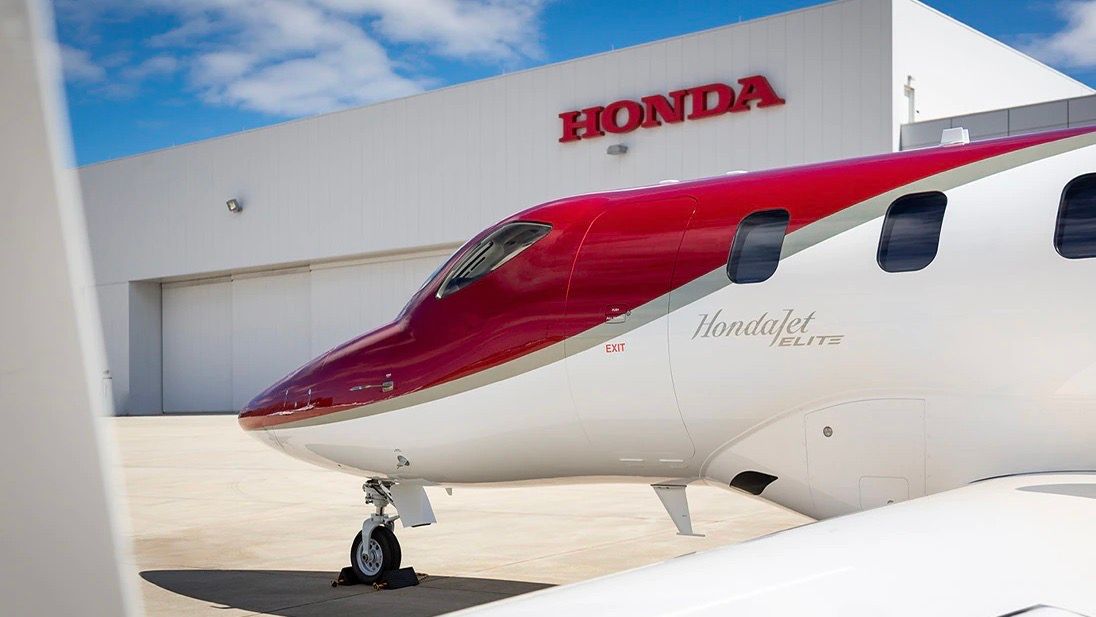
The HondaJet Elite was introduced in May 2018 with a better performance envelope, updated flight deck and improved interior. The FAA amended the certification, as did EASA. The Elite’s takeoff roll was reduced and its range increased, an auxiliary fuel tank was added and the aerodynamics were improved. Vibration and noise in the cabin were reduced and the lavatory was fitted with a seatbelt allowing a seventh passenger to travel. There was a small galley and the cockpit was fitted with the Garmin G3000 avionics suite.
The payload was increased and it had a speed of Mach 0.676 or 720 kilometers per hour. In 2019, a medivac version was introduced and in the same year, the HondaJt first flew on Sustainable Aviation Fuel (SAF). It was certified in Canada, China and Turkey and cost $5.28 million. In 2020, EASA certified the aircraft for steep approaches and the galley was removed to add an extra seat, so it could now take eight passengers. It now costs $ 5.75 million.
The original HondaJet could be upgraded with the Advanced Performance Modification Group (APMG) at a cost of $250,000 for modifications.

The HA-480 Echelon
Honda Aircraft unveiled the Echelon in 2021 as the HondaJet 2600 concept, which could feature up to eleven seats in the cabin. Its range is 2,625 nautical miles or 4,862 kilometers and it has a cruise speed of 450 knots or 830 kilometers per hour and can reach a ceiling of 47,000 feet. It costs between $10 and $12 million and will be the longest-range single-pilot business jet.
The Echelon has the same configuration as the original variant but has a stretched fuselage and a larger wingspan. In June 2023, Honda Aircraft announced the production of the Echelon. Assembly of the aircraft is due to start in 2025 and certification is projected for 2028 or 2029. The aircraft has Williams FJ44-4C turbofan engines which produce 3,450 pounds of thrust, a carbon fiber fuselage and a larger cabin. It is also 20% more fuel efficient than its competitors, the Embraer Phenom 300, the Pilatus PC-24 and the Cessna Citation CJ3/CJ4.
 HondaJet Elite II
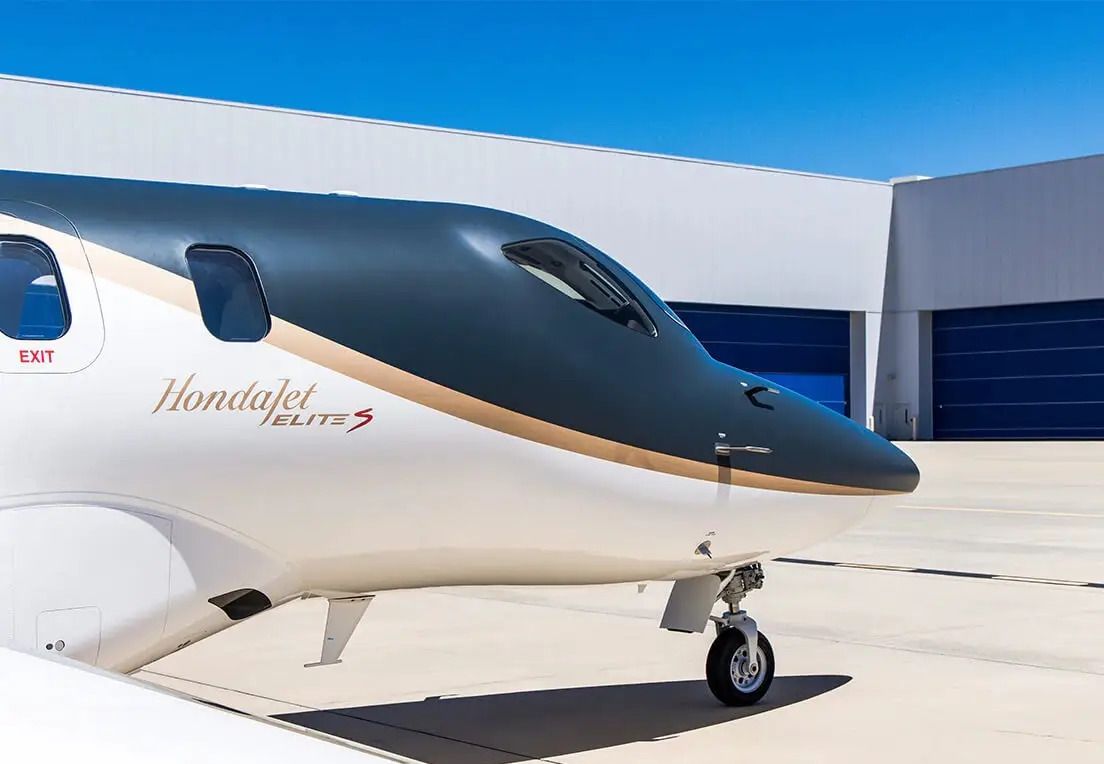
The HondaJet Elite II was introduced in October 2022, with improved aerodynamics, more fuel capacity and an increase in gross weight. It has a range of 1,547 nautical miles or 2,865 kilometers and has a cruise speed of 422 knots or 782 kilometers per hour. The flight deck is fitted with the Garmin G3000 avionics suite and features autothrottles and emergency autoland. The aircraft has a new paint scheme and upgraded interior. It was certified by the FAA in November 2022 and costs $6.95 million.
Aircraft deliveries
|
Year |
2015 |
2016 |
2017 |
2018 |
2019 |
2020 |
2021 |
2022 |
2023 |
All |
|---|---|---|---|---|---|---|---|---|---|---|
|
Deliveries |
2 |
23 |
43 |
37 |
36 |
31 |
37 |
17 |
22 |
248 |
|
Billings (million $) (est.) |
9 |
103.5 |
209.2 |
183.1 |
179.5 |
164.3 |
199.3 |
104.8 |
152.9 |
1,305.6 |
|
Average (million $) (est.) |
4.5 |
4.5 |
4.87 |
4.95 |
4.99 |
5.3 |
5.39 |
6.16 |
6.95 |
5.26 |
In 2018, deliveries were on the slow side, partly due to delivery timings and customer schedules as well as the transition to the HondaJet Elite. Again, deliveries slowed due to the Covid-19 pandemic. Other issues include a lawsuit with fractional aircraft operator Jet It, after a runway incursion and consequently, Jet It sold their fleet of HondaJets and replaced them with Embraer Phenom 300s. This was settled out of court. There were some safety concerns from the HondaJet Owners and Pilots Association, after eight accidents occured in a twelve-month period.
Aircraft specifications comparison
(Data from Wikipedia, Honda Aircraft Company)
|
Variant |
HondaJet |
Elite |
Elite II |
Echelon |
|---|---|---|---|---|
|
Cockpit crew |
1 or 2 |
|||
|
Typical seating |
4 or 5 passengers |
6, 8 or 9 passengers |
||
|
Maximum seating |
7 passengers |
10 passengers |
||
|
Length |
42 ft 7 in (12.99 m) |
57 ft 10 in (17.62 m) |
||
|
Wingspan |
39 ft 9 in (12.12 m) |
56 ft 9 in (17.29 m) |
||
|
Height |
14 ft 11 in (4.54 m) |
15 ft 11 in (4.84 m) |
||
|
MTOW |
10,600 lb (4,808 kg) |
10,701 lb (4,854 kg) |
11,100 lb (5,035 kg) |
17,550 lb (7,938 kg) |
|
Cabin height |
4.83 ft (1.47 m) |
5 ft 3 in (1.59 m) |
||
|
Cabin width |
5 ft (1.52 m) |
5 ft 1 in (1.55 m) |
||
|
Engine (× 2) |
GE Honda HF120, 2,050 lbf (9.1 kN) |
Williams FJ44-4C, 3,450 lbf (15.3 kN) |
||
|
Cruising speed |
422 kn (782 km/h; 486 mph) at FL300 |
450 kn (830 km/h; 520 mph) |
||
|
Range |
1,223 nmi (2,265 km; 1,407 mi) |
1,437 nmi (2,661 km; 1,654 mi) |
1,547 nmi (2,865 km; 1,780 mi) |
2,625 nmi (4,862 km; 3,021 mi) |
 Awards and accolades for the HondaJet
Designer and Honda Aircraft Company CEO Michimasa Fujino won:
- Business and Commercial Aviation Vision Award (2008)
- American Institute of Aeronautics and Astronautics (AIAA) Aircraft Design Award (2012)
- SAE International Clarence L. (Kelly) Johnson Aerospace Vehicle Design and Development Award (2015)
- International Council of Aeronautical Sciences (ICAS) Award for Innovator in Aeronautics (2017)
- Living Legends of Aviation Industry Leader of the Year Award (2017)
- AIAA Reed Aeronautics Award (2021)
The HondaJet aircraft awards include:
- Robb Report: Best of the Best Business Jets (2007)
- Aviation Week and Space Technology: Techs to Watch (2015)
- Popular Science: Best of What’s Now (2014)
- Flying Magazine: Flying Innovations Award (2017)
- AIAA Foundation Award for Excellence (2018)
- Aviation International News (AIN) Top Flight Award (2021)
The HondaJet Aircraft Company uses advanced technology to build safe and efficient aircraft such as the original HondaJet, the HondaJet Elite and the upcoming HondaJet Echelon. They like to defy the norm in the industry and produce aircraft that can meet a variety of different missions. They want to make private aviation more accessible and enhance the benefits of travel by private jet.
Their aircraft are suited to business or private owners, entrepreneurs, charter operators and for special missions and medivac services. The aircraft are designed to be safe, comfortable and fuel-efficient through aerodynamic performance. Their aircraft emit less CO2 without inhibiting performance and have lower operating costs than comparable aircraft of a similar class.
Over 200 aircraft are in service and have a 99.97% dispatch reliability rate and have logged more than 98,000 flight hours.
