
We may receive a commission on purchases made from links.
At this point, it sounds cliché to say, “they don’t make them like they used to,” but in the case of kitchen appliances, this statement is very true. While there are many appliances that get lost to time, there are some that seem to last for generations. The ones that stick around are often built out of sound materials, are extremely durable, reliable, and beloved. Some familiar brand names come to mind for kitchen appliance makers that have created solid products that, to this day, even have a cult-like following: KitchenAid, GE, Osterizer, and Sunbeam.
Often the reason these old-school kitchen appliances seem to last forever is that they generally had simpler mechanics, were made from metals, and used glass instead of plastic. Modern kitchen appliances have complex electrical parts that are often built into one unit. This means if one part fails, the whole unit needs to be replaced. The materials used to manufacture modern appliances are usually made from cheaper materials with planned obsolescence in mind; this can limit the durability of the appliance overall.
Many of the items on our list are great examples of how old-school appliances were constructed with craftsmanship, durability, and longevity in mind. You may even have one of these still running strong in your kitchen today. While there are some kitchen appliances you never want to buy from a thrift store, the ones we have here would be amazing finds.
GE Monitor-Top refrigerator
First released in 1927, the GE Monitor-Top (nicknamed as a reference to the turrets on the Civil War ship the USS “Monitor”) refrigerator was the first of its kind with a hermetically sealed compressor mounted on top. This protected the inner workings from dust, and it also meant that the unit never needed to be lubricated, making it extremely reliable. It was also one of the more affordable home refrigerators, at $300 or with a payment plan through your electric company, which is likely why it became so popular with consumers.
The appliance also had the added benefit of not making a lot of noise when running. The GE Monitor-Top was so reliable and durable due to its all-steel construction and condenser location that many can still be found in working condition today. You can often find vintage Monitor-Top refrigerators online selling for upwards of $5000 or more for the rare two-door models.
KitchenAid Model K stand mixer
The KitchenAid stand mixer is probably one of the most well-known and loved American-made kitchen appliances on our list. A KitchenAid stand mixer is often a beloved family heirloom, passed down for generations. It’s not uncommon for the KitchenAid stand mixer to be on a wedding registry as a staple kitchen tool. And many would say the iconic status of the appliance started with the Model K. The silhouette of the Model K was even trademarked and would forever attach its shape to the name KitchenAid.
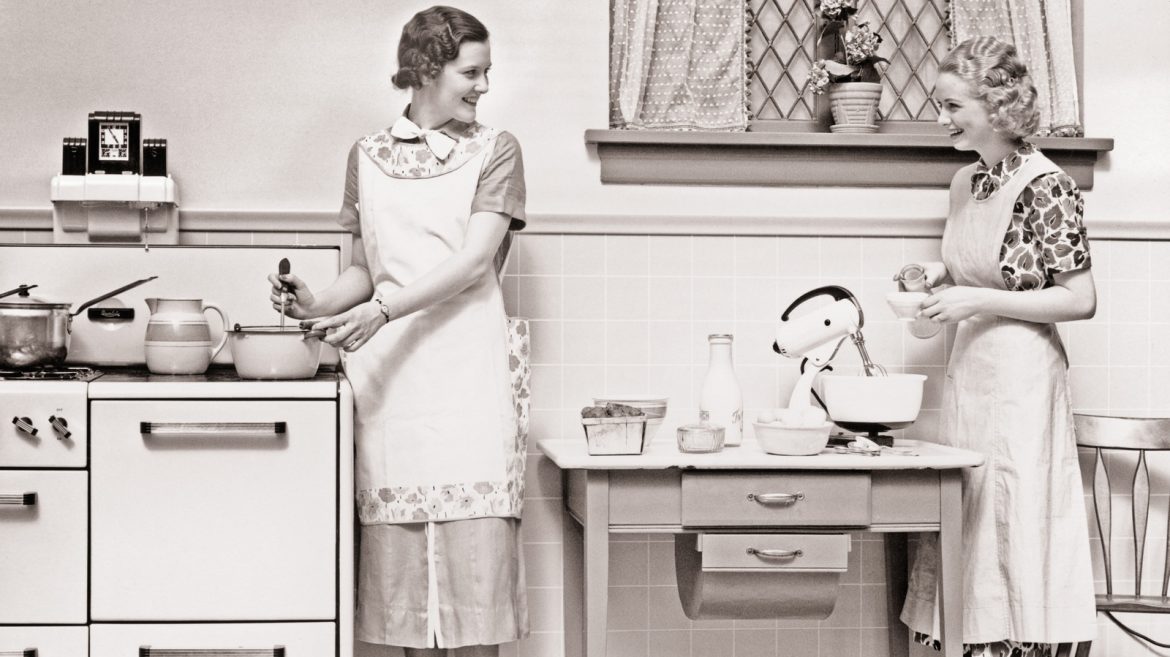
The Model K stand mixer was launched in 1937 and was a complete departure from its previous bulky and expensive models. Designed by Egmont Arens, the Model K was made to appeal to the average home cook: sleeker, smaller, and much more affordable. KitchenAid stand mixers in general were made with simple mechanical parts and solid metal, which is why it’s not uncommon to find an older Model K still going strong after all these years.
Chambers Model A gas range
The Chambers Model A gas range is a behemoth made with cast iron. It’s no wonder it’s stood the test of time. Produced by the Chambers company from 1936 through 1938, the Chambers Model A gas range has a few very important features that distinguish it from later models. The most notable differences are that the front panel is split into two distinct pieces and that it has stamped-steel Art Deco legs.
The Model A gas range was an important advance in the modernization of the home kitchen with its many cooking features and ability to maintain heat even when the gas was turned off. This feature was a crucial part of the Chambers company’s marketing of the Model A. Cooking with the gas turned off after initial preheating was made possible by the fact that the whole oven was insulated with high-grade rock wool.
Home cooks were instructed to preheat the oven for about 10 minutes, add their dish, then let the gas run for the time their recipe called for, turn off the gas, and let the dish finish cooking with the leftover heat. Because of how well these stoves were built, many are still in working condition in many kitchens today.
Osterizer Galaxie blender
You may recognize this popular blender if you grew up in the 60s or 70s; it seemed like it was standard issue for kitchens in the suburbs during the time period. The Osterizer Galaxie blender has been around for quite a while, and because of its durability and performance, one might still be hiding in your favorite Boomer’s appliance cupboard. The blender, across the various models, was built with a thick glass pitcher, solid metal housing, and a simple yet powerful motor. Because the internal parts could easily be disassembled, cleaned, and replaced, these vintage blenders could last for decades.
What’s amazing is that you can still find many working models of the Osterizer Galaxie online today for a reasonable price. This fact alone almost makes it worth adding one to your kitchen, knowing that it might outlast many modern blenders that sell for the same price, if not more. This product is a great example of a “BIFL” (Buy It For Life).
Sunbeam Radiant Control Toaster
If there is one design that has become emblematic of the whole category of toasters in general, it is the Sunbeam Radiant Control toaster. The Model T-20 (wondering if we’re witnessing the rise of the Terminator via toaster?) was first introduced in 1949. Tired of burnt toast, we imagine, Ludvik J. Koci invented the radiant heat control system that could sense when the toast was done and turn off the toaster. Inside the appliance was a bimetallic sensor that would bend when the toast radiated heat at a certain temperature, which would then trigger the heat elements to shut off. It makes us wonder why we’re still using similar devices with timers today, considering how ingenious this mechanism is.
The main part of the toaster was made of a chrome body, making it extremely durable. Like many of the other appliances on our list, it featured simplified mechanics that allowed it to be adjusted, repaired, and easily maintained. These are likely the very reasons this toaster remains popular today.
