
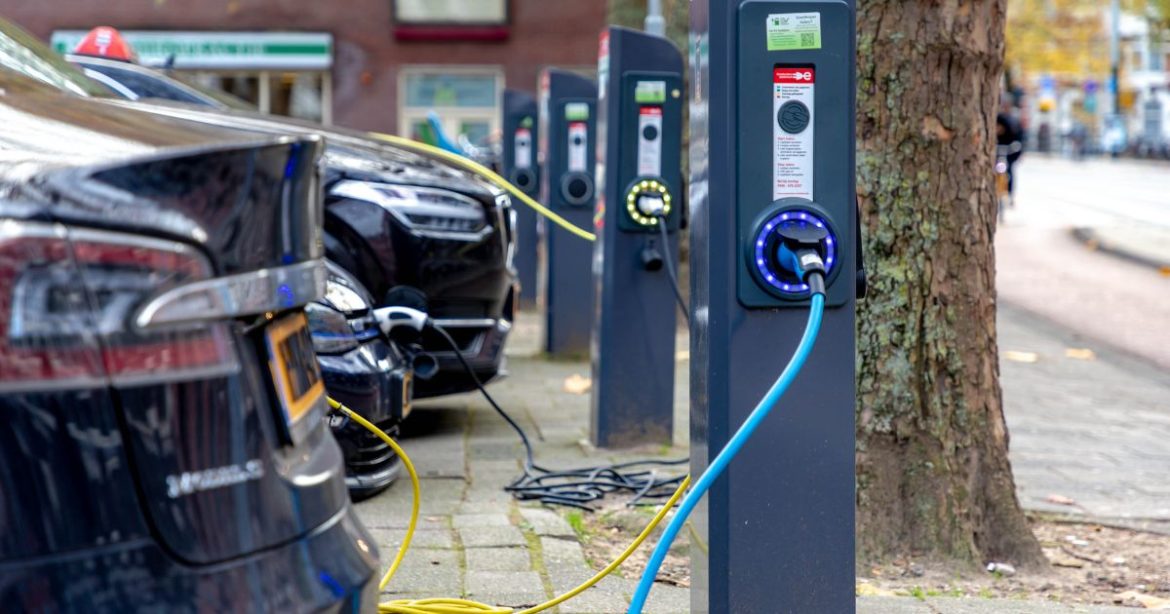
Dutch energy supplier Vattenfall has announced a new trial in which electric cars will be used as buffers for the power grid. During the six-month pilot, electric cars connected to special charging stations will store excess electricity produced and feed power back into the grid when needed.
Vattenfall launches energy trial using electric cars as batteries
Together with Kia and Hyundai, Vattenfall plans to launch the Vehicle-to-Grid (V2G) pilot from July, lasting six months. Using bidirectional charging, electric cars will store electricity and feed power back into the grid in a controlled manner.
A maximum of 80 households that own a Kia EV9 or Hyundai IONIQ 9 can take part in the test. The special bidirectional charging station will be installed at participating homes. These residents will also be reimbursed up to 500 euros for the amount of electricity charged at home.
Vattenfall will manage the charging and discharging of electric cars based on electricity demand. “Electric cars are stationary for most of the day,” Vattenfall director of customer solutions Jeroen van Loon said in a press release. “At the same time, they have a large battery: while a home battery usually holds around 10 kilowatt-hours, an electric car easily has 50 to 60 kilowatt-hours of storage.”
This makes it perfect for holding excess electricity produced by solar panels, for example, which would otherwise overload the power grid. Then this power can be fed back into the grid between 4pm and 9pm when demand is highest.
Dutch power grid becoming increasingly overloaded
The electricity grid in the Netherlands is becoming more and more overloaded as more heat pumps, solar panels, charging stations and data centres are installed, reports De Telegraaf. The initiative offers a possible solution.
“In this pilot, we are investigating how we can unlock the flexibility of this new generation of cars and thereby gain experience with an energy system that can better adapt to supply and demand,” said Van Loon. Not much will change for participants as they can set their own preferences, such as departure time or minimum battery percentage.
