
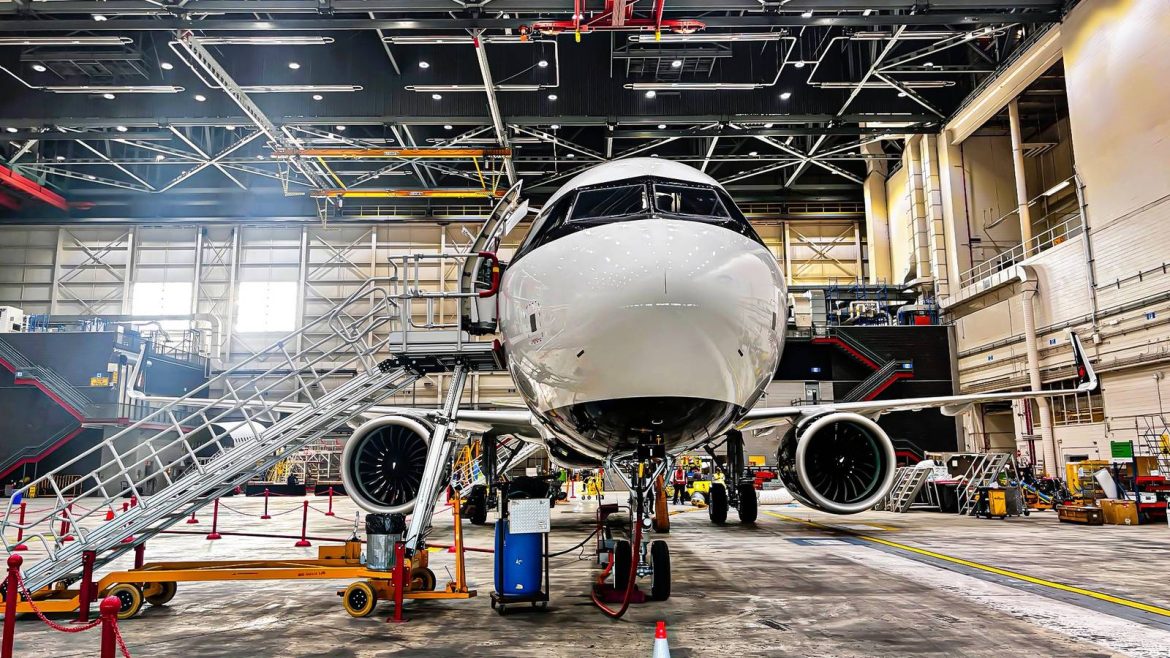
The Airbus A321XLR was supposed to arrive at  Air Canada as a clean answer to one of the airline industry’s most challenging network decisions: flying long, thin transatlantic routes without committing a widebody. The aircraft promised widebody-like range with narrowbody economics, allowing Air Canada to connect secondary European cities from Canada with lower trip cost and less capacity risk.
But the first chapter has been messier than that. Air Canada COO Mark Nasr told Reuters that the airline’s A321XLRs are “the better part of two years late”, with supply-chain “friction” continuing to affect the timing of deliveries. That delay matters in the short term, but it is not the most revealing part of the story. The sharper point is that Air Canada’s revised XLR plan shows what airlines are now learning in real time: the A321XLR is brilliant, but only when the mission is carefully chosen.
Air Canada’s XLR Plan Has Already Been Rewritten

Air Canada has 30 Airbus A321XLRs on order, split between leased and purchased aircraft, and took delivery of the first aircraft on April 24, with the second arriving earlier this month. The aircraft type gives the airline a new tool between its existing narrowbodies and long-haul widebodies, with a 182-seat cabin that includes 14 lie-flat Signature Class seats and 168 economy seats. On paper, it is exactly the kind of aircraft Air Canada needed for long, thinner international markets.
The original plan was bold. Air Canada positioned Palma De Mallorca Airport (PMI) as the first new route unlocked by the XLR, with the aircraft also earmarked for routes such as Edinburgh Airport (EDI) and  Dublin Airport (DUB). That schedule has since changed, and Air Canada has conducted a major shake-up of its original XLR plans. Palma is now being covered by a Boeing 787-8, while Toulouse has emerged as the more practical anchor for the A321XLR’s early transatlantic role.
That is the real story. A delay can explain why an airline does not have enough aircraft. It does not fully explain, however, why the airline is becoming more selective about where those aircraft fly. Air Canada’s pivot is not just because the XLR is a delayed fleet type; it suggests the airline is realizing that it is a precision instrument that requires the right route, the right airport, the right season, and the right demand mix.
The Challenge Is Not Range — It Is Usable Range

The A321XLR’s headline range is up to 4,700 nautical miles. That number is the reason airlines got excited. It takes the A321 family beyond traditional short- and medium-haul work and allows carriers to consider routes that used to require a Boeing 757 or a smaller widebody. For network planners, that is a major shift.
But the advertised range is not the same as the usable commercial range. A route has to work with a combination of factors, including the number of passengers and bags, fuel reserves, alternate-airport requirements, seasonal winds, cargo, runway limits, and hot-weather performance. The aircraft may be capable of flying a route on paper, but an airline still has to question whether it can do so reliably, repeatedly, and most importantly, profitably.
|
XLR Promise |
What It Means On Paper |
What Airlines Must Test In Practice |
|---|---|---|
|
Up to 4,700 nm range |
Opens long, thin routes |
Can it carry a full payload year-round? |
|
Narrowbody trip cost |
Lower risk than a widebody |
Is revenue high enough with fewer seats? |
|
Secondary city access |
Bypasses major hubs |
Are the runway and weather conditions workable? |
|
Lie-flat premium cabin |
Long-haul comfort in a narrowbody |
Is there enough premium demand? |
|
Route-opening flexibility |
Tests markets without widebody risk |
Is there enough spare fleet coverage? |
That distinction is central to Air Canada’s XLR rethink. Chief Commercial Officer Mark Galardo has pointed to heat, short runways, and obstacles as significant factors that can affect payload. That is not a minor footnote. It is the difference between a route that can be flown and a route that can only be flown with the right number of passengers, bags, and revenue-generating payload.
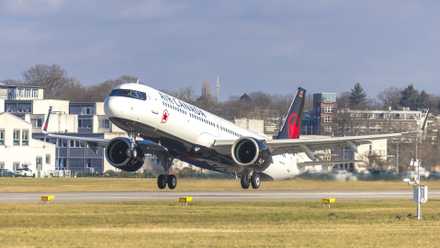
Finally Delivered: Air Canada’s 1st Airbus A321XLR Leaves Hamburg Bound For Home
Air Canada’s first Airbus A321XLR will open new long-haul narrowbody routes from North America to Europe.
Toulouse Shows What A Good XLR Mission Looks Like

Toulouse-Blagnac Airport (TLS) may not be as glamorous as Palma de Mallorca, but it is a much better example of what the A321XLR is actually built to do. The route from Montréal–Trudeau International Airport (YUL) has aerospace links, business demand, Canada-France connectivity, a francophone logic, and year-round strategic value. That is a much stronger foundation than a market driven primarily by summer leisure demand.
What is interesting is that YUL-TLS is not a new route. Air Canada originally planned it in 2019, looking to link up the two Airbus production centers, but its launch was delayed due to the pandemic. When it did eventually debut in 2023, it was operated by an Airbus A330-300 with five weekly flights. But load factors weren’t great, and plans to move to a year-round daily non-stop were shelved as Air Canada struggled to sell the 1,400 weekly seats it already had on offer.
Yet this sort of route is the A321XLR’s sweet spot. The aircraft is not most valuable when it flies the longest possible route. It is most valuable when it connects a market that is too thin for a widebody but too important to leave entirely to one-stop itineraries. Montreal–Toulouse fits that profile perfectly. It has a clear demand base, but not necessarily one that needs a large widebody every day of the year.
|
Factor |
Toulouse |
Palma de Mallorca |
|---|---|---|
|
Demand profile |
Business, aerospace, VFR, leisure |
Heavily leisure-oriented |
|
Strategic value |
Strong Canada-France and aerospace links |
Attractive but more discretionary |
|
Year-round potential |
Stronger |
More seasonal |
|
Premium demand |
More likely |
Less certain |
|
Aircraft fit |
Classic XLR mission |
More sensitive mission |
|
Symbolism |
Practical route-opening |
Original headline route |
Shifting to a daily XLR service allows Air Canada to offer a more regular service with an aircraft that can handle the 3,100 nautical mile 7-hour route with ease, yet minimizes the downside risk of flying half-full A330s. That is why Air Canada’s revised network may ultimately be more revealing than its original one. Palma was the headline. Toulouse is the case study. It shows the XLR as a tool for disciplined long-haul network development, not as a dramatic range statement.
The XLR Can Struggle On The Wrong Mission

The A321XLR is not a small Boeing 787. That may sound obvious, but it is the point that airlines are now having to confront. It is still a single-aisle aircraft, with less belly cargo capacity, fewer premium seats, fewer total seats, and tighter performance margins than a widebody. Its advantage is lower trip cost, not unlimited capability.
That matters most at the edges of the aircraft’s envelope. Hot airports reduce takeoff performance. Short runways limit takeoff weight. Strong westbound winter winds increase fuel requirements. Leisure passengers may bring heavier bags without generating high yields. Cargo-heavy routes may work better with a widebody. As a result, a long-thin route can look perfect on a map, yet still become commercially fragile when some or all of those variables are added.
|
Risk Factor |
Why It Matters |
Possible Consequence |
|---|---|---|
|
Hot airport conditions |
Reduces takeoff performance |
Fewer passengers, bags, or cargo |
|
Short runway |
Limits takeoff weight |
Payload restrictions |
|
Strong winter headwinds |
Raises westbound fuel requirement |
Blocked seats or reduced cargo |
|
Heavy leisure baggage |
Adds weight without high yield |
Weaker economics |
|
Limited premium demand |
Reduces revenue per seat |
Route becomes too fare-dependent |
|
Cargo opportunity |
XLR has less belly capacity than widebodies |
Lost revenue versus 787/A330 |
|
Small subfleet |
Harder recovery if aircraft develop issues |
Schedule reliability risk |
|
High seasonality |
Aircraft needs another use off-peak |
Weak year-round utilization |
Air Canada’s Palma decision is a useful example because it is a seasonal, leisure-skewed, and warm-weather market. Using a Boeing 787-8 less frequently — with the route now revised to three times weekly — can ultimately make more commercial sense. This is not an indictment of the XLR on transatlantic routes; it just illustrates that not all transatlantic routes make sense based on distance alone, and route selection for the XLR is crucial.
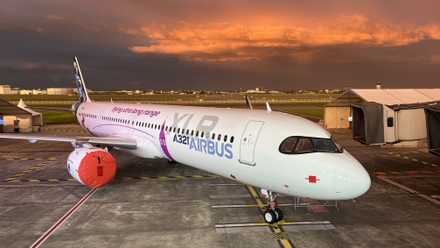
The Undiscussed Risks Of The Game-Changing Airbus A321XLR
The A321XLR is being touted as a game-changer for airlines. And it is. But here are just a few of the things airlines need to watch out for.
Air Canada Is Not The Only Airline Learning This

Air Canada is not alone, and other early A321XLR users are discovering that the aircraft is highly capable, but that its economics depend heavily on mission selection. Aer Lingus is perhaps the best example. It is using the XLR for longer routes approaching 4,000 miles, where there is a strong year-round business case, such as  Minneapolis-St. Paul International Airport (MSP) and Raleigh–Durham International Airport (RDU). Yet shorter routes to the Northeast (such as Hartford) are comfortably served with the Airbus A321LR, while larger cities (such as Chicago) warrant a widebody.
The Irish flag carrier is therefore using the XLR as a precision tool — when a route can’t justify a widebody, yet can deliver yields with a narrowbody, but requires more range than an LR. Even so, the airline has acknowledged that winter westbound flying can create payload pressure for the XLR. That is the key phrase: payload pressure. The issue is not whether the aircraft can cross the Atlantic. The issue is whether it can do so with the desired number of passengers, bags, and cargo when winds and reserves are less favorable.
|
Airline |
XLR Lesson |
What It Shows |
|---|---|---|
|
Air Canada |
Toulouse replaces Palma as the early anchor |
Mission selection is everything |
|
Aer Lingus |
Winter westbound payload can matter |
Range is not always full-payload range |
|
Wizz Air |
XLR no longer fits the post-Abu Dhabi model |
Long-haul ULCC flying is difficult |
|
United Airlines |
Premium-heavy 757 replacement strategy |
Best used on thin, high-yield routes |
|
American Airlines |
Conservative first transatlantic deployment |
Early operators are avoiding the edge of range |
Other airlines show different kinds of caution. Wizz Air’s retreat from the XLR reflects a business-model issue after the end of its aspirations in Abu Dhabi.  United Airlines is configuring its XLRs as premium-heavy 757 replacements, indicating that it sees the aircraft as a high-yield niche tool rather than a volume machine.
  American Airlines‘ first international XLR route,
  New York JFK Airport (JFK) to Edinburgh, is a relatively conservative transatlantic mission rather than a maximum-range showcase.
What Makes The Ideal XLR Route?

Looking across the airlines, and specifically at Air Canada, it is becoming apparent that the ideal A321XLR route is not simply the longest one. It is a route that sits comfortably within the aircraft’s real-world operating range, has airport conditions that do not punish payload, and offers a demand mix strong enough to support long-haul narrowbody economics. The aircraft needs more than passengers who will fill seats. It needs passengers who will generate enough revenue to justify the mission.
This is where the comparison with the Airbus A321LR matters. The LR already covers a meaningful part of the long-range narrowbody market, with a published range of up to 4,000 nautical miles. That is enough for many shorter transatlantic routes, especially from eastern Canada or the US Northeast to Ireland, the UK, Portugal, Spain, or western France. If an airline can fly the route comfortably with an LR, the XLR may not be necessary.
The XLR becomes valuable when the route asks the LR to operate too close to its limits. The XLR has an extra 700 nautical miles of range, but that is only part of the story. The XLR is also designed to give airlines more operating margin on difficult long-range missions, helped by its integrated Rear Center Tank rather than the LR’s reliance on additional fuel tanks in the cargo hold. That can matter when the airline is dealing with westbound winter winds, heavy bags, reserves, alternate fuel, or longer sector lengths.
|
Factor |
Ideal XLR Mission |
Better LR Mission |
Riskier XLR Mission |
|---|---|---|---|
|
Distance |
Long, but with XLR margin |
Within LR range with comfort |
Near the XLR’s practical limit |
|
Airport performance |
Long runways, mild conditions |
Standard narrowbody-friendly airports |
Hot, short, or obstacle-limited airports |
|
Demand |
Thin but proven |
Shorter long-haul with steady demand |
Speculative or highly seasonal |
|
Yield |
Business, premium leisure, VFR mix |
Balanced demand without extreme range needs |
Mostly low-fare leisure |
|
Cargo/bags |
Passenger-led economics, manageable bags |
Limited cargo dependence |
Heavy bags or cargo needed |
|
Hub feed |
Strong feed at one end |
Strong feed but shorter sector |
Mostly local demand |
|
Fleet logic |
Needs XLR range and margin |
LR can do the route reliably |
XLR is used because it is available, not ideal |
|
Seasonality |
Year-round or easily redeployed |
Seasonal but operationally simple |
Short peak season and hard off-season use |
|
Passenger proposition |
Nonstop saves time and hassle |
Narrowbody acceptable on shorter sectors |
Narrowbody comfort becomes a drawback |
In that sense, the XLR is not simply a better LR. It is a more specialized aircraft. The LR is a strong tool for routes that are long by narrowbody standards. The XLR is the tool for routes that are almost too long for narrowbodies. If the LR can do the route with margin, the XLR may be overkill. If the LR can only do the route on a good day, the XLR becomes much more valuable.
The best XLR market, then, is too small for a widebody but too important to ignore. It has real point-to-point demand, useful hub feed at one end, some premium or high-value traffic, manageable seasonality, and limited dependence on belly cargo. The aircraft works when nonstop service creates a clear advantage over connecting itineraries, and when the route genuinely needs the XLR’s extra range and margin rather than simply the novelty of a long-haul narrowbody.
The XLR Is Brilliant, But Not Magic

None of this makes the A321XLR a disappointment. Quite the opposite. It remains one of the most important narrowbody aircraft in decades because it gives airlines a lower-risk way to open long-haul routes that widebodies may not be able to support profitably. Air Canada is signaling this with what comes after Toulouse: routes to Copenhagen, Berlin, Nantes, and Porto all make sense in terms of the range requirements, the amount of year-round demand, and airport-performance profiles.
But the XLR is not a universal long-haul solution. It cannot erase supply-chain delays. It cannot ignore runway limits. It cannot carry widebody cargo loads. It cannot make every leisure market work year-round. And it cannot turn an ultra-thin route into a profitable one simply because it has enough fuel to reach the destination.
That is why Air Canada’s revised rollout matters. The two-year Airbus delay forced the airline to adapt, but the deeper lesson is about the aircraft itself. The best XLR routes will not be the boldest lines on a map. There will be routes where range, payload, runway performance, seasonality, premium demand, hub feed, and fleet reliability all line up. The A321XLR is brilliant, but only when the mission is chosen with care.
