
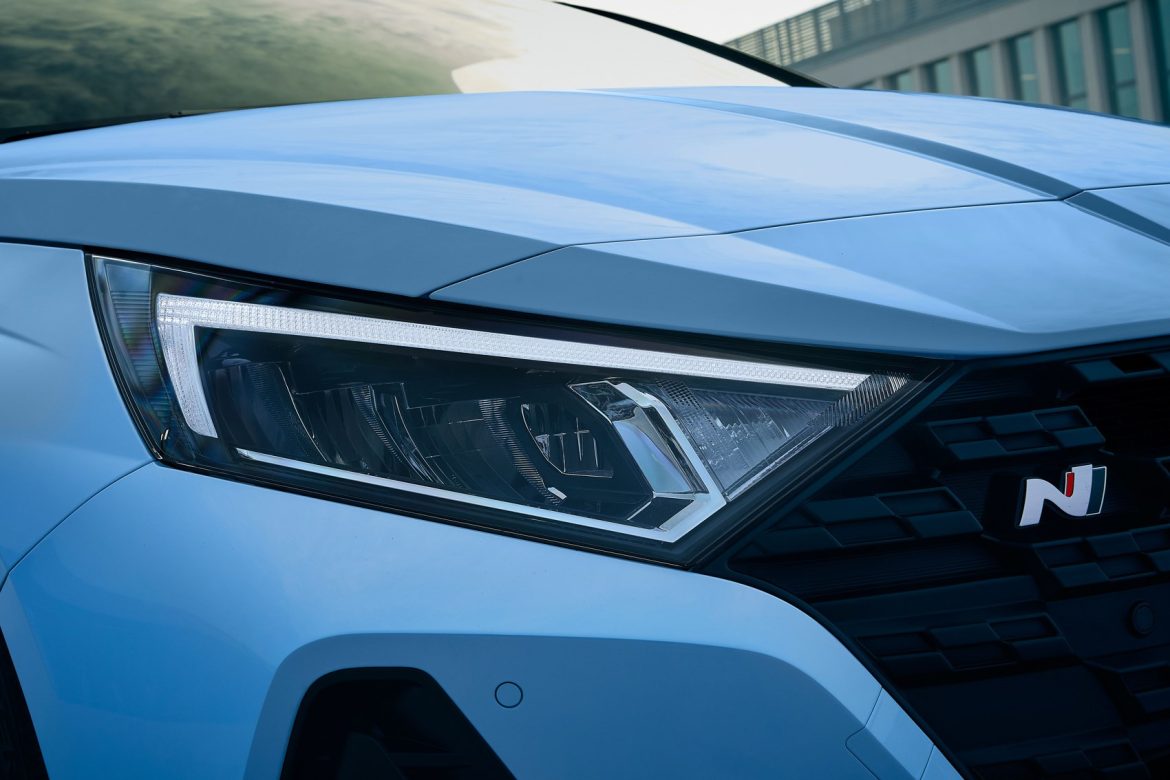
► Combustion hot hatch on the way
► Brand wants it to be priced well under Ioniq 5 N
► Will complement Hyundai’s N EVs
To paraphrase Mark Twain, the obituary of the attainable performance petrol engine might have been exaggerated – at least if Hyundai has got anything to do with it.
Because while the only Hyundai hot hatches currently on sale are priced from £65,800 – and are electric – performance bargains should be on the horizon soon.
Both Xavier Martinet, Hyundai’s boss in Europe, and Manfred Harrer, Hyundai’s global R&D boss (pictured below), recently told CAR that cheaper hot models are on the way.

Both feel it’s the right thing to do for Hyundai. Harrer spoke of ‘needing this [N] entry level back for our fans,’ feeling that the gap to the Ioniq N cars was ‘too big’, while Martinet said Hyundai ‘doesn’t want to be exclusively EV with them [N models]’. In essence, Hyundai wants to keep the affordability of N and the characteristics that made sense with the early iterations of the performance brand.
It feels like a good strategy on a number of levels.
Budget. For the all the brilliance of the N versions of the Ioniqs 5 and 6 – and they really are – they definitely stretch the wallet beyond your traditional hot hatch sector. The days of youngsters cutting their performance car teeth in Fiesta XR2is or Clios or 106s are long gone.
Heritage. The i30 N and following i20 N were roundly well-received, partly because they were more than half decent and partly also because they completely broke the sell ‘em cheap Hyundai mould that was the way back then. They helped launch Hyundai on its current path, lending it credibility and a sense that this company really could take on some of the oldest and most storied names in the business. ‘Hyundai’s GTI’ is a headline that makes sense to anyone.
And then virtually as soon as they arrived, they disappeared. You could argue it’s always good leaving your customers wanting more but as a rational brand-building case, it was an odd play.
So what form could the new car take? It’s unlikely to be another i30 as this is a car that doesn’t feel like a priority anymore, caught between the two awkward stools of not being cheap enough and also not SUV-enough.
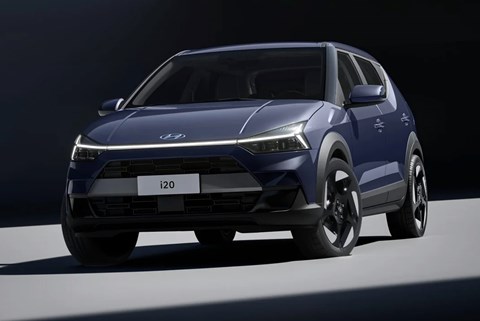
Instead, it seems likely that it’ll be an i20 N. The brand has just announced the Brazilian version of this car (pictured above) and it’s the model that would give the best chance of coming in at a reasonable price point.
Powertrain? Hyundai is on record as saying that it will continue to develop petrol engines – much like Toyota, it wants multiple powertrains going forward – and the 1.6-litre petrol feels like the right fit. My suspicion is that it will be hybridised – Martinet asked us what we’d like to see in the future, be that petrol or hybrid, manual or auto – but if even Porsche is struggling to make a naturally aspirated manual meet emissions regs, it’s unlikely a hot hatch with far tighter margins would manage it.
It would also be almost unique. Now that Ford has abandoned the small hot hatch market, and VW, Peugeot and Renault Group are doing EV-only versions, it would be in a class of one (ish – it just needs to come in under the Mini’s price), hoovering up all the airtime.
Not for the first time, you get the sense that Hyundai is reading the room correctly, managing to balance regulations with customer’s demands. As Martinet points out, ‘if the regulations make you do a 180-degree U-turn, you have a problem’. With the Ioniqs 5 and 6 – and who would bet against an Ioniq 3 N? – plus this potential i20 N, all bases are covered.
