
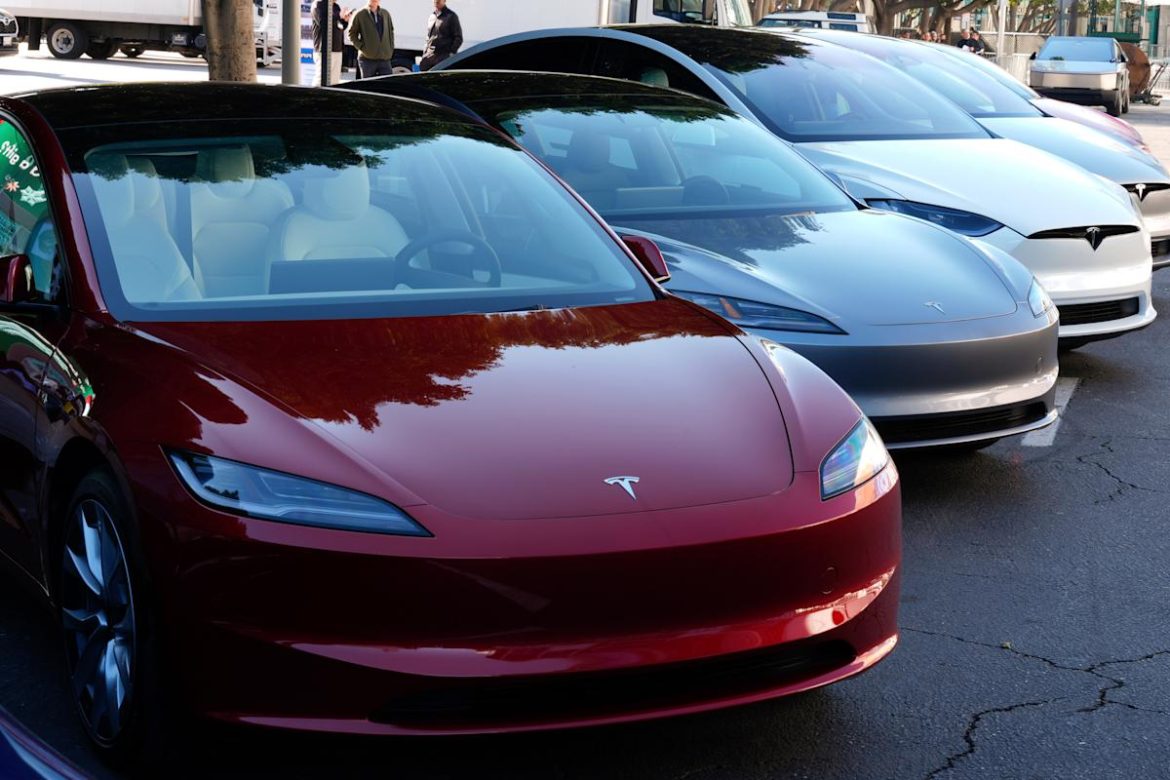
For a second time, Tesla (TSLA) heads Cars.com’s list of the most American-made vehicles, a paradox that comes as the US EV market it helped build shrinks in a post-tax-credit world.
Cars.com said on Tuesday that for the sixth straight year, the Tesla Model 3 claimed the No. 1 spot on its American-Made Index (AMI). The Model Y followed at No. 2 for a second consecutive year, giving Tesla the top two spots of the index.
Stellantis’s (STLA) Jeep took the next two spots with the Gladiator and Grand Cherokee, while Honda (HMC) placed five vehicles in the top 10 — the Ridgeline, Odyssey, Accord, Passport, and Acura MDX.
The 2026 list named 86 vehicles, down from 99 a year earlier. Cars.com attributed the drop to automakers trimming their lineups as President Trump’s tariffs introduced last year worked their way through the industry.
“This year’s list represents the ongoing evolution and diversification of American-made vehicles,” Cars.com AMI lead researcher Patrick Masterson said in the report. “Notably, nearly two-thirds of this year’s list was produced by foreign automakers, about the same as in 2025, while the Big Three still hold approximately one-third of the vehicles.”

Cars.com weighed each eligible vehicle on a 100-point scale across five factors: location of final assembly, the percentage of US and Canadian parts as reported under the American Automobile Labeling Act, US manufacturing workforce relative to output, and the countries of origin for available powertrains.
The final assembly location is a major factor. Cars.com said a vehicle has to roll off one of 48 US plants run by 13 automaker groups to qualify at all, which is why imports never appear, and why even a US-built model loses points for imported volume.
Tesla’s dominance of the index comes at a challenging time for it and other EV makers. New EV sales fell 27% year over year in the first quarter of 2026 to around 216.4K units, according to Cox Automotive’s Kelley Blue Book. EVs made up just 5.8% of all new-vehicle sales — flat from the prior quarter, but a steep dip from the 10.6% market share hit in the third quarter of 2025.
Expiration of the $7,500 federal EV tax credit at the end of Q3 was the main culprit, and demand has sagged ever since. Many automakers have throttled back production, with some major brands posting Q1 EV sales declines of 60% to 70% or more. In fact, the AMI share of electrified vehicles slipped from 30% to 24%, and the number of pure EVs on the list nearly halved, falling from 11 to five.

