
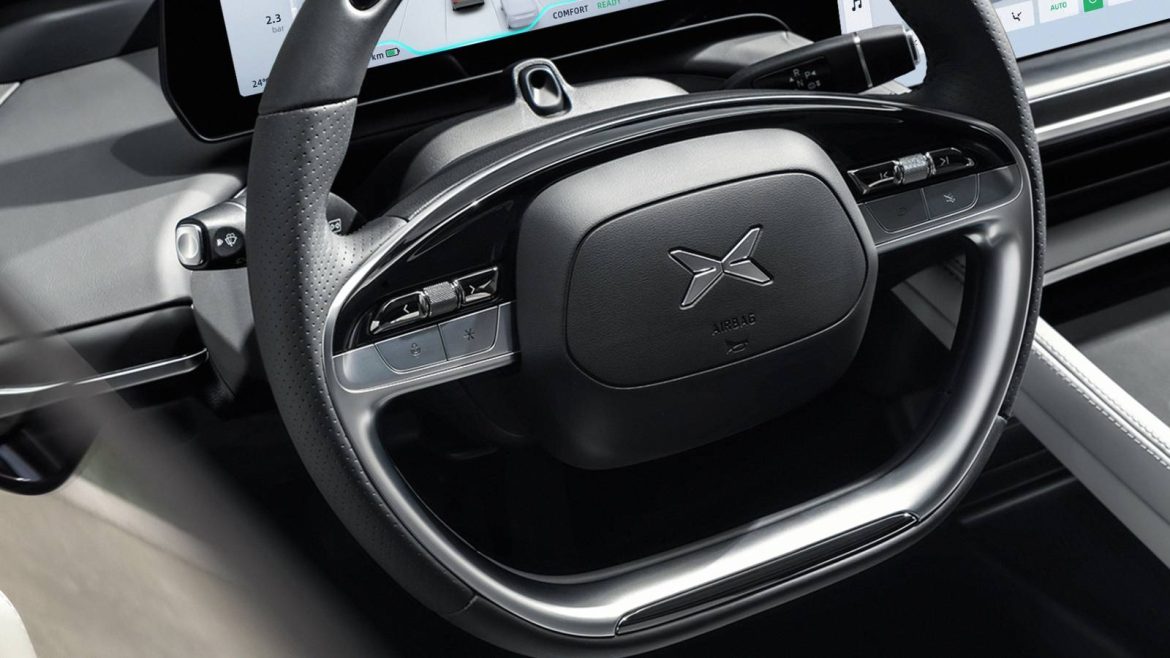
Chinese EVs are still at the center of attention in automotive industry headlines, from new and exciting China-exclusive models launched in rapid succession to news about yet another Chinese electric car brand beginning operations or expanding into another foreign market (except the United States).
It can be a bit overwhelming for anyone not familiar with the nature of the Chinese EV market to keep up with the latest brands, models, and technologies that these types of EVs are touting to win over buyers, but take the time to focus on the few that have established themselves to the same degree as mainstream EV brands like Tesla, Rivian, or Lucid Motors, and you can begin to understand them in further detail.
One such example is XPeng, which has not only cultivated a following of customers in its native China but also in regions like Europe, the Middle East, and APAC (Australia Pacific), with plans to further expand into South America and Mexico. But for anyone unfamiliar with this Chinese EV brand, what is the background behind XPeng, how has this relatively “young” startup grown so quickly, who is its key founder, and what models currently occupy its lineup? We outline all of this below.
All information about Xpeng, He Xiaopeng, and Xpeng models mentioned in this piece has been cited from the manufacturer and authoritative sources. We have converted kW to horsepower as per the outputs XPeng has supplied; range figures are converted from kilometers to miles, but it’s worth noting that range estimates on the EPA cycle are generally stricter as a default, so a straightforward comparison in miles isn’t an accurate representation of efficiency.
What Is Xpeng?
From Tech To The Automotive Industry

XPeng (also known as XPeng Motors, or 小鹏汽车 in Chinese) was founded in 2014 in Guangzhou, China, as a startup among the various EV brands that began to emerge in the Chinese market during the 2010s, following initial funding from various representatives in the country’s tech industries (including Alibaba, Xiaomi, and Foxconn).
XPeng’s key differentiating factor as an automotive company is that not only does it produce EVs for consumers, but it also develops various software and technologies in-house that can be applied to various forms of vehicular transport (aka mobility solutions) – including driver-assistance programs (ADAS), artificial intelligence software for infotainment/hands-free driving systems, and ‘Turing’ chips to power AI-driven functions/models utilized in these vehicles.
“Founded in 2014, XPENG is a leading Chinese AI-driven mobility company that designs, develops, manufactures, and markets Smart EVs, catering to a growing base of tech-savvy consumers. With the rapid advancement of AI, XPENG aspires to become a global leader in AI mobility, with a mission to drive the Smart EV revolution through cutting-edge technology, shaping the future of mobility.”
In addition to its headquarters and main production facility in Guangzhou, XPeng currently maintains offices internationally in Mountain View, California, and Munich, Germany.
Who Is XPeng’s Founding Figure, He Xiaopeng?

He Xiaopeng (from whose name the company gets its own) served as one of the initial backers of XPeng when it began, alongside Lei Jun (of Xiaomi) and two ex-senior executives from GAC (Guangzhou Automotive Group Co.Ltd) who specialized in automotive technology and research/development.
Initially a tech entrepreneur whose ventures were acquired by e-commerce giant Alibaba (and subsequently hired to lead their mobile app department), he eventually left his former position to focus on XPeng full-time, taking up the role of chairman in 2017. Reportedly, Xiaopeng drew inspiration from being one of Tesla’s first Chinese customers to develop his own equivalent EV vehicles and establish a mobility company, but domestically within China, giving rise to the foundations of XPeng as its known today.
“For our next decade (2024 onwards), XPENG is setting new goals: to become a global technology company centered on AI-powered vehicles.”
Xiaopeng takes a central role in promoting the company across various forms, from interviews with domestic Chinese and international media outlets, engaging with XPeng user communities, to presenting keynote presentations announcing new products to be launched under the XPeng brand, from vehicles to technological innovations, and the latest over-the-air updates.
The Next Force In Luxury Cars Doesn’t Come From Germany Or Korea
A luxury automotive revolution is taking place in China, with companies like Nio and Hongqi producing world-class flagships unavailable to Americans.
Chinese Electric Cars From XPeng In 2026

XPeng has risen to be one of the most prolific EV brands not only in the Chinese market but internationally. The company not only focuses on the development of all-electric vehicles across different segments but has also expanded into other forms of transportation and forms of artificial intelligence – including a personal aircraft, robotic assistants, as well as further refining its hands-free, smart driving assistant to rival Tesla’s Full Self-Driving and Ford’s BlueCruise: XPILOT (now in its second generation).
Various models released as part of XPeng’s lineup have established many firsts for Chinese EVs and this segment as a whole. The XPeng P5, for instance, was the first vehicle able to “read” traffic lights, while the P5 was the first production vehicle to incorporate Lidar sensors as part of its advanced driver assistance systems (ADAS).

XPeng has also begun partnerships with other car brands to help develop products specifically for the Chinese market, allowing foreign brands to utilize the technologies and platforms they engineer for their vehicles destined for China. One such example is Volkswagen, with its latest ID. Unyx series of Chinese EV cars serves as the first of many vehicles to emerge from this collaboration.
“In 2023, Volkswagen Group entered a long-term partnership with XPENG, focusing on product development and technological innovation at scale leveraging core competences of both companies…
Built on mutual trust and close collaboration, this partnership allows both sides to combine our strengths and create long-term value. “
– Volkswagen Group and He Xiaopeng
XPeng EVs Are Currently Sold In Europe, Too

Aside from its native Chinese market, XPeng has also embarked on a major expansion in recent years to reach other countries and non-Chinese markets. Much like other Chinese EV cars brands, XPeng is aiming to compete in the international EV market, from mainstream brands that have launched their all-electric models, to more established EV brands like Tesla, which have led to the popularity of EV ownership to the present day.
XPeng was one of the first Chinese electric car brands to begin sales abroad, with the Norwegian market being the first country outside of Asia to receive locally delivered models.
“Currently, XPENG operates in 60 countries and regions worldwide, including high-momentum automotive markets such as the UK, France, Germany, Australia, and Thailand, actively contributing to the global green transition.”
As of this writing, XPeng cars are sold and marketed in the following regions/countries:
- APAC (Asia Pacific): Hong Kong, Macau, Malaysia, Indonesia, Thailand, Cambodia, Australia, New Zealand
- Middle East: Kingdom of Saudi Arabia, United Arab Emirates, Qatar
- Europe: Denmark, Sweden, Norway, Germany, France, Austria, Netherlands, Spain, Hungary, Slovenia, Croatia, Switzerland, Portugal
- North Africa: Morocco, Tunisia, Egypt
- United Kingdom and Ireland
- South America: Mexico, Colombia, Uruguay, Guatemala
The company has expressed plans to continue expanding into other regions, with XPeng cars expected to be available in other African and European countries, and has taken an interest in expanding within Latin America. Although Canada has plans to lower import restrictions for Chinese-made EVs, XPeng has not expressed any plans to enter the region closest to the United States (which in turn, still applies tariffs on any Chinese electric car brands under the current administration).
4-Door Nissan GT-R? No, It’s Just The Latest Electric Sedan From China
China’s Xpeng is betting big on its new flagship P7 sedan to spearhead its international expansion efforts.
XPeng And Tesla In The European Market
The European market continues to be a fairly competitive landscape for EVs, especially for long-term leader Tesla and the various Chinese brands that have begun expanding in the area. It’s worth mentioning that these two EV brands sell their models in the same European countries, which currently include the following:
- United Kingdom
- Ireland
- Norway
- Finland
- Germany
- France
- Turkey
- Spain
- Austria
- Switzerland
- Romania
XPeng Chinese Electric Cars vs Tesla
As with many Chinese electric cars, XPeng models have gained attention in the automotive industry and the media for how competitive they appear on paper compared to more globally recognized EV brands, with Tesla routinely cited as one of their chief rivals.
Putting this into perspective, it’s worthwhile to see how some of XPeng’s current models stack up against their rivals from Tesla. We’ve taken the opportunity to discuss this further below, where we review how competitive the XPeng G6, P7/P7+, and GX are compared to the latest versions of the Tesla Model Y, Model 3, and Model X, respectively.
XPeng G6 vs Tesla Model Y
|
XPeng G6 vs Tesla Model Y Compared |
||
|
XPeng G6 |
Tesla Model Y |
|
|
Segment |
Midsize Crossover SUV |
|
|
Seating Capacity |
5 |
|
|
Powertrain |
Single/Dual Electric Motor |
Single/Dual Electric Motor |
|
Power Output |
|
|
|
Drivetrain |
Rear/All-Wheel Drive |
Rear/All-Wheel Drive |
|
Range (WLTP) |
~270–354 miles (WLTP) |
|
Positioned as a crossover SUV, it’s no surprise that the XPeng G6 is a strong rival to the Tesla Model Y. Both not only occupy the same segment but also are offered with either a single or dual electric motor powertrain, providing them with the option of rear or all-wheel drive, respectively. They also share similarities observed in their exterior and cabin design: following a coupe-style rear profile, with the cockpit defined by a large, center touchscreen display that provides access to all the vehicle’s features onboard.
Both also incorporate LED exterior lighting in one form, thanks to the latest facelifts they have received (the Model Y’s ‘Juniper’ update and G6 MY2025 refresh respectively). The Model Y does have a slight advantage, being offered in more powertrain configurations for buyers who want more choice (factoring total range per charge and power output), and has recently added the option for third-row seating through the recent addition of the Model Y L variant. But as other media outlets have highlighted, in most markets where both EV crossovers are sold, the XPeng G6 has consistently been priced below the Model Y, yet offers equivalent or more features onboard, making it far more enticing for buyers seeking the best possible EV in this segment.
XPeng P7+/P7 vs Tesla Model 3
|
XPeng P7+/P7 vs Tesla Model 3 Compared |
|||
|
XPeng P7+ |
XPeng P7 |
Tesla Model 3 |
|
|
Segment |
Executive Sedan (Five-door Liftback) |
Executive Sedan (Four-door Fastback) |
Midsize Sedan (Four-door Fastback) |
|
Powertrain |
|
Single/Dual Electric Motor |
Single/Dual Electric Motor |
|
Power Output |
|
|
|
|
Drivetrain |
Rear-Wheel Drive |
Rear/All-Wheel Drive |
Rear/All-Wheel Drive |
|
Range (WLTP/CLTC) |
|
436–510 miles (CLTC) |
|
Among EV sedans, both the XPeng P7 and P7+ are considered rivals to the entry-level model in Tesla’s lineup, the Tesla Model 3.
The P7+ notably stands out as the only sedan of the three to be offered with a range-extender powertrain, using a 1.5L turbocharged four-cylinder engine onboard to power its electric motors and offering fewer concerns over range anxiety, especially over long distances. The XPeng P7, now in its second generation, is the more sports-oriented of these EV sedans, bringing a more striking design language, an active rear spoiler, and the inclusion of vertically opening front doors.
The P7 in its Ultra Long-Range or Performance configuration also outclasses the equivalent Model 3 Performance, with its dual electric motors pushing out 586 hp versus the Tesla’s 510 hp. Both the Tesla and XPeng sedans predominantly use cameras as part of their hands-free driving features (FSD vs XPILOT), but previous reviews have cited experiences of the XPILOT system being more confident through various driving scenarios, even in the most complex of situations.
XPeng GX vs Tesla Model X
|
XPeng GX vs Tesla Model X Compared |
||
|
XPeng GX |
Tesla Model X |
|
|
Segment |
Full-size Luxury SUV |
Midsize Luxury Crossover SUV |
|
Seating Capacity |
6 |
5–7 (depending on configuration) |
|
Powertrain |
|
Dual Electric Motor |
|
Power Output |
|
|
|
Drivetrain |
Rear/All-wheel Drive |
All-wheel Drive |
|
Range (CLTC, EPA Range) |
|
|
The Tesla Model X and the recently debuted XPeng GX serve as each EV brands’ flagship SUV models, touting the largest body sizes, seating configurations, and levels of cabin amenities with driving features onboard.
The GX is available with either a range-extender or all-electric powertrain, but even the top-line, dual-electric-motor model does not come close to the Model X when it comes to total power and performance; the latter outshines the XPeng in either its dual-electric AWD or ‘Plaid’ variants. The GX, though, is more oriented towards luxury and refinement than the Model X’s performance figures (and more complex design, such as the ‘Falcon’ rear doors) – with seating for six occupants total on board, a wide roof-mounted rear seat entertainment screen (larger than the smaller unit found in the Tesla), and a larger size overall compared to the Model X’s coupe-crossover body that brings more cargo and occupant space.
It’s also worth highlighting that the XPeng GX has served as the basis for the Chinese brand’s autonomous driving taxi platform, otherwise known as ‘Robotaxi’ that is a rival to the likes of other self-driving taxis like Waymo. Notably, the brand’s attempt to enter this segment of the autonomous driving market has been developed fully in-house, from the vehicle to the software (A.I) powering the autonomous driving model and all the necessary internal components.
“The newly unveiled Robotaxi, built on the XPENG GX platform, is China’s first production-ready, pre-assembled Robotaxi model developed entirely with in-house technologies and engineered to L4 autonomous driving standards…The company aims to achieve fully autonomous operations without an on-site safety officer by early 2027.”
There is no doubt XPeng car models are giving brands like Tesla some serious competition when it comes to technology, performance figures, and overall value for money. As reflected in markets abroad where both brands are present and critics who have had experience with models from both brands, more buyers are finding the options offered by Chinese electric car brands like XPeng more attractive candidates against Tesla’s lineup, that has long dominated the EV segment of the past decade.
Times are changing as Tesla attempts to keep up with these new brands, and if XPeng cars were to make an entry into the US market, it would be interesting to see whether their market share would take a significant cut with the introduction of new competition.
Sources: XPeng, Tesla
