
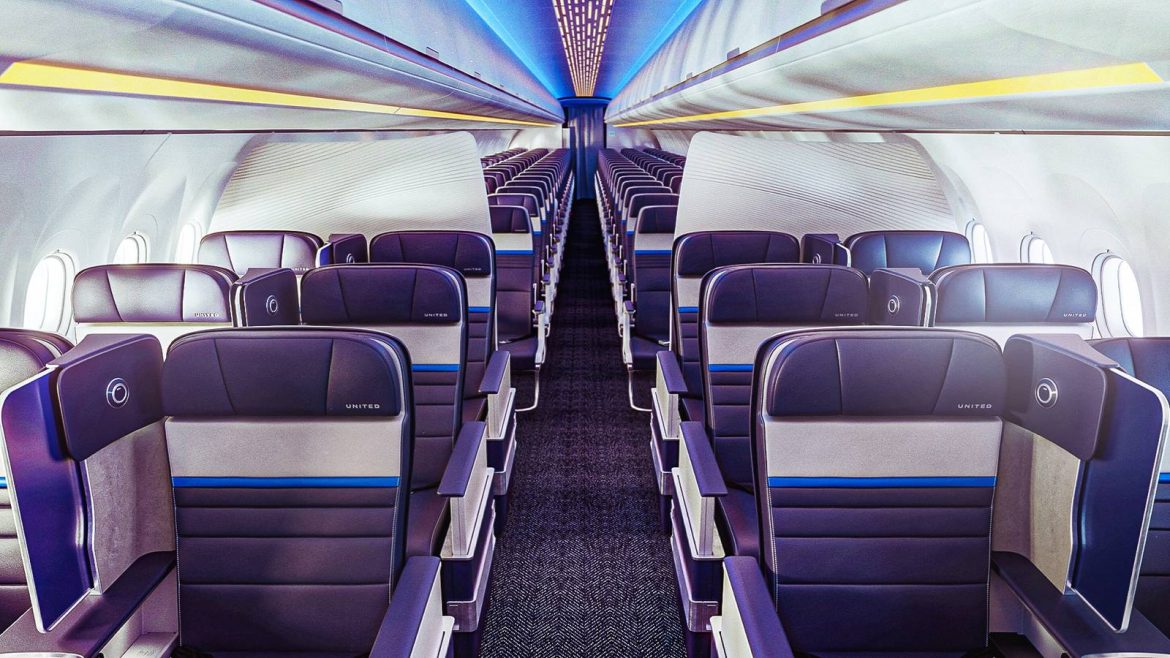
United Airlines recently took delivery of its first Airbus A321XLR. This aircraft is configured with 150 seats, 32 of which are premium. This premium offering is divided between Polaris lie-flat suites (20) and Premium Plus (12). The jet replaces the Boeing 757, which United configured with roughly half as many premium seats. United’s A321XLRs offer a host of additional benefits, including a longer range and better fuel efficiency than the 757 and other legacy narrowbody aircraft.
The large premium cabin aboard these A321XLR aircraft relates to how United hopes to use its A321XLRs to rewrite the rules of narrowbody aviation. The jet makes long and thin routes possible, which have enough flight time to create a market for premium products.
United’s A321XLR Layout

United has ordered 50 A321XLR aircraft. Each will share the same three-cabin and four-class configuration, writes One Mile At A Time. The jets will feature 20 Polaris, 12 Premium Plus, 36 Economy Plus, and 82 economy seats. Due to the size of Polaris seats and the limited space aboard a narrowbody aircraft, the Polaris seats will be in a herringbone layout facing away from the windows and towards the aisle at a 49-degree angle. This is a small price to pay for the novelty of lie-flat seating on a narrowbody aircraft.
Beyond the seats, the aircraft has one lavatory at its front. This is shared between business class passengers and the pilots. The jet also has three lavatories at the back for the two other cabins. A small snack bar helps passengers to stay refreshed and fed. Entertainment comes from Starlink Wi-Fi, which is available for free onboard.
So, how does this compare to the 757, which the A321XLR replaces? According to United, the airline configures its Boeing 757-200 with 16 Polaris, 42 Economy Plus, and 118 economy seats. This is a distinctly different weighting. While the Polaris cabin is only slightly smaller, there is no Premium Plus product available. Both Economy Plus and economy have significantly more seats available. Patrick Quayle, United SVP, explained to Avio Space why the carrier is moving away from the 757, “The 757 is getting a bit uneconomic, but we want to continue flying to these cities, and the A321XLR is longer-ranged and has much better fuel burn and maintenance costs.”
The First A321XLR Arrives

United marked the start of its new narrowbody era with the arrival of its first A321XLR. The jet, registered N64321, began its flight from Hamburg Finkenwerder, an Airbus facility, on June 3, before landing at Tampa International Airport (TPA). The flight, which began at 1:25 PM, had a ten-hour flight time. United chose TPA as the destination to receive the new aircraft, as this airport has the facilities for Starlink Wi-Fi installation before N64321 enters commercial service.
The table below breaks down each of the products that United passengers will have to choose from when they fly on United’s new A321XLR:
|
Cabin |
Seats |
Layout |
Features |
|---|---|---|---|
|
Polaris |
20 |
1-1 |
Lie-flat suites that provide all business class amenities, such as privacy doors and high-quality entertainment screens. |
|
Premium Plus |
12 |
2-2 |
United’s premium economy, with deep recline, wide seats, great entertainment screens, and footrests. A premium experience on a budget. |
|
Economy Plus |
36 |
3-3 |
Typical economy class, but with additional legroom. |
|
Economy |
82 |
3-3 |
Typical economy class. |
“In addition to strengthening our ability to fly more efficiently, the A321XLR’s range capabilities open potential new destinations to further develop our route network and provide customers with more options to travel the globe,” said Andrew Nocella, who serves as United’s chief commercial officer, and was keen to detail how the A321XLR will push United into the next generation of aviation.
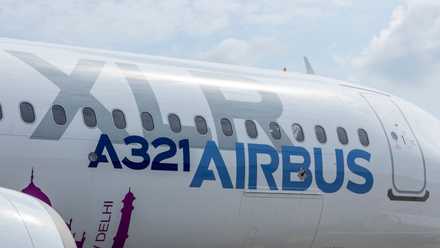
Revealed: United Airlines Airbus A321XLRs Will Have 150 Seats & New Polaris Business Class
The aircraft will also feature premium economy, giving passengers expanded premium seating options on a narrowbody jet.
Polaris: The Best Premium Seat On United’s A321XLR

Without first class available, United Polaris business class is the best that you will be able to access. United says that Polaris “brings a new level of quality premium cabin travel” and “provides the best sleep in the sky.” The experience starts at the airport, where passengers can enjoy priority check-in and baggage handling (up to two checked bags), along with exclusive United Polaris lounges. These facilities are available at Chicago O’Hare, Houston Intercontinental, Los Angeles, New York-Newark, San Francisco, and Washington-Dulles, with lounges from partner airlines usually available at other airports.
The table below shows the standard dimensions for Polaris business class, according to United’s data for the product available on its Boeing 787-9s. The space available should be roomy enough for all but the tallest and largest passengers, and be in line with industry standards for North American legacy carriers:
|
Pitch |
6 feet 6 inches (198 cm) |
|---|---|
|
Width |
20.5 inches (52 cm) |
|
Recline |
180 degrees (lie-flat) |
|
Entertainment |
“Seatback entertainment and personal device entertainment” |
Comfort and exclusive service remain high-quality once you are in the skies. The suites are based on the Safran Optima seat. 16-inch (40.6 cm) touchscreen entertainment is available. Complimentary liquor, wine, and beer will keep you refreshed throughout the flight.
United Airlines’ Premium Plus

The other premium product available on United’s new Airbus A321XLR is Premium Plus, which is the airline’s version of premium economy. Announcing the product, Nocella said, “United® Premium Plus includes some of our high-end amenities from United Polaris, and is the perfect option for someone who wants an upgraded experience in the Economy cabin.” Premium Plus is available on many more aircraft than the A321XLR. This includes the airline’s Boeing 767s, 777s, and 787s.
As with Polaris, the upgraded experience begins on the ground. Passengers can make use of two complimentary bags. Selected airports feature a dedicated security line, and passengers get priority boarding through Premier Access. After finding their seat, Premium Plus passengers get an amenities kit. To provide better sleep, these passengers can also enjoy a higher-quality blanket and a Saks Fifth Avenue pillow, with a complimentary eye mask and earplugs, also helping you to arrive refreshed.
The Premium Plus seat itself is manufactured by Collins Aerospace, decked out with a leather seat cover. This comfortable seat, along with several more inches of legroom, is the main perks compared to standard economy. Although not close to lie-flat, the seat also has a strong amount of recline. Entertainment comes from the 13-inch (33 cm) seatback entertainment screen. The large armrests help preserve your personal space, a valuable commodity aboard any narrowbody aircraft, and the headrest is adjustable so you can find the most comfortable position possible. This headrest is winged for additional comfort and a sense of privacy.
The A321XLR’s Impressive Capabilities Opens Up New Possibilities

Shutterstock | Simple Flying
The need for such a high premium density aboard the A321XLR comes from its extraordinary range, which Airbus states is 4,700 nautical miles (8,700 km). For flights from Dallas, that is comfortable enough range to reach cities like Oslo, Manchester, and Lisbon. The aircraft achieves this range with a permanent rear center tank (RCT). This feature has a maximum capacity of 3,400 gallons (12,900 liters). To deal with the additional weight, the aircraft has better braking systems and a reinforced landing gear, which has given the jet a higher maximum takeoff weight than a standard Airbus A321neo. The jet can sustain a flight time of 11 hours, so there is a significant market of high-budget individuals prepared to pay to avoid having to sit in economy class for such an extended period.
The table below shows the A321XLR’s characteristics according to Airbus’ data:
|
Capacity |
244 (max) or 206 to 220 (typical two-class) |
|---|---|
|
Wingspan |
117 ft 5 in (35.8 meters) |
|
Height |
38.7 ft (11.76 meters) |
|
Maximum takeoff weight |
223,000 lb (101.5 tonnes) |
|
Range |
4,700 nautical miles (8,700 km) |
|
Overall length |
146 ft (44.51 meters) |
The A321XLR offers this impressive performance with a far lower environmental impact. Fuel burn is 30% lower per seat compared with aircraft of the previous generation, and it produces a 50% lower noise footprint. This also greatly reduces operating costs, allowing Airbus to refer to the aircraft as a “low risk route opener.”

The Aircraft Set To Replace United Airlines’ Iconic Boeing 757s
A new era is dawning as United Airlines prepares to bid farewell to an icon, but what will take its place?
United Isn’t The Only Carrier Offering Premium Products Aboard New A321XLRs

Another carrier has recently received an A321XLR. On the same day as United’s delivery, C-GXAN departed Hamburg for Windsor International Airport (YQG). Having received its first A321XLR in April,  Air Canada has plans for a 30-aircraft program that will bridge the gap between narrowbody and widebody aircraft. Like United, premium products are available onboard, with 14 lie-flat Signature Class seats. Yet, this is a much higher-density layout, with 168 economy class seats.
Air Canada plans on beginning a host of routes using this aircraft, originating from both Montréal and Toronto, most of which are transatlantic. Example destinations, rolled out gradually from June to October, include Toulouse, Calgary, Berlin, Nantes, Vancouver, Lyon, Porto, and Manchester.
Airbus detailed how the jet will fit into Air Canada’s operations: “The aircraft will play a pivotal role in the airline’s network expansion, operational efficiency gains on new and existing long-haul routes, as well as providing additional range and economics required to serve secondary markets.” This is a clear indicator of how flexible airlines think the A321XLR will prove.
Catch what other trackers miss
Emergency squawks, holds, NOTAMs — live signals, no signup.
Open tracker
Catch what other trackers miss
Emergency squawks, holds, NOTAMs — live signals, no signup.
Open tracker
