Astrid & Miyu
A jewellery purchase is one of the most personal consumers can make. Whether shopping for themselves or buying a gift for a loved one, jewellery often marks a milestone, an anniversary or a special moment in time.
Fashion trends come and go. But jewellery stands the test of time.
For the jewellery market, this connection to special occasions and emotions is a blessing, but, in the age of digital commerce, it could also be a curse.
Memories are often made in person. How do you sell something emotional when customers cannot touch it, try it on or rely on the guidance of an in-store expert?
Jewellery brand Astrid & Miyu offers a sparkling example of how to get it right online. Founder Connie Nam launched the business in 2012 with a mission to create inclusive and empowering pieces, retailed via personalised and engaging experiences that customers would not easily find elsewhere.
While that might be easy in a shop, it is far more difficult to achieve via a phone screen or laptop.
The latest in Drapers’ Wonderful Websites series, which highlights innovative retailers from across industries leading the way in ecommerce, the London-based jewellery brand demonstrates how Shopify-powered smart technology and bespoke digital tools can help make one of retail’s most emotional categories feel surprisingly human online. (Other profiles in the series: Finisterre, Orlebar Brown, Victoria Beckham)
Putting experience at the centre
The result is a website designed not only to sell jewellery, but to help customers visualise it, personalise it and connect with it.
”We’re all about breaking boundaries,” says Suzie Satterthwaite, digital product owner at the brand. “We’re not just your typical jewellery brand. We have a lot of in-store experiences in terms of our permanent jewellery [items such as bracelets or anklets that are designed to not be removed after being safely welded], our tattoos, piercing and more. We try and bring those experiences to life online.”
Rather than treating ecommerce as a separate channel, the brand views it as an extension of the experiences and service customers encounter in store.
“Jewellery is obviously such an emotional product,” adds Satterthwaite. “For us, it’s all about building that connection with our customers online and getting them to play around on the website and find it a source of inspiration.”
That emphasis on inspiration is critical in a category where purchases are often highly considered – whether as a gift, to commemorate a special occasion, or invest in a piece that is intended to be worn every day. The website therefore needs to be more than just transactional. It needs to inspire, guide and reassure.
And Astridandmiyu.com has delivered, successfully recreating the sense of creativity and playfulness experienced when browsing in its store, via its engaging digital experience.
Driving innovation
One of the biggest challenges in jewellery ecommerce is helping customers visualise products they cannot physically try on.
Astrid & Miyu’s answer has been to invest heavily in interactive tools that bridge the gap between digital and physical shopping.
Working with Shopify agency partner By Association Only, the retailer has developed two custom visualisation tools that have become central to its online experience.
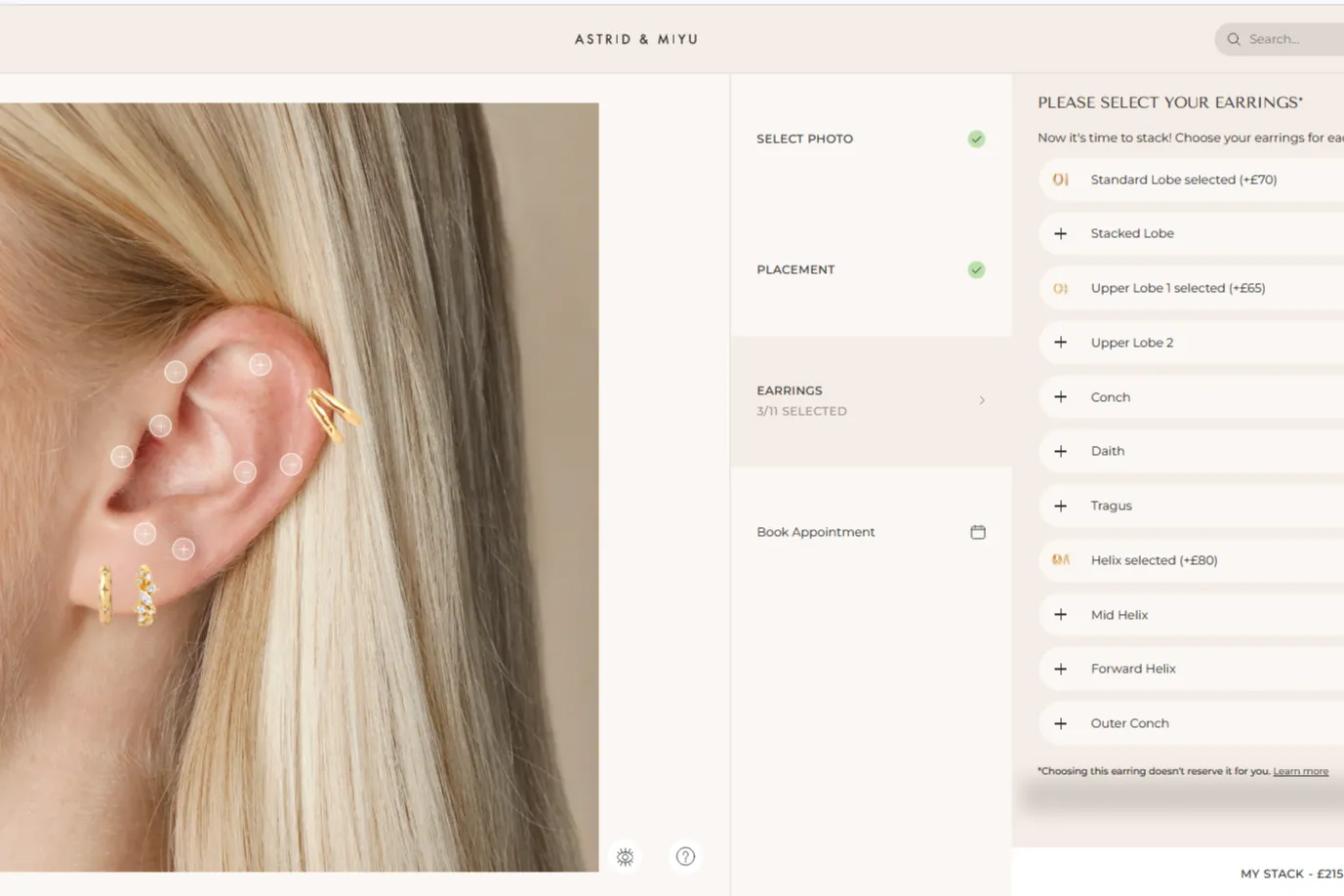
The Stack Curator
The Story Chain visualiser allows customers to build personalised necklaces, bracelets and anklets using different charms and decorative components.
The Stack Curator builds an “ear stack” – a combination of different piercings and multiple earring styles across the ears. The interactive tool helps shoppers to experiment with different combinations of piercings and jewellery.
Both digital elements encourage customers to play, experiment and become inspired in a fun and engaging way – and they perform extremely smoothly online. In fact, the Story Chain Builder and the Stack Curator won the Innovative Feature prize at the Pulse Ecommerce Awards 2026. (See box below for a preview of Astrid & Miyu’s tech stack).
But they also drive sales, helping customers accurately visualise the products and then easily transact.
Furthermore, they help upsell additional products, such as extra charms for the brand’s signature Story Chain, or piercing appointments for additional ear piercings as part of the Stack Curator. Multiple items can be easily added to bag in one click, or saved for later, and in-store appointments can be booked seamlessly as part of the checkout process.
For Satterthwaite, these tools solve one of the fundamental challenges of ecommerce.
“When you’re online you can’t see, touch and feel jewellery like you can in stores,” she explains. “We wanted to add that more fun and interactive feature online where customers could visualise how it would look on them more easily.”
The tools have proven particularly popular with first-time customers, helping reduce decision-fatigue and giving them the confidence they need to complete purchases.
“We have high engagement and conversion rates for our Stack Curator and our Story Chain visualiser,” says Satterthwaite. “They have completely transformed how our customer’s shop, by providing an interactive online experience. During our latest personalisation campaign, they maintained a 70% average engagement rate, proving to be a key conversion driver and also helping boost both basket size and average spend.”
The learning for fashion brands and retailers is shoppers’ appetite to visualise and be inspired online – whether for jewellery stacks or full outfits featuring clothing, footwear and accessories. AI-powered try-on tools such as Fits and Vybe are leading the way in the fashion space.
Shopify’s solutions engineering lead Ben Homer says the tools help refine the user experience by reducing the friction of multiple product pages that would otherwise be needed to browse and purchase multiple charms or earrings at the same time: “Going down the bespoke builder route allows you to deliver a much nicer, cleaner customer experience as shoppers configure their own product rather than trawling through multiple individual options.”
Natalia Howard, head of merchant strategy at By Association Only, believes the success of the brand’s digital elements like the Story Chain builder lies in its ability to combine creativity with commerce.
“There’s lots of brands that try and do this, but Astrid & Miyu’s is a really successful tool,” she says. “It helps customers create their bracelet and tell a story with different charms in a really elegant, seamless way. It also helps increase average order value because people are buying more than one charm.”
Playful personalisation at its best
Astrid & Miyu understands that for some customers, buying jewellery as a gift can be an overwhelming process. Customers often have limited knowledge of sizing, materials or styles, making it difficult to know where to start.
To make life easier for its online customers, the brand has introduced personalised gift quizzes that ask a series of questions and then recommend products based on information such as personality traits, interests and even star signs.
Satterthwaite says the quizzes are designed to support customers who arrive online without a clear purchase in mind.
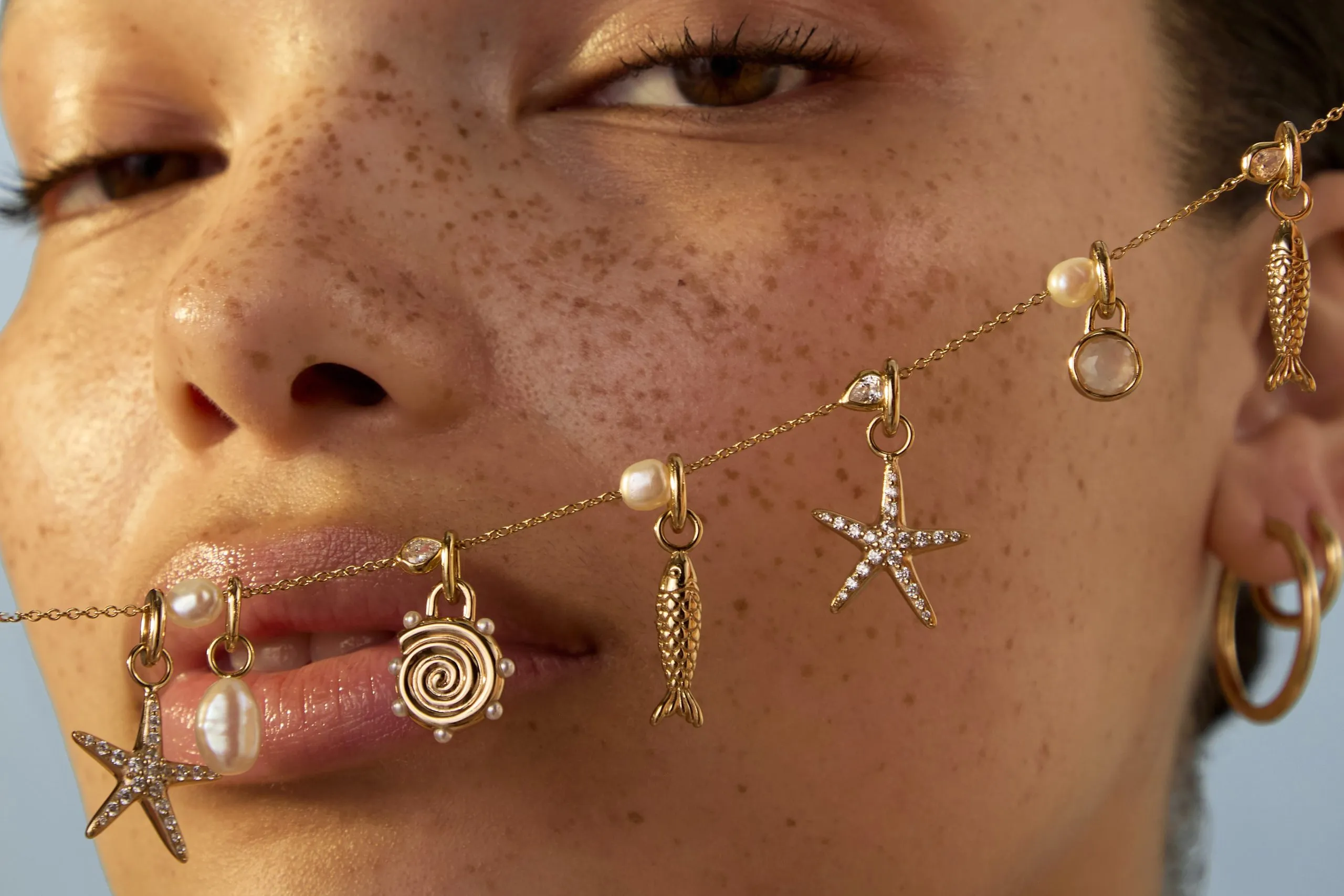
Astrid & Miyu charms
“We’ve got two types of customers,” she explains. “You’ve got people who are very well versed in jewellery and know exactly what they’re looking for. But then you’ve got people who don’t really know much about jewellery and want guided questions to get them to the product that their girlfriend, daughter or partner would like.”
These elements help deliver an elevated online user experience that puts a sense of reassurance at its core – as if the customer was stepping into a physical store.
Glittering results
As Astrid & Miyu grew to more than 30 stores across the UK, Europe and North America, a fragmented view of its customer data was holding the business back. The challenge was connecting the online and physical experiences, which led the brand to migrate to the Shopify platform in 2018.
Astrid & Miyu now uses both Shopify POS Go and Shopify POS Terminal, benefiting from unified commerce capabilities, with a data-driven single view of the customer no matter which channel they choose to shop (see box, below).
The results have been impressive: a five-fold increase in customers who purchase four times or more when shopping omnichannel, and 40% higher lifetime value among repurchasing customers who shop omnichannel versus online only – among other wins.
“I would definitely say the one, single view of our customer has been a game-changer,” says Satterthwaite. “Our CRM team can then segment customers and drive personalised re-engagement campaigns that resonate.” For example, sending a piercing jewellery email to someone who has just had a piercing appointment in-store.
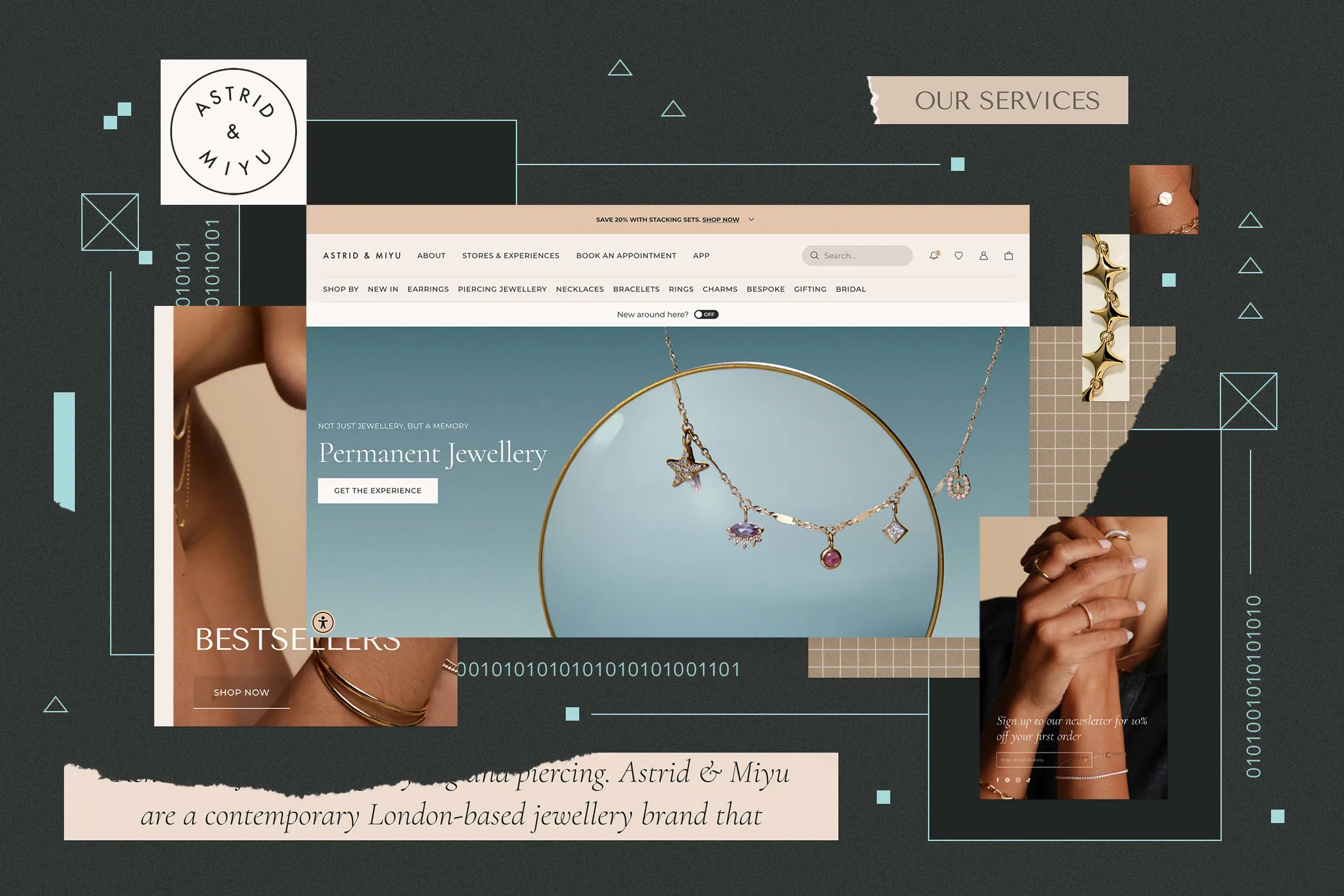
The business’s focus on blending the online and offline experiences is visible throughout the website. Customers can check the availability of products in store via the website, and book in-store appointments and discover in-store experiences directly from the homepage and the main navigation menu. Physical services such as piercing appointments and permanent jewellery are positioned alongside digitally shoppable product and collection tiles. This subtly reinforces Astrid & Miyu’s status as a brand rooted in both online and in-store experiences.
“When you go on the Astrid & Miyu website, you know immediately that there are physical experiences to be had,” says Shopify’s Homer. “The stores and experiences are right there in the header, and customers can book appointments directly from the website. It drives online customers into stores.”
Astrid & Miyu recently consolidated multiple international storefronts into a single global Shopify-powered platform, allowing customers to access one account, one loyalty programme and one customer profile regardless of where they shop.
That unified view means customers can earn loyalty points in store, redeem them online and maintain a consistent relationship with the brand regardless of the channel or the country they are shopping in.
The brand also launched its app last year as a hub for rewards, experiences and customer engagement. It worked with Ven Apps to integrate its Shopify store into a native mobile app. Alongside loyalty functionality based on their tier spend and points, the app promotes online elements and perks such as app-exclusive products or early access to new collections and Sales, alongside in-store services and enables customers to manage their relationship with the brand through a single interface.
The strategy reflects a broader focus on retaining loyal, returning customers rather than simply acquiring new ones – something that is becoming increasingly critical across mature ecommerce markets.
“We’re very lucky that we have a very loyal returning customer base and they make up quite a significant part of our business,” says Satterthwaite.
Small changes, big impacts
Although shiny digital additions such as innovative visualisers and personalisation tools can help attract attention, some of Astrid & Miyu’s biggest gains come from much smaller changes and hidden gems.
The business invests heavily in testing and optimisation, working with conversion rate optimisation agency Fabric Analytics to evaluate new features and customer journeys before rolling them out more broadly.
Satterthwaite notes that seemingly minor adjustments can have surprisingly significant impacts.
She points to an A/B test that moved the messaging of a buy-now, pay-later payment tool from beneath the add-to-bag button to higher up the page directly below the product price. A simple change, but one that delivered measurable results, with a +3% increase in transactions for the variation that showed messaging in its new position.
Conversely, other seemingly sensible updates have negatively affected conversion rates.
“It’s surprisingly small changes that sometimes make a big difference,” she says. “Every change you make has an impact on the customer buying journey.”
The brand is also experimenting with artificial intelligence (AI), primarily in areas focused on operational efficiency and automation. Shopify’s Sidekick AI assistant has become a useful tool for creating customer flows and managing backend processes more efficiently. “It’s almost a member of the team at this stage,” says Satterthwaite. Like many retailers, however, Astrid & Miyu remains in test-and-learn mode with AI.
For Shopify’s Homer, the test and learn stage should include preparation for agentic AI readiness, as more customers turn to AI tools such as ChatGPT for shopping recommendations. “AI agents reason over attributes, not prose. Gaps in brand’s data kill relevance. Common misses include vague or inconsistent titles, such as marketing copy in place of facts. Missing attributes are also an issue, such as silhouette, fabric composition and care. Inconsistent size charts, no variant-level images or on-model context, and stale availability and pricing data also impact discoverability.”
The future of jewellery ecommerce
What sets Astrid & Miyu apart and defines it as a Wonderful Website is its fearless approach to selling jewellery in the digital space, finding innovative ways to tackle traditional problems that have faced the sector online.
“Astrid & Miyu succeeds because it doesn’t treat digital and physical as separate entities. Instead, it uses technology to blend the two into a single, frictionless journey that recognises customers shop fluidly across both channels,” says By Association Only’s Howard.
A example of this is their Stack Curator tool. On the website, it acts as an interactive styling feature to help shoppers visualise multiple pieces together. But critically, in store stylists use that exact same tool face to face with customers on the shop floor to cocreate looks, “turning a digital asset into a powerful in store sales driver” says Howard.
The business has taken the same unified approach with its loyalty program. “It runs seamlessly across both the website and physical stores, allowing a customer to walk into a boutique, tell their stylist they have points to spend, and redeem them right at the counter,” she adds. “For fashion brands looking to build a compelling on site experience, the focus should be on creating cohesive digital features that actively enhance the physical, human interactions inside your stores.”
Through elements such as visualisers, product recommendation quizzes, loyalty tools and seamless online access to in-person experiences, the retailer has reimagined what a jewellery brand can look and feel like, both in store and online.
Or, as Satterthwaite puts it: “Showing the fun, inspirational aspect of jewellery is what Astrid & Miyu is all about.”
A look at Astrid & Miyu’s tech stack
- Shopify – built for high-volume, rapidly scaling direct-to-consumer and B2C brands that require a robust infrastructure to handle high traffic, seamless international selling and advanced backend automation
- Shopify POS – syncs store sales, inventory and customer data with the online store
- Shopify POS Go – Mobile point-of-sale devices that enable queue-free checkout and clienteling in stores
- Shopify Markets – a centralised, cross-border management tool that enables brands to sell in multiple regions, and customise pricing, and local languages from a single store
- Shopify Payments – a built-in payments processor
- Shop Pay – allows customers to check out with one click
- Shopify Sidekick – AI-powered assistant used to create customer flows and improve operational efficiency
- Story Chain Visualiser – custom-built jewellery personalisation tool developed with By Association Only
- Stack Curator – interactive jewellery stacking visualiser and Pulse eCommerce Awards-winning feature
- Product Recommendation Quizzes – personalised gifting and product discovery experiences
More from the Wonderful Websites series