
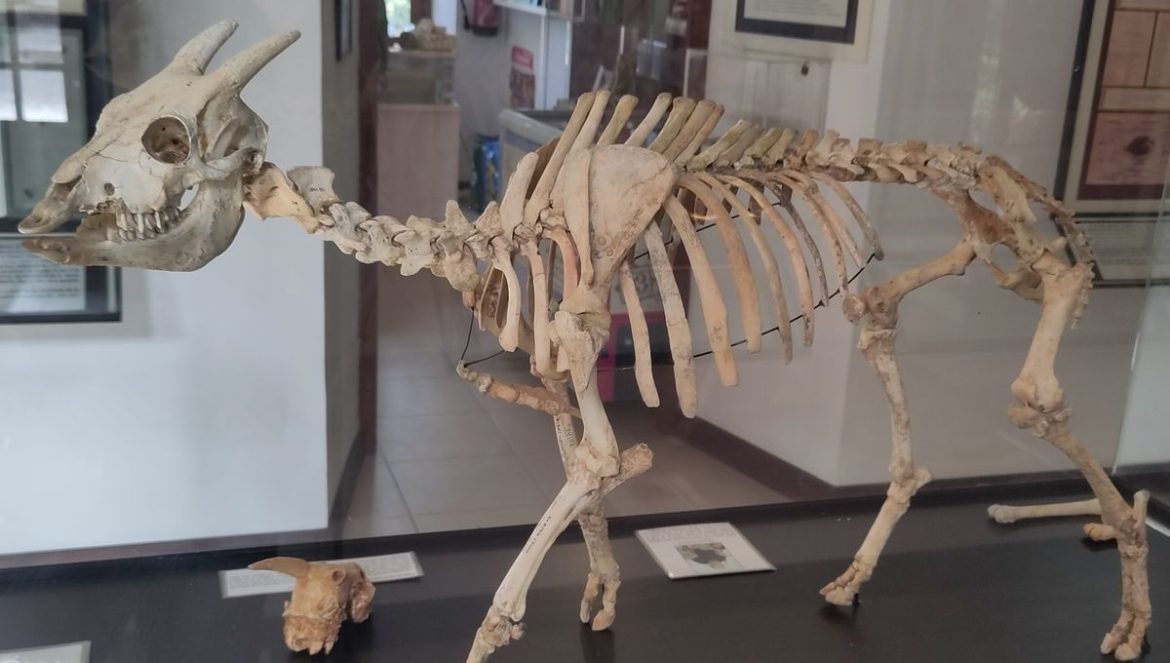
One of the things we first learn about the animal kingdom is the difference between warm and cold-blooded animals. While reptiles bask in the sun to get warm, mammals must eat regularly to gain the energy needed to sustain a constant internal temperature. However, one mammal, trapped on a resource-poor Mediterranean island, did something rather extraordinary and broke the norm by becoming the only cold-blooded mammal in the world (bar one notable exception).
The Balearic Islands cave goat
A long-extinct goat species, Myotragus balearicus, also known as the Balearic Islands cave goat, once roamed across the land that would have connected the Balearic Islands to mainland Europe. Here it stayed, and as the Balearic Islands became surrounded by the sea, the ancient goat found itself living on what is now the Spanish island of Mallorca.
At only 45 centimeters (17.7 inches) tall, these animals underwent a series of morphological changes resulting in shorter limbs, a smaller brain size, and smaller sense organs – effectively becoming a dwarf species – to survive.
These goats are also the first animals to have been discovered with the same kind of bone structures that are found in reptiles.
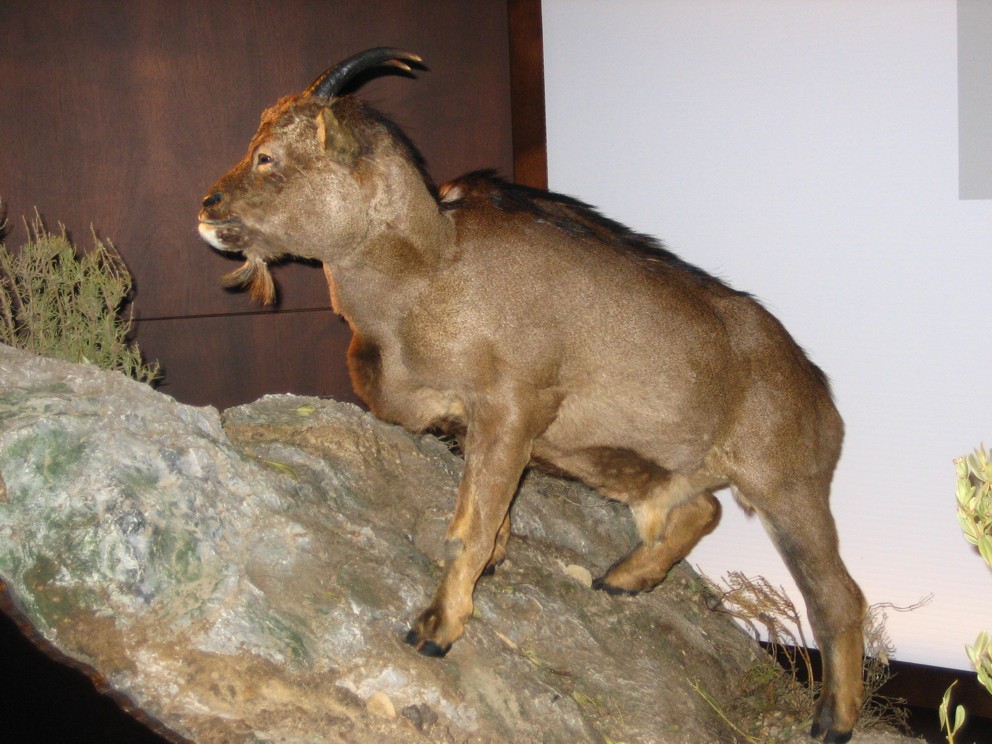
This taxidermy shows what Myotragus balearicus could have looked like, before it became bones.
The reptile-like goat
Reptiles grow very slowly and have the ability to control or even completely stop their growth based on resource availability. This periodic slowing or cessation of the growth rate leaves telltale signs in the bones of these species.
By looking at the bone histology of the extinct goat, researchers found the same lamellar-zone tissues, which had previously only been found in ectothermic reptiles. The team compared the goat bones to those of crocodiles and found remarkable similarities, with the same ability to have slow and flexible growth rates, and even stop growing altogether.
M. balearicus was also found to reach maturity quite late, by around 12 years; by contrast, a typical goat species might reach sexual maturity before 9 months of age, according to the MSD Veterinary Manual.
Research also suggests that these goats would have had a much slower lifestyle than the typical modern goat species. Rather than running and jumping over the island’s rocks, they would have spent more time in the sunshine and become more slow-moving.
“Myotragus not only decreased aerobic capacities […] and behavioral traits […] but also flexibly synchronized growth rates and metabolic needs to the prevailing resource conditions as do ectothermic reptiles,” researchers Meike Köhler and Salvador Moyà-Solà wrote in a study published in Proceedings of the National Academy of Sciences in 2009.
Controversy in the bones
Looking at the bones alone does bring controversy. In cold-blooded species or ectotherms, the bones are typically made of slow-growing lamellar bone. However, fast-growing fibrolamellar bones, typically found in warm-blooded species, have also been found in dinosaur species and in birds. The researchers take into account that there could be a third intermediate condition between what would be fully warm- or fully cold-blooded.
The dwarf goat M. balearicus makes an excellent study model, because the island on which it lived had no natural predators. On the resource-poor island of Mallorca, it developed reptile-like traits that allowed it to survive for 5.2 million years, more than twice as long as species on the mainland.
However, because of the development of these traits, unfortunately the world’s only cold-blooded mammal species did not survive the arrival of humans to the island around 4,000 years ago, which, coupled with a decline in their preferred plant species, likely caused their extinction.
The evolution of warm-blooded beasts
Long before this, there was a time when the ancestors of mammals still closely resembled the cold-blooded reptiles from which they had evolved form.
Around 230 to 250 million years ago, these mammal-like reptiles had slow metabolisms and basked in the sun to maintain their body heat. They looked like strange little shrews, but they were essentially still reptiles or, perhaps more accurately, protomammals evolving toward the fast-metabolism mammals that inhabit Earth today.
Other warm-blooded mammals
Along with M. balearicus, Another exception to the rule is naked mole-rats, which lack the ability to internally regulate their body temperature, acting essentially like cold-blooded animals.
Then again, these strange, wrinkled rodents are famous for defying biological conventions, so this peculiarity is perhaps unsurprising. For an island-dwelling goat to break these rules, however, is far more remarkable.
An earlier version of this story was first published in October 2024.
