
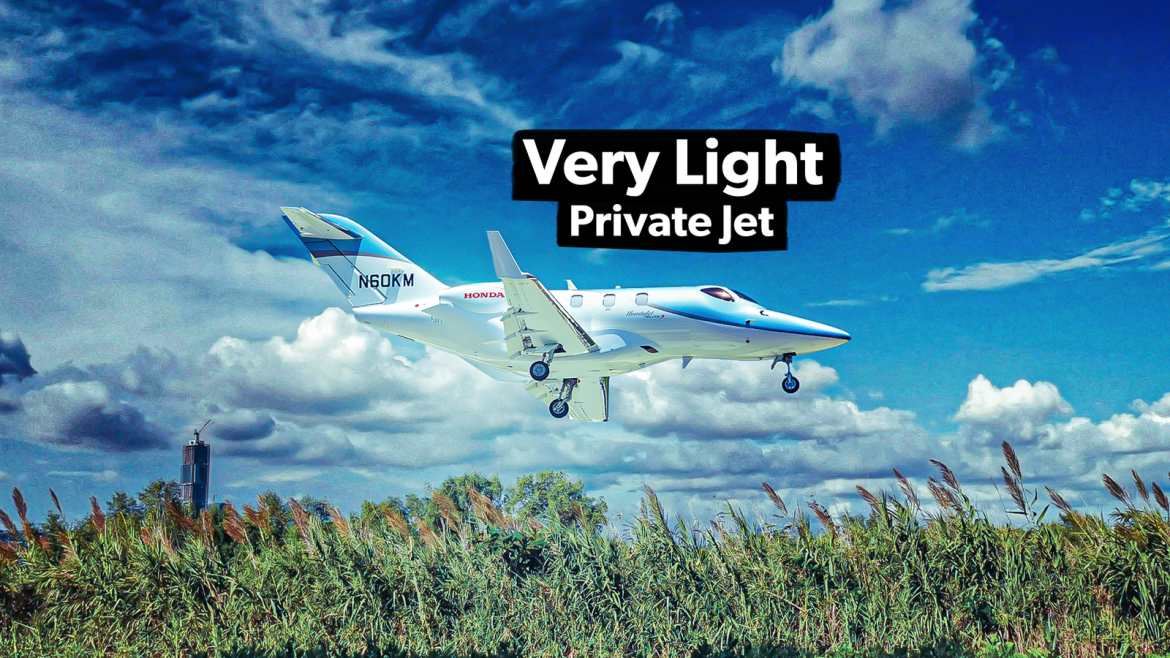
The HondaJet stands out in its class of light business jets, especially considering its newest and most innovative version – the HondaJet Elite II. The aircraft was certified at the end of 2022 and is now the flagship aircraft of Honda Aircraft Company. It can reach impressive cruising speeds of 422 knots and climbs to 43,000 feet. The original version debuted in 2015 and has since been a breakthrough in its segment.
For pilots and operators who value efficiency, innovation, and comfort in a very light business jet, the HondaJet HA-420 is a fantastic option. In this article, we will examine the aircraft’s performance, relevance, position on the market, and newest variants. We will also explore how the company has reinvented the very light business jet class and what makes it so special, even over 10 years since its first delivery.
Performance By The Numbers: How HondaJet Measures Up

The original HondaJet, named the HA-420, is powered by two GE Honda HF120 engines, which generate 2,050 lbs each. They allow the aircraft to reach 422 knots in cruise and cover a distance of 1223 nautical miles without stopping. The maximum cruising altitude of the jet is 43,000 feet and the maximum take-off mass amounts to 10,600 pounds, giving very good results for a small jet and being great for short and medium trips.
The HA-420 can comfortably seat four people in the cabin, and can even facilitate a small toilet and extra baggage space in the above configuration. Alternative seating can also be arranged, with two seats in the cockpit and five in the main cabin. The aircraft has been a primary competitor to the cessna citation Mustang or Embraer Phenom 100; However, it offers better efficiency.
It was certified by the FAA in December 2015 and received its EASA certificate in May 2016. After the tests were performed, the performance of the jet positively surprised the manufacturer as it easily reached all the requirements and showed a lot of potential for exceeding expected numbers.
|
Specification |
Details |
|---|---|
|
Variant |
HondaJet HA-420 |
|
Max Range |
1,223 NM |
|
Cruising Speed |
422 knots |
|
Fuel Capacity |
2,948 L (778 US gallons) |
|
MTOW (Max Takeoff Wt) |
10,600 lbs |
|
MLW (Max Landing Wt) |
9,900 lbs |
|
Typical Payload |
4–5 passengers + 2 crew |
|
Cabin Altitude |
8,000 ft at FL430 |
|
Wingspan |
39.8 ft |
|
Engines |
2× GE Honda HF120 |
|
Entry into Service |
2015 |
How The HondaJet Achieves This Performance

The key element of HondaJet’s nuance is the engine placement, as they are mounted on top of the wings (OTWEM), rather than being attached to the rear fuselage. This design aimed to reduce drag and noise while allowing for more freedom in cabin design. The aircraft has a composite fuselage, which further increases fuel savings and efficiency.
The engines were developed in partnership with General Electric, based on Honda’s blueprints for the HF118 from the late 1990s. The initial tests of the engine were done on a Cessna Citation CJ1, and it received its certification in December 2013.
According to Honda Aircraft Company, the jet offers up to 20% better performance and efficiency than competing aircraft in its class due to the combination of bespoke engines, aerodynamics, and materials used during the manufacturing process. For comparison, it uses 3% less fuel than the similar Phenom 100EV or 8% less fuel than the Cessna Citation M2 on flights of around 1000 nautical miles. For flights under 300 nautical miles, the fuel burn is even more competitive, decreasing to 11% and 18% less, respectively.

How It Compares To Competing Aircraft

In 2015, when the HondaJet entered the market, the main competitors were the Cessna Citation Mustang and Phenom 100. While the Phenom 100 did offer more capacity, it also burned significantly more fuel, and the Citation lagged behind in range and cruising speed. Today, with the introduction of the new HondaJet Elite II, key competitors are the upgraded versions of previously mentioned jets: the Citation M2 and Phenom100EV.
The unique design of the HondaJets offers unmatched interior features that cannot be replicated without over the wing engine mount. The main ones include significant noise reduction and extra baggage space due to additional space. The consensus is that the cabin of the jet, while smaller than the Phenom, is certainly more comfortable, making it an attractive choice for both private and charter operators.
Many “very light jet” models currently on the market serve different purposes and cater to specific consumers. An example, such as the Cirrus Vision Jet G2+, which is designed specifically with private owners in mind, disrupts the segment. However, with competitive prices and constant innovations, the HondaJet maintains a strong position in the market. The continuous demand and forward-thinking of the manufacturer influenced the introduction of new and improved versions of the classic HA-420, such as the Elite, Elite S, and Elite II.
Operational Use And Operator Strategy

The main customers of HondaJet are both private and charter operators. Thanks to relatively low annual and hourly costs, it has quickly seen many orders from both the US, Europe, and Asia.
It is a great solution for short to medium routes such as New York – Boston, Berlin – Paris, or Tokyo – Osaka. Since its introduction, over 250 jets have been delivered to customers worldwide, and the aircraft has accumulated over 100,000 flight hours collectively.
According to the Honda Aircraft Company, the jet is the most delivered aircraft in its segment, and existing proof that a fresh outlook on designs and problem-solving in aviation can yield amazing results.
“The HondaJet is a very light business jet with excellent fuel efficiency, high flight performance, and a spacious cabin. Due to these and other features, the HondaJet became the most delivered aircraft in its category for the fifth consecutive year since 2017.”

Why Is The HondaJet So Popular?
Stylish, efficient, and affordable, with over 250 examples produced.
Operator Adoption And Feedback

Despite the HondaJet being primarily designed with private ownership and commercial needs in mind, it sparked a lot of interest from charter operators. The model is used by Wijet in Europe, Jet It in the US, and JetClub in Asia. The main selling points are the low costs and very attractive efficiency, which make it a great combination for short routes.
The jet has gathered a lot of positive feedback over the years from operators, passengers, and even pilots. Key points are always the surprisingly spacious cabin and unexpectedly low engine sounds. These are thanks to the unconventional engine placement.
As the aircraft is equipped with the modern Garmin G3000, many pilots praise the technology and cockpit ergonomics. This, connected with best-in-class landing and takeoff performance, has given it a positive reputation. According to some internal company reports, the jet’s performance has exceeded the expectations and numbers declared officially. Operators also agree that the fuel efficiency is often much better than the one stated in the official paperwork.
The Story Behind The Aircraft Development

The HondaJet was created as a response to the lack of very light jets on the market that could fill the gap in the premium segment. Similar aircraft made by Cessna, Embraer, or Learjet all lagged in either comfort, efficiency, or technology. The main goal of the development of the model was to create an efficient, silent, luxurious aircraft that could match the performance of conventional business jets.
The project was coordinated by Michimasa Fujino, a Japanese engineer and one of the leaders of the Honda Aircraft Company located in North Carolina. The program officially began in 2006. However, some of the first blueprints date to the mid-1990s, when Fujino was working on unconventional engine placements for jets. This arrangement, known as the Over the Wing Engine Mount (OTWEM), became the most recognizable feature of the HondaJet and a baseline for further advancements of the model.
The first prototype took to the skies in 2003, which validated the project and allowed it to officially launch it three years later. After years of development, the FAA certified the aircraft in 2015 and the first deliveries began in 2016. The biggest milestones were the 100th delivery, which took place in 2018, and the introduction of new and improved variants such as the HondaJet Elite or the newest Elite II.
What Comes Next?

The Honda Aircraft company is not slowing down with the project. After the big success of the original HA-420, the manufacturer has continued to innovate and introduced new variants, such as the Elite or Elite II, with a bigger range, upgraded avionics, and increased comfort in the cabin.

The Echelon: A Guide To The HondaJet 2600 Concept
Honda is planning to certify the aircraft by the late 2020s.
Despite no official announcements from Honda about creating a bigger version of the jet, some people speculate that in the next couple of years, we might see a midsize jet coming from the manufacturer. For now, the only known and confirmed news regards the efficiency packages which focus on personalization options and improved electronics. Additionally, the company has also addressed the demand for a bigger jet, soon introducing the HondJet Echelon, which is going to be the biggest single-pilot business jet, able to carry up to 11 passengers.
Looking at the success of the HondaJet and continued advancements, it is safe to say that the aircraft will maintain its relevance on the market for at least a decade. Its unique design and high customer satisfaction make it an icon in the very light business jet segment. If the company keeps following the momentum and addressing market demands, the future of the HondaJet will look very promising.
