
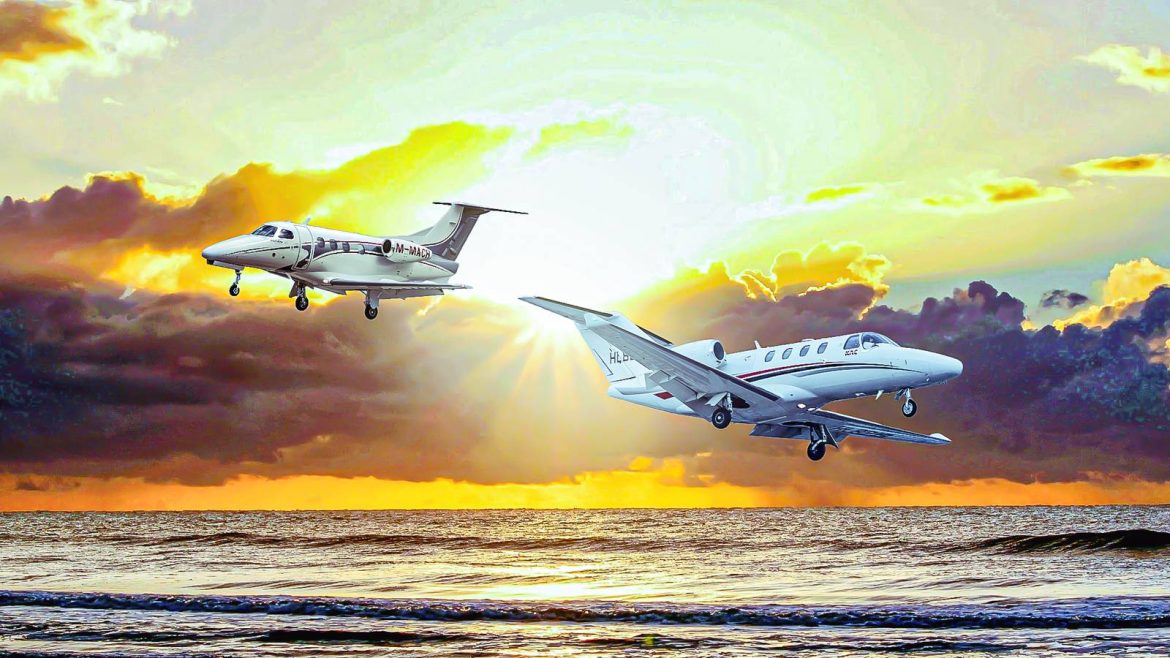
The Cessna Citation M2 Gen 3 and Embraer Phenom 100EV are some of the most popular jets in the very light category. Designed to accommodate 4-5 passengers each, the two jets are equipped with comfortable cabins and high-tech cockpit systems that allow maximum efficiency, flexibility, and comfort to its customers. This article compared certain salient features of the two aircraft.
1
Cost of acquisition
The capital cost
- Cessna Citation M2: $4.5-$5.1 mission
- Embraer Phenom 100: $2.5-$3.2 million
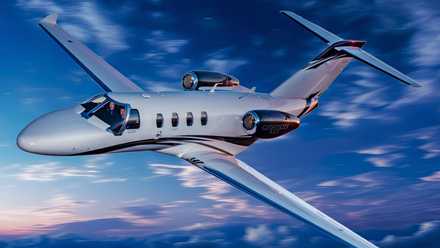
The cost of acquiring a Cessna Citation M2 ranges between $4.5 million and $5.1 million, depending on the variant. The M2 is a very-light category jet with a Maximum Takeoff Weight (MTOW) of 10,700 lbs. The similar-sized Embraer Phenom 100, with a MTOW of 10,500 lbs, costs between $2.5 million and $3.2 million. That is nearly half the price of the Citation M2.

Another competitive aircraft, the Honda Jet, is slightly more expensive than the M2, with approximately $5.2 million. According to Embraer,
“The Phenom 100EX isn’t just a jet; it’s an embodiment of comfort and innovation harmoniously entwined. The high-tech interior design represents the epitome of comfort, while its operational versatility ensures you’re ready for any journey. With enhanced single-pilot-friendly avionics and pioneering safety features, whether you’re a seasoned pilot or a passenger seeking the utmost comfort, the Phenom 100EX is the ultimate match for those who demand excellence.”
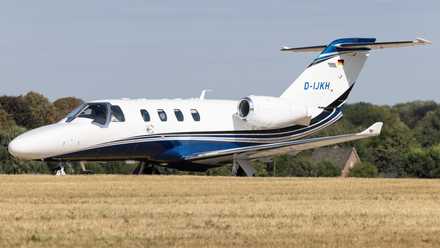
What Exactly Changed With The Cessna Citation M2 Development?
With the retirement of the Citation Mustang, the Cessna Citation M2 became the company’s entry-level private jet for potential customers.
2
Aircraft performance
Cessna Citation M2
- Range: 915 NM
- Max Cruising Speed: 390 knots
- Ceiling: 41,000 ft
- Take off Distance: 3,190 ft
- Landing Distance: 2,448 ft

Embraer Phenom 100
- Range: 1,178 NM (2,182 km)
- MMO (Maximum Mach Operation): Mach 0.70
- High Speed Cruise: 406 ktas (752 km/h)
- Takeoff Distance: 3,190 ft (972 m)
- Landing Distance: 2,430 ft (741 m)
- Maximum Operating Altitude: 41,000 ft (12,497 m)

The Cessna Citation M2 is powered by two Williams FJ44 engines, offering up to 15% more thrust at cruise compared to the predecessor. The type had a new cabin layout, a significant upgrade from the previous CJ1. The aircraft has a wider wing, allowing greater performance in terms of range, fuel consumption, and speed. The M2 is faster by nearly 25 knots compared to the CJ1 and over 50 knots faster than the Embraer Phenom 100E.
Ultra-Light Jet: A Guide To The Maximum Range Of The Embraer Phenom 100
The most recent Phenom 100 variant can fly over 1,300 miles.
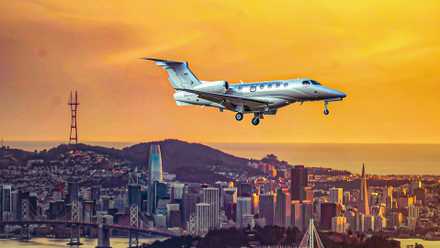
The Phenom 100 is powered by two Pratt & Whitney PW617F-E engines, each generating 1,695 lbf of thrust at takeoff. The PW6 engines feature a Full Authority Digital Electrical Control (FADEC) system, allowing higher levels of safety and lower maintenance. The engine inspection interval is 3,500 hours.
3
Cabin and comfort
- Easily configurable cabins
- Leather seats with multiple systems, including lighting and entertainment
Both the Cessna Citation M2 and Embraer Phenom 100 have a capacity of 4-5 passengers. Both aircraft types offer comfortable leather seats and several amenities onboard. Textron Aviation states that the jet offers a comfortable cabin for passengers and an equally comfortable space in the cockpit.

Jet Advisors, an aircraft management and charter company, states about the Embraer Phenom 100 jet having one of the most comfortable cabins in the very-light jet category.
“The design of the cabin is comfortable and aesthetically pleasing. It features large leather seats that include arm rests, power outlets and multiple controls at you fingertips, and nice-looking wood finishing that is consistent throughout. The Phenom’s interior can be configured using seven pre-defined factory options.”
4 Things Embraer Improved On The Phenom 100EX
The newly-introduced jet is already sold out for 2024, thanks to these attractive enhancements
4
Avionics suite
Both aircraft use different versions of Garmin avionics suites
- Activation: Garmin® Emergency Autoland is programmed by Garmin® to automatically engage if the pilot becomes inactive for too long as it continually checks for pilot responsiveness. The push of a single button can also engage this system.
- Stabilization: Once engaged, the Garmin® Emergency Autoland system is designed to stabilize the aircraft, evaluate the location, weather, and terrain, and communicate with air traffic control (ATC). During this process, the system announces to the passengers what to expect and how to prepare for landing.
- Controlled Descent: Garmin® Emergency Autoland takes all the necessary steps a pilot would to fly the aircraft and secure a landing at the most suitable airport in range for an automated landing.
- Automated Landing: When securely on the ground, the Emergency Autoland system is equipped to bring the aircraft to a stop and power down the engines. Supported in the air, secure on the ground.

Both aircraft feature state-of-the-art avionics systems that provide high levels of safety through enhanced situational awareness and reduced pilot workload. The Citation M2 features the Garmin G3000 avionics suite, an upgraded version of the G1000 suite used on predecessor aircraft.
According to Textron Aviation,
“The Citation M2® Gen3™ jet is equipped with a fully digital autopilot system with many features for added peace of mind, redundancy, and reliability. It maximizes aircraft performance with precise lateral and vertical navigation guidance for all phases of flight, as well as pinpoint fuel calculations thanks to the addition of the standard autothrottles. Rest easy with the added protection of the Garmin® Emergency Autoland.“
On the other hand, the Embraer Phenom 100 is equipped with the Prodigy Touch Flight Deck by Garmin, featuring autopilot, synthetic vision technology, and high-resolution cockpit displays.
Smallest Citation Jet: A Guide To The Citation M2’s Top Speed
The Citation M2 is the smallest Cessna Citation jet in production.
5
Operating costs
Fixed and variable operating costs
- Both types have similar fixed costs
- The variable operating cost of the Cessna Citation M2 is greater than the Embraer Phenom 100
Liberty Jet states that the total operating cost of a Cessna Citation M2 jet is approximately $650K for 200 hours of annual flying, whereas $1 million for 400 hours. Fixed costs include aircraft storage, insurance, management, and crew acquisition and training costs, which are approximately $310K. The direct operating cost, including fuel, maintenance, and airport handling and fees, varies between $200K and $400K, depending on the usage. The average cost per mile for 200 hours of flying is approximately $10, and just over $7 for 400 annual flying hours.

The similar sized Phenom 100 costs approximately $550K for 200 hours of annual flying and about $850K for 400 hours. Similarly, the average cost per mile for 200 hours is $7.75, whereas just over $6 for 400 hours. The cost of operating an Embraer Phenom 100 is over 15% lower than the Citation M2. While variable costs are the same across both aircraft, the Embraer Phenom 100 has much lower fixed costs of approximately $230K.
- Crew: 1 or 2 pilots
- Capacity: 4 or 5 passengers (standard configuration); 7 passengers maximum (with passenger in cockpit, optional side-facing seat, and optional belted lavatory)
- Length: 12.82 m (42 ft 1 in)
- Wingspan: 12.3 m (40 ft 4 in)
- Height: 4.35 m (14 ft 3 in)
- Wing area: 18.76 m2 (201.9 sq ft)
- Empty weight: 3,275 kg (7,220 lb)
- Max takeoff weight: 4,800 kg (10,582 lb)
- Fuel capacity: 1,272 kg (2,804 lb)
- Cabin height: 1.5 m (4 ft 11 in)
- Cabin length: 3.35 m (11 ft)
- Powerplant: 2 × Pratt & Whitney Canada PW617F1-E turbofan engines, 7.7 kN (1,730 lbf) thrust each at ISA + 8°C
Why Did Embraer Develop The Phenom 300?
The company Embrare developed a more advanced Phenom model, guaranteeing more room for additional passenger without compromising the quality
