
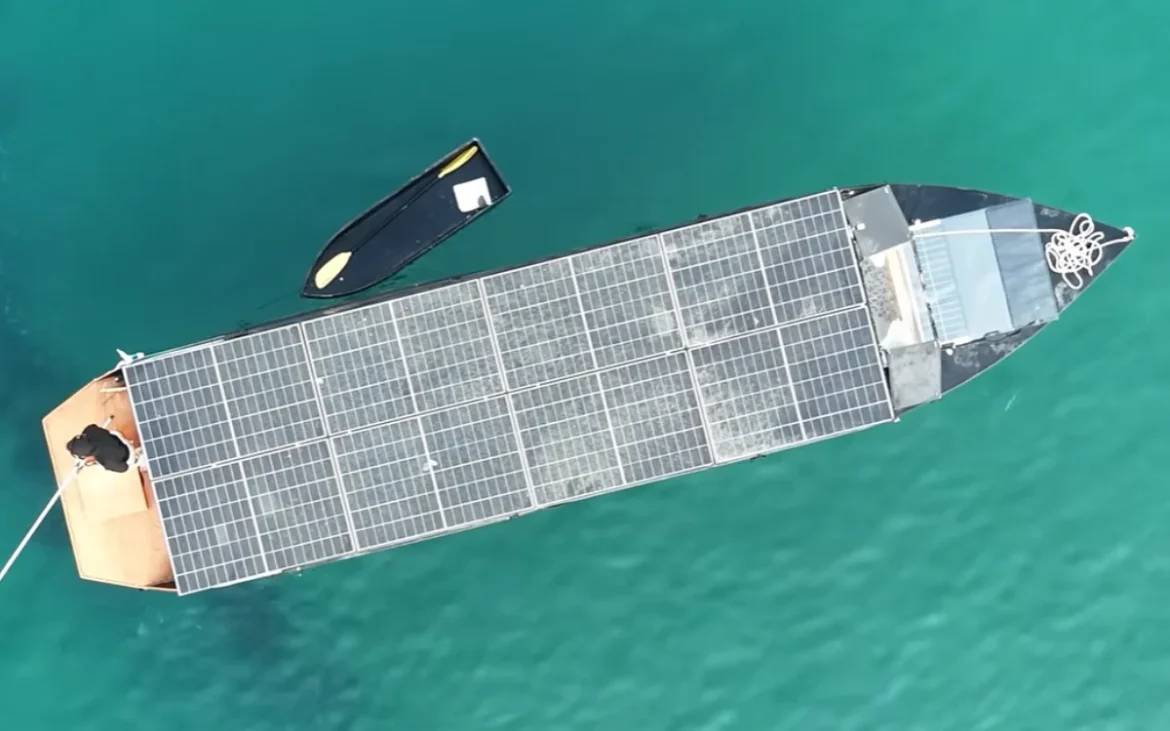
The man behind the Helios 11 solar-powered yacht says he’s already figured out what comes next.
Speaking on the True North Yachts YouTube channel while cruising along Spain’s Mediterranean coast, he’s been living aboard the prototype as a full-time test.
After months of real-world use, the focus has shifted.
It’s no longer about whether the boat can keep going – that part is already handled.
Turning a solar yacht into something you can actually live on
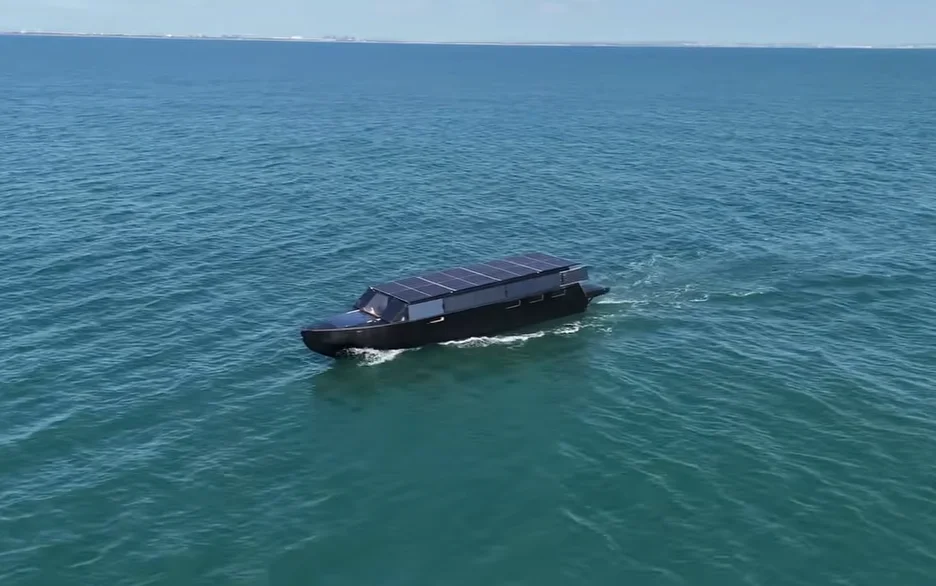
After running the Helios 11 prototype for an extended stretch, the builder is clear on one thing – range isn’t the issue.
At 4,000 to 5,000W, the boat cruises above seven knots, and pushing harder doesn’t do much more because it’s already hitting its natural limit.
Because of that, he said there’s no real reason to chase more power.
The system already keeps up, especially in consistent sun.
Instead, the weak point shows up when the boat stops.
He said it rolls around 40-50 percent more than a typical sailboat at anchor, which doesn’t just affect comfort.
It slightly drags down performance too.
The shifting angle of the roof means the solar panels are constantly adjusting, shaving a small amount off the total yield.
So he started experimenting.
First came a temporary fix – around 154 pounds of flat rocks placed at the bottom of the hull to lower the center of gravity.
It worked, but only to a point.
There’s also a potential battery upgrade on the way, adding roughly 8kWh and more weight.
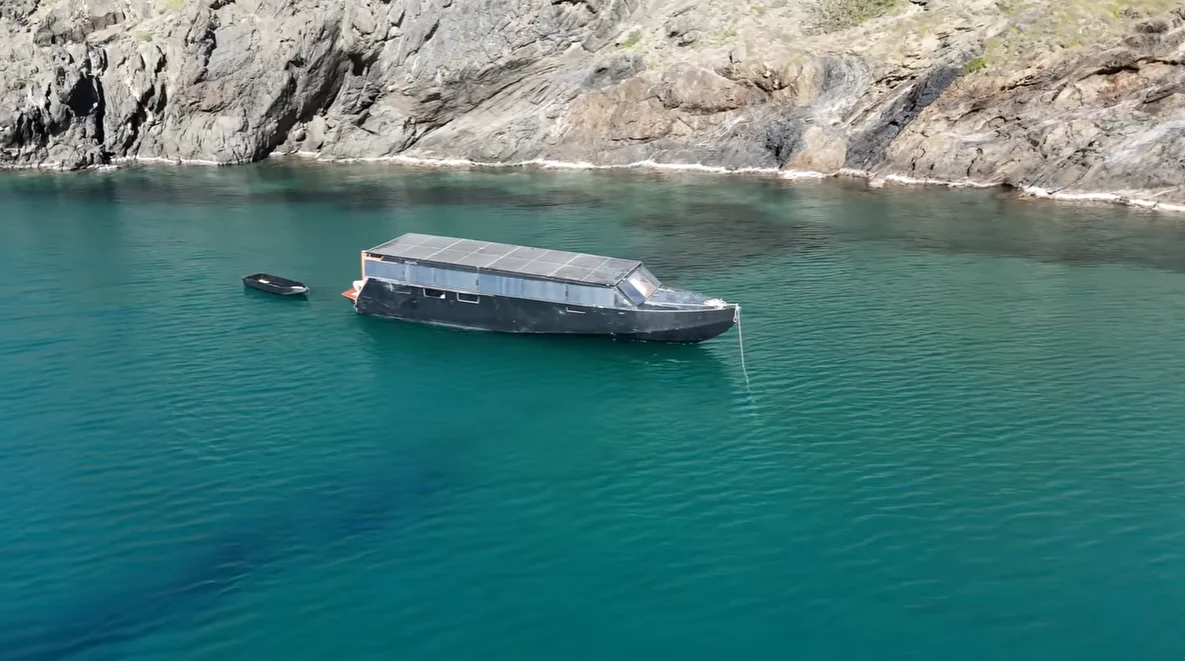
Although he admitted he’s never actually run out of power with the 13kWh already onboard.
That’s when the bigger idea clicked.
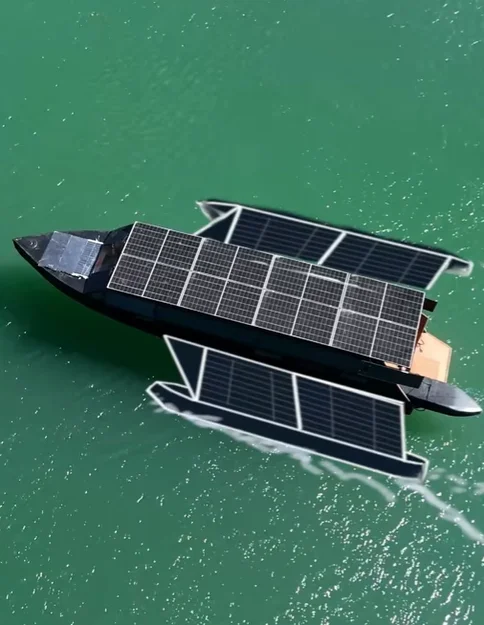
Rather than adding mass, he’s now planning to change the structure entirely – introducing outriggers.
He’s weighing up two options, but keeps coming back to the same conclusion: a triaran setup.
With two outriggers, the boat gains stability from both sides, reduces rolling, and even lifts the main hull slightly out of the water.
That alone, he said, would make it faster without touching the motor.
Then, once you layer solar panels across those outriggers, the gains stack quickly, potentially adding close to 2,000W of real input in good conditions.
The anchoring test that changed how he’s building the next version
That shift in thinking didn’t come from theory, it came from a rough few hours at anchor.
While testing in a sheltered bay, winds picked up past 30 knots.
There were no waves, but the gusts hit hard from the side, pushing the boat into heavy tilt and constant swinging.
At one point, he said it leaned as far as 45 degrees.
So he improvised.
By running the motor in reverse at just 200-500W, he managed to pull the anchor line tighter and cut the side-to-side movement by around 70 percent.
It was enough to settle the boat, but it also exposed a bigger issue – side wind is the real problem, not head-on gusts.
Because of that, he’s now planning a proper multi-anchor setup, including a rear anchor to lock the boat’s position.
At the same time, he’s rethinking the shape of the boat itself.
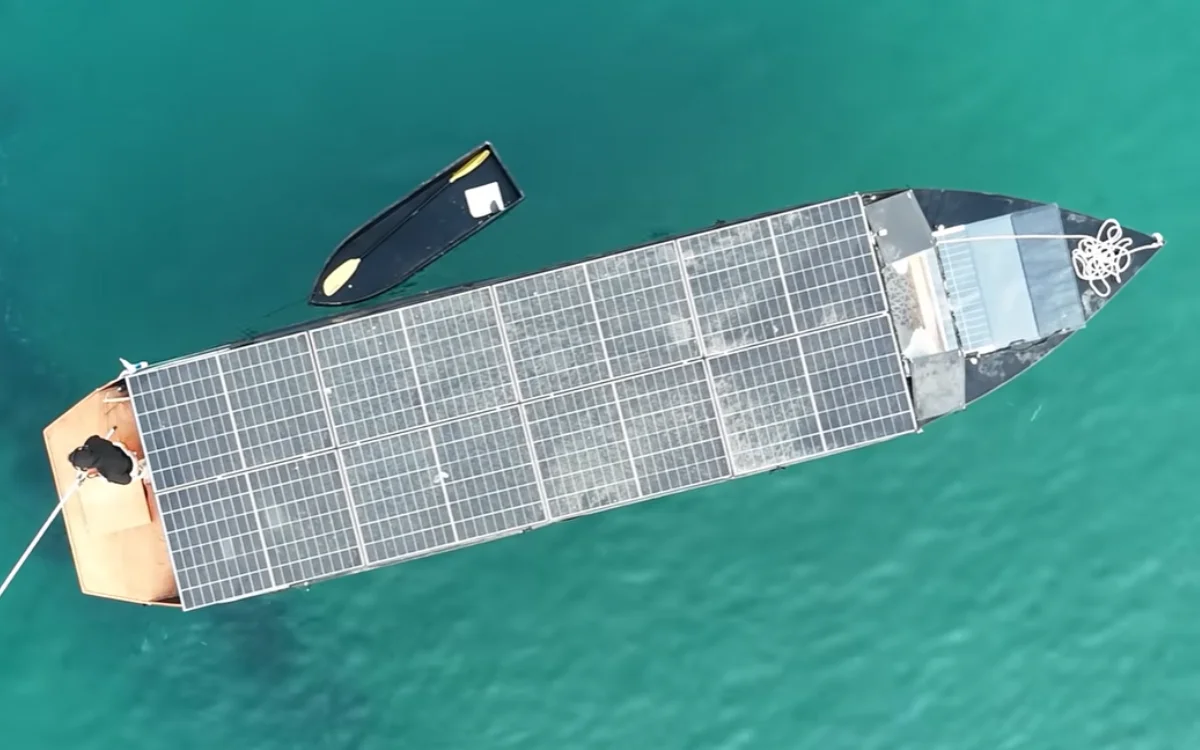
The current design is almost boxy to support a simple solar layout, but he said that comes at the cost of side stability.
So the next version will go lower and wider, with panels repositioned across the roof and sides to improve airflow, reduce wind drag, and increase solar input at the same time.
Put it all together, and the next Helios 11 doesn’t just go further.
It becomes easier to live with.
Which, as he’s found out, matters a lot more once you’re actually out there.
DISCOVER SBX CARS:
The global premium car auction platform powered by Supercar Blondie
