
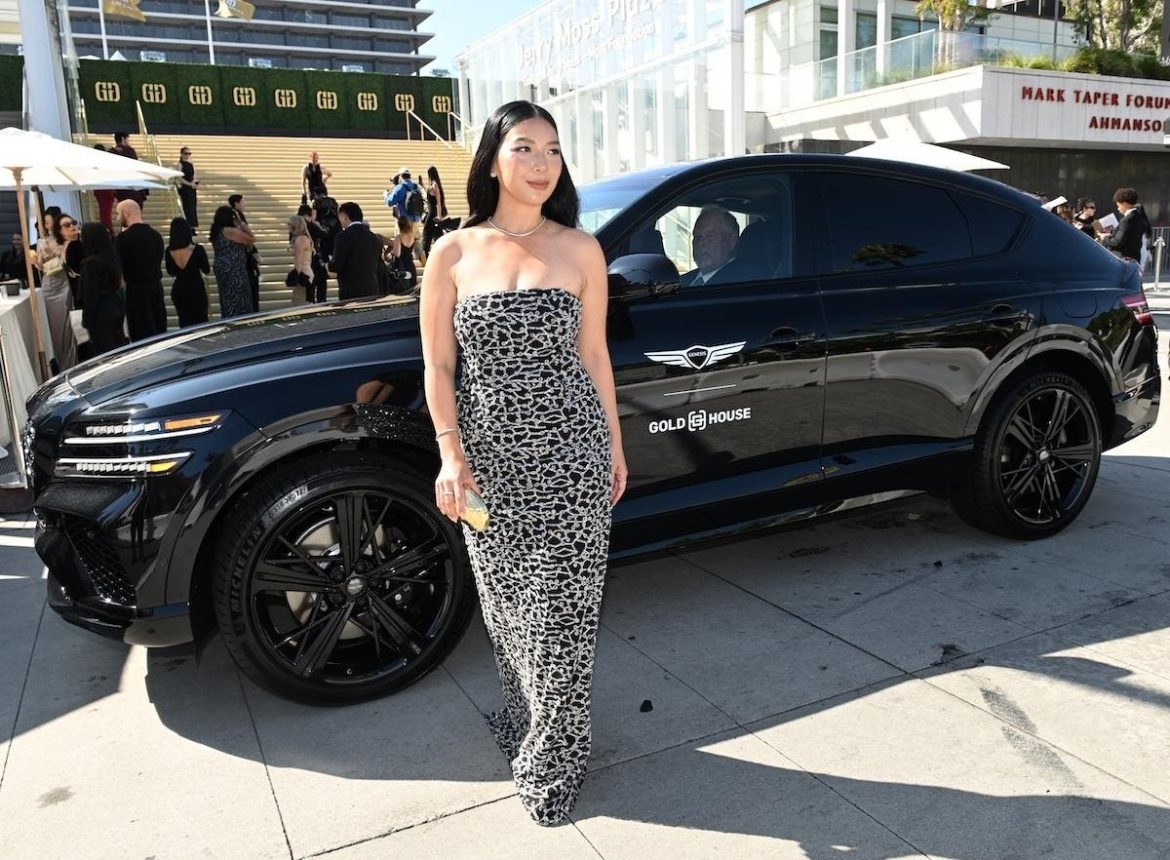

The Genesis strategy of being where the customer is extends to events; here, the Genesis GV70 at an event for AAPI Month as a partner of Gold House Gold Gala
Genesis
You’d think that slowing luxury car sales would signal danger ahead; the overall category grew only a few percentage points in 2025 with some brands dropping as much as 20% from their 2024 sales.
But what those numbers really reflect is a change in the market; while sales are down for some brands, revenue is up thanks to a ‘fewer cars, more revenue’ strategy.
And then, there is Genesis, maintaining prices and increasing sales, up 10% in 2025 and every quarter performing better than the last. The formula is a no-nonsense one according to Tedros Mengiste, chief operating officer, Genesis Motor America.
No Longer A Scrappy Upstart
When Genesis emerged as a standalone luxury brand from its parent company, Hyundai, in 2016, the brand sold a lone sedan, the Genesis G90, but offered a distinct approach to luxury design and high ambition. The brand quickly brought new models to market and introduced a novel come-to-the-customer sales and service experience that let buyers bypass dealerships—Genesis was sold and serviced through existing Hyundai stores.
Adhering to the more-for-the-money strategy that had propelled Hyundai into buyers’ favor, early Genesis models underpriced other luxury brands with more standard features for the price, from intuitive technology to quilted leather seating, head-up displays and premium sound systems, as well as a satisfying amount of power under the hood.
As the brand grew, so did its luxury offerings, competing directly with European and Japanese luxury brands.
The Genesis Magma GT3 Concept car
Genesis
Concept Cars And Events Keep The Excitement High
As carmakers have moved away from expensive concepts that may never actually go into production, Genesis has leaned into the idea. Startup car brands can go years between new model introductions, so Genesis needed a way to stay in the spotlight, growing awareness and excitement. A tight strategy of concept cars based on iterations of current models and future product revealed at auto shows did the trick; Genesis has consistently been part of the “what’s new” conversation, drawing consumers to their exhibits and showrooms.
That conversation continues at the many events that Genesis sponsors, from PGA golf to endurance racing, local non-profit programs and a rotating calendar of events at Genesis House in New York City.
But it’s really in the concepts that Genesis has teased and tested the appetites of buyers. Two years ago, the company showed the Neolun concept, a full-size SUV; the real thing, though reimagined for a more useful purpose, will make its debut later this year. At the same time, Genesis revealed its Magma concept, a performance-driven upgrade to current models and a separate Magma racing concept designed for the track. Genesis was poised to enter the most visible and most rigorous part of the automotive world: competitive motorsports.
Genesis Magma Racing on the circuit at Le Mans
Genesis
Magma Racing Extends Genesis Into A New Realm: Le Mans
In less than two years Magma Racing made its debut at the famed Le Mans, a defining moment for Genesis, and one the company is counting on to fortify its reputation. “It’s going to drive brand awareness, significant engagement with racing enthusiasts, a whole other population of people that we can appeal to,” said Mengiste. But building a reputation is only part of the benefit. “It’s also where we’ll get a lot of learnings from durability and high-end performance to then put into production for our everyday vehicles.”
Magma Racing just completed its first circuit at Le Mans, the oldest and most grueling endurance race. Of the two teams Genesis fielded, one was forced out early due to mechanical issues, but the other team finished, placing 13th in a field of 62 (though not all teams finished the race). It was quite an accomplishment for a team that’s just two years old.
A Genesis standalone dealership outside Memphis, TN
Genesis
The Real Key To Winning: Standalone Dealerships
All the design, engineering, pricing strategy and brand excitement boils down to one thing: Pairing customers with cars. Rather than pivoting to a direct-to-consumer strategy, as some new car brands are doing and as Genesis used at its start, the company has leaned into a traditional franchise model. By allowing Hyundai and other dealership owners to build a ground-up dealership, the company has been able to establish a retail footprint that extends the company’s design and luxury ethos. There are currently 84 Genesis dealerships with more on the way.
The dealerships allow the company to demonstrate “how well we take care of our customers,” Mengiste said; customer service is central to the Genesis dealership promise. But the dealership structure also allows Genesis to better communicate with buyers and deliver the luxury car they desire. “We want to meet the customer on their journey to electrification,” he told us; the company will continue to offer gas-powered vehicles, hybrids and now, performance models, though not all powertrains will be offered in all models. The goal is to deliver ”the best experience for both the customer and for Genesis,” Mengiste said. It’s a strategy that continues to deliver gains quarter after quarter for a no-longer-scrappy luxury start up.
